

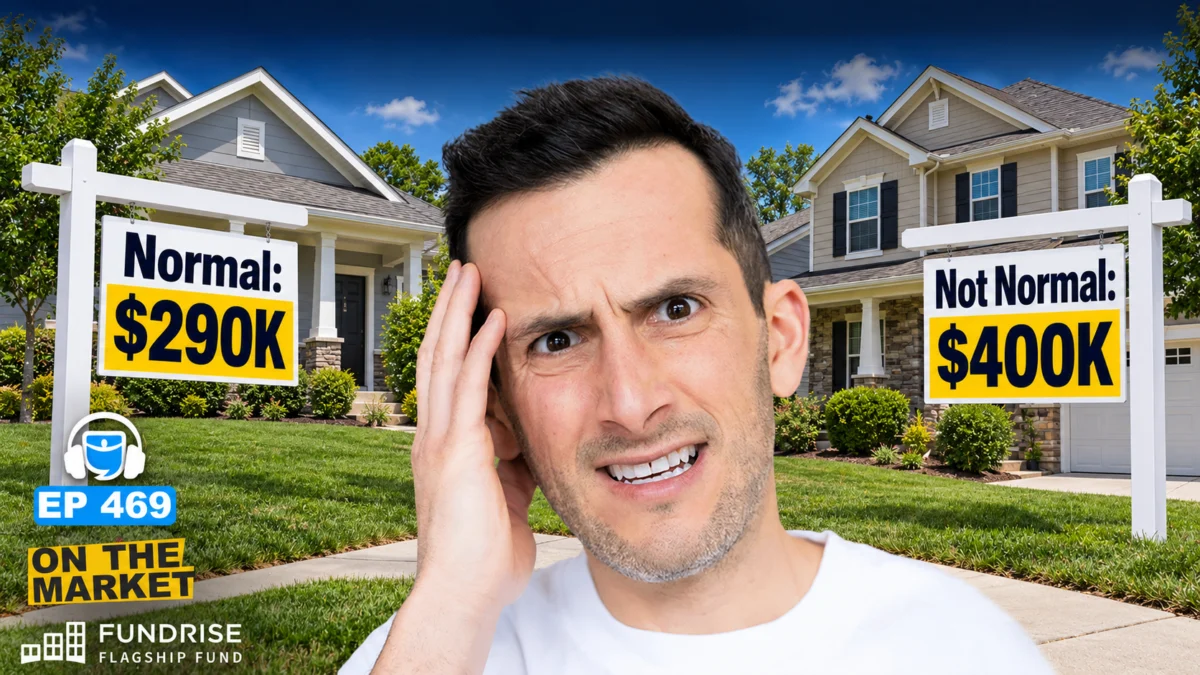
The dream of a return to a "normal" housing market is not just delayed; according to new data-driven analysis from BiggerPockets Chief Investment Officer Dave Meyer, it may be mathematically impossible to reach in the short term. As mortgage rates hover stubbornly around the 7.5% mark and median home prices remain near $400,000, the gap between home costs and average household income has reached a chasm that traditional market cycles cannot easily bridge.
For years, potential buyers and sellers have waited for a "return to normal," hoping for a cooling-off period that would make homeownership accessible once again. However, by dissecting the three pillars of housing affordability—mortgage rates, home prices, and wage growth—it becomes clear that the current market stagnation is not a temporary blip, but a structural reality that could persist for years.
The Three Pillars of Affordability
To understand why the housing market is currently so sluggish, one must look past the "vibes" and toward the mathematical reality of affordability. Affordability is defined by the payment-to-income ratio: how much of a household’s gross monthly income is required to service a mortgage payment.
Historically, this ratio has hovered around 18.5% since 1989. In 2019, the last "normal" pre-pandemic year, that number sat at a healthy 15.6%. Today, that figure has ballooned to nearly 25%, and when adjusted for current interest rate spikes, some estimates place it as high as 27%. This 10-point jump from 2019 levels explains why the market feels paralyzed: monthly mortgage payments have risen 116% since 2019, while family incomes have only grown by roughly 37%.
1. The Wage Growth Fallacy
The most optimistic path to affordability is rising wages. If incomes grew significantly, the burden of higher mortgage rates and prices would diminish. However, the data suggests this is unlikely. To return to the 2019 level of affordability through wage growth alone, real, inflation-adjusted wages would need to increase by 57%.
Historically, real wage growth has averaged just 0.8% annually since 1968. At that rate, it would take nearly six decades to close the current affordability gap. Furthermore, with current real wage growth turning negative due to stubborn inflation and the looming specter of AI-driven labor market disruption, wage growth is currently acting as a drag on affordability, not a savior.
2. The Mortgage Rate Mirage
The most volatile lever in the housing market is the mortgage rate. Many buyers are waiting for a return to the sub-3% rates seen in 2021. However, achieving 2019 affordability levels would require mortgage rates to plummet to 2.7%.
Given the current economic landscape and the Federal Reserve’s battle against inflation, a 2.7% rate is, for all intents and purposes, a relic of a unique, emergency-era monetary policy. Even reaching a 4% mortgage rate—which would require significant, potentially painful shifts in the economy—appears unlikely in the near term. The bond market, which dictates mortgage rates, is currently reacting to an economy where inflation remains above the 2% target, keeping upward pressure on long-term yields.
3. The Price Correction Problem
The final pillar is home prices. To return to 2019 affordability levels through price depreciation alone, national home prices would need to crash by approximately 36%. Even to return to the 40-year long-term average, prices would need to drop by 25%.
For context, the largest price decline during the 2008 Great Financial Crisis—a crisis fueled by predatory lending and toxic debt—was roughly 20-22%. A 36% national crash is statistically unlikely because the market today is fundamentally different. The "lock-in effect," where 80% of existing mortgage holders have rates below 6% (and 50% have rates below 4%), creates a massive barrier to inventory growth. Homeowners are not being forced to sell, and without a massive, sustained influx of distressed inventory, a national price collapse remains a remote possibility.
Chronology of a Stagnant Market
The path to this current state can be traced back to the post-2020 era.
- 2019: The benchmark year for "normalcy," characterized by stable, if slightly constrained, affordability.
- 2020-2021: The era of historically low interest rates, which caused a massive, unsustainable surge in home price appreciation.
- 2022-2023: The Federal Reserve begins aggressive interest rate hikes to combat post-pandemic inflation, leading to the "great stall" in transaction volume.
- 2024-Present: A period of "higher-for-longer" interest rates, where the disconnect between buyer affordability and seller expectations has created a deadlock in the real estate sector.
Supporting Data: The "Base Case" Scenario
Mathematical models testing various outcomes show the timeline for recovery is far longer than most observers anticipate. In a "Base Case" scenario—where rates decline to 6%, prices remain flat, and wage growth outpaces inflation—it would take seven years for the market to return to historical levels of affordability.
If rates remain slightly higher at 6.6%, the timeline stretches to 20 years. Even in a more optimistic, albeit difficult scenario involving a controlled 2% annual correction in prices, a 2% increase in real wages, and mortgage rates settling at 6%, it would still take five and a half years to restore affordability. The data makes one thing clear: there is no "quick fix."
Official Perspectives and Market Implications
Financial analysts and real estate experts emphasize that the current market is not necessarily "crashing," but rather "correcting" in real terms. While nominal home prices may stay flat or decline slightly, inflation-adjusted home prices have been essentially stagnant for four years.
For real estate professionals—agents, loan officers, and brokers—this implies a prolonged period of low transaction volume. For the average buyer, the implication is that waiting for a "market crash" is a losing strategy. The market is not waiting for a specific event; it is waiting for a slow, agonizing convergence of wages, rates, and prices that will take at least half a decade to fully realize.
Implications for Investors
For the savvy investor, this environment requires a shift in playbook. Because broad-market appreciation is unlikely to drive returns in the short term, investors must "make" their appreciation on the buy side.
- Value-Add Focus: Returns must be generated through forced appreciation (renovations and property improvements) rather than market tailwinds.
- Purchase Basis: Investors should target a 15% to 20% discount off current market comps to buffer against future price stagnation.
- Cash Flow Over Speculation: Properties must cash flow based on today’s high interest rates. Relying on future refinancing at lower rates is a speculative gamble, not a sound investment strategy.
Conclusion: The Reality of the "New Normal"
The housing market is not heading for a cliff, nor is it about to bounce back to 2019-era accessibility. Instead, we are likely entering a new era where housing constitutes a larger portion of household income than in previous decades.
The "great stall" is the new reality. Whether this eventually resolves through a painful, multi-year correction in prices or a slow, agonizing rise in wages, the timeline is measured in years, not months. For those looking to enter the market, the message is clear: stop looking for a "normal" that no longer exists, and start looking for value in a market that rewards patience, precision, and discipline. The math doesn’t lie, and the numbers suggest that the road to recovery is long, steep, and paved with the necessity of realistic expectations.
