

For many men, the milestone of turning 55 brings with it a quiet, persistent anxiety: the fear that their best physical years are behind them. The medical community often labels this age-related muscle loss as sarcopenia. While it is a natural physiological process, recent sports science and geriatric health research suggest that the decline is not inevitable. In fact, men over 55 possess a unique capacity to build and retain significant muscle mass, provided their approach is strategic, consistent, and sustainable.
The secret does not lie in high-intensity, marathon-length gym sessions that leave the joints inflamed and the schedule shattered. Instead, the most effective protocol involves "signaling"—providing the body with a consistent, manageable stimulus that tells the muscles they are still required for daily operation. By focusing on foundational movement patterns, men can maintain their independence, metabolic health, and physical capability well into their later years.
The Science of Muscle Preservation
Research published in journals such as the National Center for Biotechnology Information highlights that muscle protein synthesis remains responsive to resistance training at any age. The primary challenge for men over 55 is not a biological inability to build muscle, but rather the cumulative effect of sedentary habits and the "all-or-nothing" mentality that often leads to burnout or injury.
When we look at the mechanics of aging, the loss of muscle power (the ability to exert force quickly) often precedes the loss of muscle mass. Therefore, training must prioritize functional movements that mirror real-life demands: pushing, pulling, squatting, hinging, and stabilizing. By mastering these five movements, you can optimize your "return on investment" for every minute spent training.
The Five Pillars of Strength
The following five exercises form a complete, full-body routine. They are designed to be scalable, meaning they can be performed by beginners or those returning to fitness after a hiatus, while still offering enough complexity for the seasoned athlete.
1. The Push-Up: The Foundation of Upper-Body Power
The push-up is arguably the most efficient upper-body exercise in existence. It simultaneously engages the chest, shoulders, triceps, and, crucially, the entire core.
Why it matters: As men age, the ability to push oneself up from the floor or catch oneself during a stumble is a critical marker of functional longevity. The push-up provides a repeatable metric for strength. If you can perform 12 clean reps today, you have a baseline to improve upon next month.
- How to Scale: If a floor push-up compromises your form, start with an incline push-up by placing your hands on a sturdy countertop or a bench. As your strength improves, lower the angle until you are working from the floor.
- The Goal: 2 to 3 sets of 6 to 12 repetitions.
2. The Dumbbell Walking Lunge: Reclaiming Leg Symmetry
Unilateral (single-leg) training is essential after 55. We rarely move through the world with both feet perfectly planted; we walk, climb stairs, and step over obstacles. The walking lunge addresses the common issue of strength imbalances between the left and right sides.
Why it matters: Lunges improve balance and coordination—two attributes that decline rapidly if not challenged. By utilizing dumbbells, you also increase the load on your quads, glutes, and hamstrings, while forcing your core to stabilize your torso during the transition.
- Form Tip: Focus on the quality of the step. Keep your torso upright and avoid rushing. A slow, controlled descent is more effective for muscle retention than a frantic, unstable pace.
- The Goal: 2 to 3 sets of 8 to 10 repetitions per leg.
3. The Bent-Over Row: Posture and Pulling Power
Modern life is "forward-facing." We drive, we sit at desks, and we look at screens, all of which pull our shoulders forward and weaken the upper back. The bent-over row acts as the perfect antidote, strengthening the lats, rear shoulders, and rhomboids.
Why it matters: A strong back is the cornerstone of healthy posture. By balancing the "pushing" work of the push-up with the "pulling" work of the row, you protect your shoulder joints from the common impingement issues that plague older adults.
- Form Tip: Keep your spine neutral. Think about pulling your elbows toward your hips rather than just lifting the weight with your hands. Keep your shoulders away from your ears to engage the lats effectively.
- The Goal: 2 to 3 sets of 8 to 12 repetitions.
4. The Kettlebell Deadlift: The King of Hinge Patterns
The deadlift is often misunderstood as a dangerous heavy-lifting exercise. In reality, the kettlebell deadlift is simply the act of picking up an object safely. It is the ultimate movement for hip, leg, and lower-back health.
Why it matters: The hinge pattern is required for almost every heavy lifting task you encounter in daily life. By keeping the weight centered (as is the case with a kettlebell), you reduce the shear force on the lower back while maximizing the engagement of the posterior chain—the muscles along the back of the body.
- Form Tip: Keep the weight close to your body. Imagine "closing a door" with your hips as you stand up. Your legs should do the heavy lifting, not your lower back.
- The Goal: 2 to 3 sets of 8 to 10 repetitions.
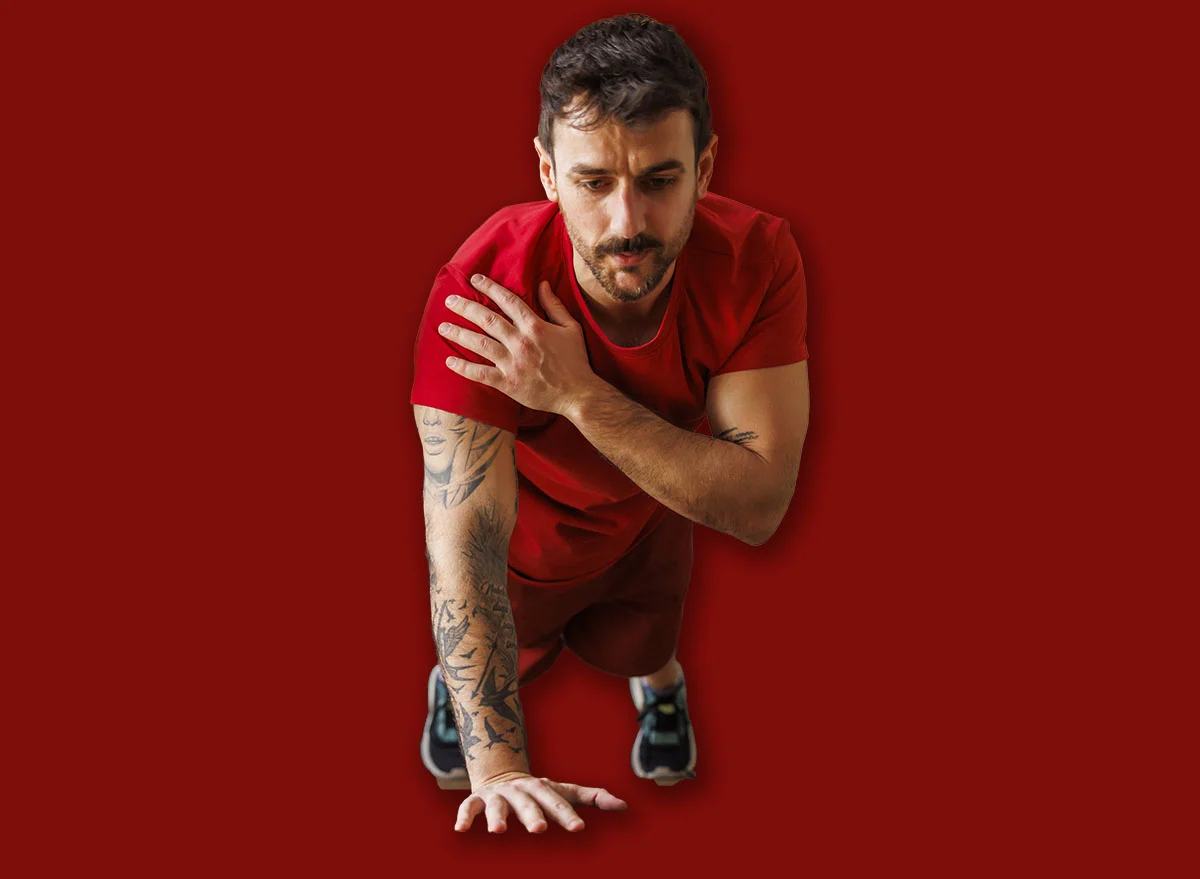
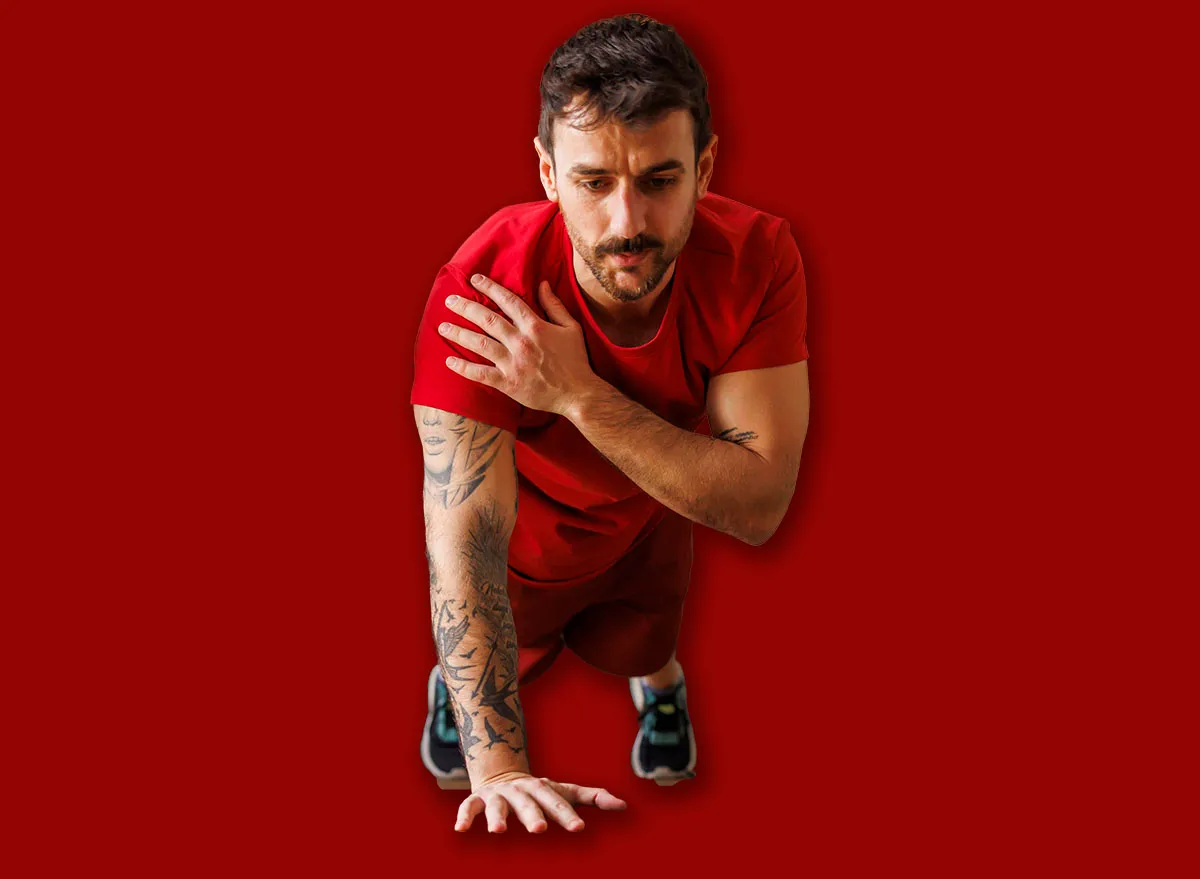
5. Plank with Shoulder Taps: Active Core Stability
A standard plank is excellent for endurance, but a plank with shoulder taps introduces the element of anti-rotation. It forces your midsection to resist the urge to twist as you lift one hand to touch the opposite shoulder.
Why it matters: This exercise translates directly to improved athletic performance and injury prevention. It teaches the deep core muscles—the stabilizers—to fire in coordination with the shoulders and hips.
- Form Tip: If your hips are rocking side to side, widen your feet. The goal is to keep your torso as still as a statue while your arms move.
- The Goal: 2 to 3 sets of 6 to 10 taps per side.
Chronology of Progress: How to Structure Your Week
Consistency is the primary driver of muscle maintenance. For a man over 55, the ideal schedule involves 3 to 5 sessions per week.
- Phase 1 (Weeks 1–4): Focus on form. Choose weights or variations that allow you to complete every rep with perfect technique.
- Phase 2 (Weeks 5–8): Begin to add resistance. If the bodyweight version of an exercise feels "easy," introduce a light set of dumbbells or increase the number of sets.
- Phase 3 (Ongoing): The "Auto-Regulation" phase. On days when you feel energized, increase the intensity. On days when you are tired or stressed, focus on mobility and lighter, controlled reps.
Supporting Data and Medical Implications
The medical consensus is shifting from "rest more as you age" to "load more as you age." Research indicates that resistance training not only preserves muscle but also increases bone mineral density, improves insulin sensitivity, and enhances cognitive function.
According to the Journal of Applied Physiology, older adults who engage in regular resistance training see significant improvements in mitochondrial health—the powerhouses of the cells. In simple terms, this means that by lifting weights, you aren’t just building bigger muscles; you are helping your cells produce energy more efficiently, which translates to less fatigue in your daily life.
Official Responses and Expert Consensus
Fitness experts and physical therapists frequently emphasize that the "best" routine is the one that causes the least amount of joint trauma while providing the maximum amount of muscular tension.
"The goal is not to train like a 20-year-old bodybuilder," says one leading sports physiologist. "The goal is to maintain a level of strength that allows you to remain entirely self-sufficient. Every exercise selected here serves a purpose that extends far beyond the gym mirror."
Conclusion: The Path Forward
To keep muscle after 55, you must stop viewing exercise as a temporary chore and start viewing it as a prerequisite for a high quality of life. The five movements outlined above—the push-up, the lunge, the row, the deadlift, and the plank—do not require a commercial gym membership or hours of free time. They require only your commitment to show up.
By integrating these moves into your weekly routine, you are making an investment in your future self. You are choosing to maintain your strength, your balance, and your freedom. Start today, keep your movements controlled, and remember: progress is measured in consistency, not in the weight on the bar.
