

For many aspiring real estate investors, the "Big Portfolio" myth acts as an insurmountable barrier. The prevailing narrative suggests that to walk away from a stable W-2 corporate job, one must amass dozens—if not hundreds—of rental properties. However, a new wave of investors is challenging this assumption, proving that the fastest route to financial independence isn’t necessarily through massive capital acquisition, but through operational expertise and strategic partnerships.
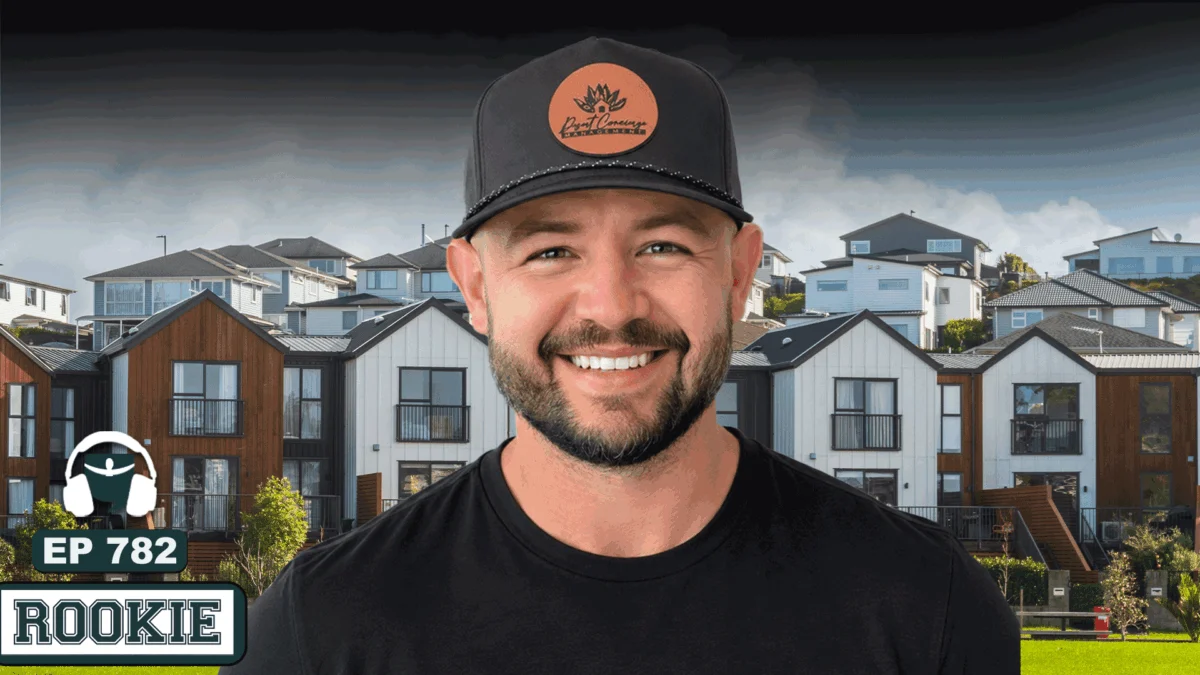
Ryan Dumka, a former corporate manager at Microsoft and the Cheesecake Factory, recently joined the Real Estate Rookie podcast to share his unconventional roadmap. By leveraging his background in hospitality and technology, Dumka bypassed the slow, capital-intensive grind of traditional real estate, instead building a thriving short-term rental (STR) management business that currently oversees 85 properties. His journey offers a masterclass in how "rookies" can turn minimal initial investments into sustainable wealth.
The Genesis of a Career Pivot
Before becoming a fixture in the Arizona vacation rental market, Dumka’s life was defined by the grueling demands of corporate hospitality. As a restaurant manager in Los Angeles and later in Phoenix, he was accustomed to 12-hour shifts and high-stress environments. Following a transition to a retail management role at Microsoft, he found himself physically and mentally drained, missing pivotal moments with his growing family due to exhausting commutes and long hours.
The catalyst for change came in 2019, during a Fourth of July vacation near the Colorado River. Dumka noticed a family member succeeding with a simple manufactured home on Airbnb. Initially skeptical—he couldn’t fathom how a "double-wide" could generate significant revenue—his research into platforms like AirDNA and Zillow revealed a hidden market of high-demand, high-margin opportunities.
The First Acquisition: A Strategic Foundation
Dumka’s first move was calculated and low-risk. He purchased a manufactured home for $158,000, utilizing a 10% down payment and investing roughly $15,000 into high-quality furnishings and staging. By treating the property as a vacation home (a legitimate designation given his personal use), he entered the market with a total investment of about $30,000.
The results were immediate. The property grossed $50,000 in its first year, yielding a monthly cash flow of $2,000 to $3,000 after mortgage expenses. This success provided the proof-of-concept necessary to scale.
Chronology: From Side Hustle to Scaling
Dumka’s ascent was not an overnight success but a deliberate series of pivots.
- 2019: Purchased the first STR in Bullhead City, Arizona.
- 2020: Navigated the COVID-19 pandemic by pivoting to "staycationers" from California, keeping the business afloat when travel ground to a halt.
- 2021: Utilized a 1031 exchange to sell his first property, rolling the $100,000 in equity into a second, more premium property on a golf course.
- October 2021: Faced with corporate restructuring at Microsoft, Dumka opted for a severance package, choosing to commit full-time to his budding management business, which at the time managed roughly 10 properties.
- 2025: His company, Desert Concierge Management, now manages 85 vacation rentals across three Arizona markets, supported by a robust cleaning and maintenance operation.
Operational Excellence: Managing Properties You Don’t Own
The core of Dumka’s success lies in his transition from "investor" to "manager." As he notes, owning properties is a slow game of equity appreciation, but managing them is a cash-flow business.
Developing a Winning Pitch
Dumka’s strategy for acquiring new properties for his management portfolio is remarkably grounded in "guerrilla marketing." He doesn’t rely on expensive advertising. Instead, he targets underperforming listings on Airbnb—properties with poor photography, lack of amenities, or "bottom 10%" reviews.
His pitch to these owners is simple: "Let me manage your house for a year. I will upgrade your photos, stage your living space, and implement professional hospitality systems." By positioning himself as a partner rather than a threat, he leverages his ability to increase the owner’s net revenue in exchange for a management fee.
Building the "Flywheel"
Dumka emphasizes that if a potential investor cannot find a top-tier cleaning or maintenance team, they must "manufacture" one. By training local individuals—often those looking for flexible, supplemental income—he built a dedicated team that treats his properties with the same care he would. This network now extends to pool maintenance and HVAC services, creating a symbiotic ecosystem where his team’s success fuels his own business growth.
Supporting Data: The Economics of Management
For those wondering if management is a viable path to quitting a W-2, the numbers are compelling.
- Revenue Scale: As of recent reporting, Dumka’s portfolio generated $650,000 in booking revenue in a single month.
- Net Invoicing: After accounting for management fees, the business invoiced approximately $120,000 in monthly revenue.
- Overhead: Operational costs, including virtual assistants (VAs) and local management teams, consume roughly 20% of the gross management revenue, leaving a healthy profit margin that far exceeds traditional passive rental income.
Dumka’s "tech stack" is equally lean. He relies on Hospitable for guest communication and direct booking, PriceLabs for dynamic revenue management, and Microsoft Teams for internal coordination. By avoiding overly complex software, he keeps his overhead low and his response times lightning-fast.
Official Perspective: The "Forrest Gump" Business Philosophy
When asked about his rapid expansion into other sectors—specifically his recent move to acquire a laundromat—Dumka describes his approach as "Forrest Gump-based." He identifies the logical next step to solve an existing operational bottleneck.
"My team was doing laundry out of a garage," Dumka explains. "It wasn’t a sustainable experience for them. Buying a laundromat wasn’t just about the coin-op revenue; it was about creating a vertical integration point."
By owning the laundry facility, Dumka can now service his 85 STRs more efficiently, while simultaneously opening his doors to commercial laundry contracts with local hotels. He plans to further integrate the businesses by placing QR codes for his cleaning and management services inside the laundromat, creating a self-sustaining loop of lead generation.
Implications: Redefining Financial Freedom
The most profound takeaway from Dumka’s journey is his evolving definition of "freedom." When he first started, freedom meant a paycheck large enough to travel the world. Today, it means being present for his children.
The Sacrifice of Balance
Dumka is candid about the "teeter-totter" nature of entrepreneurship. He acknowledges that during the early growth phase, balance was non-existent. "You can’t have it all at once," he admits. "If you are in the throes of growing a business, you are going to be out of balance."
However, by establishing strict boundaries and hiring VAs to handle the 24/7 guest communication demands, he has reached a point where he can choose his schedule. He is no longer tethered to a corporate clock; he is tethered only to the needs of his family and the health of his community.
A Legacy of Giving
Perhaps the most notable implication of his success is his focus on community impact. His vision for his new laundromat involves "Donut Tuesdays" and dedicated reading corners for children, as well as providing free laundry services for local families in need. For Dumka, the ultimate goal of his financial success is to demonstrate that business can be a force for good.
"I don’t want the community to think that STRs are just coming in to gather money and leave," he says. "There is plenty to go around, and if I’m able to use the gifts I’ve been given to support my neighbors, that is the real measure of success."
Final Advice for the Rookie
For the investor currently stuck in a cubicle, Dumka’s advice is simple: "Start by solving a problem." Whether it’s poor photography on an Airbnb listing or a lack of reliable cleaners in your town, the opportunity to build a business exists in the gaps of the current market. You don’t need a massive portfolio to start; you only need the willingness to provide more value than the next person. If you can provide a better guest experience and a better result for an property owner, the doors to financial independence will open faster than any traditional mortgage could ever promise.
