

By Editorial Staff | June 4, 2026
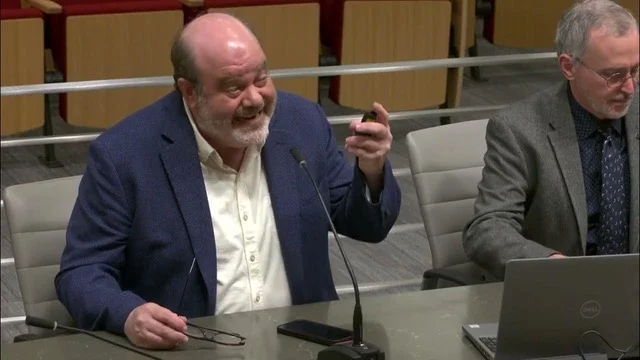
In a high-stakes hearing before the Senate Energy and Natural Resources Committee on June 3, 2026, Jamie Court, President of Consumer Watchdog, delivered a blistering testimony aimed at the structural inefficiencies and alleged market manipulations governing the American gasoline sector. The testimony, which has since ignited a firestorm of debate among policymakers and energy lobbyists, centers on the assertion that current gasoline pricing is not merely a byproduct of global crude supply fluctuations, but a reflection of systemic deficiencies in domestic refining and regional market concentration.
Main Facts: The Core Argument
The central premise of Consumer Watchdog’s testimony is that the United States energy market is currently experiencing a "decoupling" between the cost of raw crude oil and the price consumers pay at the pump. Court argued that major oil refiners have capitalized on a lack of transparency and regulatory oversight to maintain artificially high profit margins—a phenomenon often described by economists as the "rocket and feather" effect, where retail prices rise rapidly with oil prices but fall sluggishly when crude costs decline.
According to the testimony, the domestic refining capacity is being throttled by consolidation. With fewer independent players in the market, the remaining giants have increased their leverage, allowing them to exert upward pressure on prices during peak travel seasons and periods of geopolitical instability. Court emphasized that this is not a failure of the free market, but a failure of competition policy, urging the Senate to implement stricter reporting requirements and enhanced transparency laws for energy conglomerates.
Chronology: A Timeline of Market Tension
To understand the gravity of the June 3rd hearing, one must examine the progression of events that led to the current energy crisis:
- Q1 2025: Gasoline prices began a steady climb, initially attributed to regional pipeline maintenance and seasonal blending requirements.
- Late 2025: Market analysts noted a persistent gap between the "crack spread"—the difference between the price of crude oil and the refined products—and historical averages.
- February 2026: Consumer Watchdog released a preliminary report indicating that western regional markets were seeing a 15% price premium compared to the national average, without a clear logistical justification.
- April 2026: The Senate Energy Committee officially opened an inquiry into "Retail Fuel Market Disparities," citing public outcry over record inflation.
- June 3, 2026: Jamie Court appears before the committee, presenting evidence of market concentration and urging legislative reform.
Supporting Data: The Anatomy of the Price Spike
The evidence presented by Consumer Watchdog relies heavily on econometric data tracking the refining margin. Historically, the refining margin has hovered between $0.15 and $0.25 per gallon. However, recent data from the Energy Information Administration (EIA), highlighted in the testimony, shows that these margins have frequently exceeded $0.60 per gallon in several regions.
Regional Disparities and Refiner Consolidation
Court’s data illustrated that states with higher concentrations of refinery ownership by a single entity consistently reported higher retail prices. The correlation between the "Herfindahl-Hirschman Index" (a measure of market concentration) and retail gasoline prices suggests that in states where competition is restricted, consumers are paying an "oligopoly tax."
The Transparency Gap
Furthermore, the testimony pointed to the lack of "real-time" data regarding refinery outages. Currently, refiners are not required to provide granular, immediate reports on scheduled versus unscheduled maintenance. This information asymmetry allows refiners to manage supply levels in a way that prevents price drops, essentially creating an artificial scarcity that keeps the market in a state of constant, high-priced equilibrium.
Official Responses: A Divided Chamber
The response to the testimony from members of the Senate Energy Committee was starkly divided, reflecting the deep-seated ideological rift regarding energy policy in the United States.
The Pro-Regulation Stance
Senators favoring stricter oversight argued that the data provided by Consumer Watchdog constitutes a "smoking gun." Several members of the committee pledged to draft legislation that would empower the Federal Trade Commission (FTC) to perform more rigorous audits of refiner accounting practices. They argue that energy is a critical national security resource and that the current level of "black-box" pricing is an affront to consumer protection.
The Industry Defense
Conversely, representatives linked to the energy industry—and several senators with ties to major oil-producing states—pushed back during the Q&A portion of the hearing. They argued that the high margins are a necessary buffer against the extreme volatility of the global oil market and the high costs associated with meeting increasingly stringent environmental regulations. Industry spokespeople have subsequently issued statements claiming that the "refining bottleneck" is caused by a lack of investment in new infrastructure—a trend they attribute to long-term government signals that favor a transition away from fossil fuels.
Implications: What Comes Next?
The implications of this hearing are significant for both the energy sector and the American voter. If the Senate acts on the recommendations provided by Consumer Watchdog, the industry could face:
- Mandatory Price Reporting: Legislation could require daily reporting of wholesale and retail fuel margins, which would be made available to the public.
- Antitrust Investigations: The FTC may be tasked with launching a nationwide investigation into regional market concentration, potentially leading to forced divestitures of refinery assets in areas where a single company dominates the supply chain.
- Refinery Maintenance Oversight: A new regulatory framework could be established to mandate public disclosure of refinery maintenance schedules, preventing companies from timing repairs to induce artificial price spikes.
The Broader Economic Impact
For the American consumer, the immediate impact remains uncertain. While policy changes take time to manifest, the visibility of this issue ensures that gasoline prices will remain a centerpiece of the 2026 political conversation. The "Price at the Pump" is often the most visible indicator of economic health for the average household; when prices stay high, public sentiment toward the current administration and the legislative branch inevitably suffers.
Conclusion
Jamie Court’s testimony on June 3rd was not just an indictment of the oil industry’s pricing practices; it was a call to reclaim the democratic process from the influence of concentrated market power. As the Senate Energy Committee deliberates on its next steps, the ball is firmly in the court of federal regulators. Whether this leads to genuine reform or remains a performative legislative exercise will depend on the willingness of lawmakers to confront one of the most powerful lobbying forces in Washington.
As the summer travel season approaches, the spotlight on gasoline prices will only grow brighter. Consumers are no longer content with vague explanations of "global market forces." They are demanding transparency, accountability, and, above all, a fair price at the pump. The events of June 3, 2026, serve as a clear signal that the status quo is under intense scrutiny, and the era of unchecked volatility may be approaching a legislative reckoning.
