

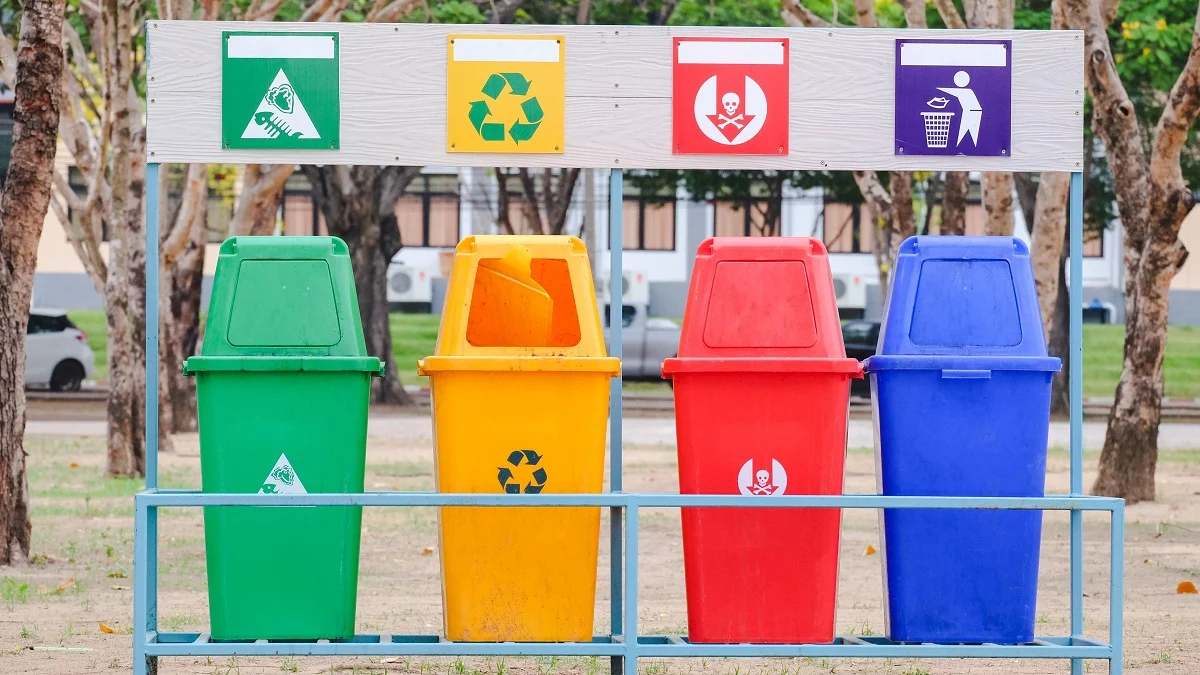
For millions of Americans, the act of rinsing a plastic container and tossing it into the blue bin is a daily ritual—a small, tangible contribution to a healthier planet. Yet, behind this widespread environmental conscientiousness lies a systemic crisis. Industry experts estimate that roughly one in four items placed in residential recycling bins is non-recyclable. This phenomenon, dubbed "wishcycling," occurs when consumers, unsure of local regulations, deposit questionable items into the bin with the optimistic hope that a facility will somehow sort it out.
Far from helping the environment, this practice has become a multibillion-dollar burden, causing equipment failure, skyrocketing processing costs, and, most alarmingly, significant physical danger to the workers on the front lines of our waste infrastructure.
The Anatomy of a Systemic Failure
"Wishcycling" is more than just a consumer annoyance; it is a structural failure born of the disconnect between global manufacturing and local waste management. The term, coined around 2015 by Bill Keegan, president of the Minnesota-based waste operator Dem-Con Companies, describes the "hopeful but mistaken" behavior of discarding items like garden hoses, propane tanks, Christmas lights, and bowling balls into curbside streams.
In the early 2000s, the economic model of American recycling was built on a foundation of simplicity: collect large volumes of mixed materials and ship the majority of the "dirty" load to overseas markets, primarily China. However, the global landscape shifted dramatically in 2018 when China implemented its "National Sword" policy, effectively banning the import of most foreign waste. The result was a collapse of the global market for contaminated recyclables. Suddenly, American material recovery facilities (MRFs) were left with nowhere to send their low-quality, mixed bales. The economic shock was immediate: processors were forced to either invest heavily in advanced cleaning technology or pay to dump the material in landfills.
Chronology of a Crisis
- Early 2000s: The "Golden Era" of single-stream recycling, characterized by high export volumes to international markets and minimal scrutiny of contamination.
- 2015: Industry leaders begin formalizing the term "wishcycling" to describe the growing epidemic of improper waste disposal.
- 2018: China’s National Sword policy takes effect, triggering a collapse in global recycling commodity prices and exposing the fragility of the U.S. model.
- 2020–2024: Contamination rates remain stubbornly high, hovering near 25% despite increased public awareness campaigns.
- 2025: Implementation of state-level Extended Producer Responsibility (EPR) programs begins, shifting the financial burden of waste management from municipalities to producers.
- 2026: A new EPA assessment identifies a staggering $36.5 to $43.4 billion investment gap required to modernize U.S. recycling infrastructure by 2030.
Supporting Data: The Burden of Contamination
The statistical reality of modern recycling is sobering. According to the Recycling Partnership’s 2024 State of Recycling report, only 21% of residential recyclable material is actually processed into new goods. The remaining 79% is either discarded by households as trash or lost during the MRF sorting process due to contamination.
Waste Management, the nation’s largest waste hauler, has reported average inbound contamination rates of roughly 17%. While this is a decrease from the long-standing industry average of 25%, it remains drastically higher than the sub-5% contamination threshold required by most manufacturers who purchase recycled materials.
The economic fallout is measurable. In Oregon, audit data from 2022 showed that processing a single ton of mixed recyclables costs approximately $129. When facilities receive "dirty" loads—clogged with food grease, plastic bags, or hazardous batteries—machinery slows, jams, or breaks entirely. The Environmental Research and Education Foundation reported that landfill tipping fees have surged 10% year-over-year, reaching an average of $62.28 per ton in 2024. For a facility that cannot sell its contaminated bales, the cost of disposing of that material is a direct hit to the bottom line, which is ultimately passed down to taxpayers through higher municipal fees.
The Human Cost: A Dangerous Workplace
Perhaps the most overlooked consequence of wishcycling is the physical toll on MRF employees. The sorting floor is a hazardous environment where workers manually remove items that sensors cannot identify.
According to U.S. Bureau of Labor Statistics data from 2026, the injury rate for recycling facility workers reached 5.8 per 100 full-time employees, more than double the average for all private industry. The job is currently ranked as one of the deadliest in the nation, trailing only high-risk sectors like logging and roofing.
The rise of lithium-ion batteries in the waste stream has created a literal firestorm. These batteries are frequently tossed into blue bins by well-meaning residents. When they reach a compaction truck or an MRF sorter, they are crushed, triggering intense chemical fires. The National Waste & Recycling Association estimates that more than 5,000 such fires occur annually at U.S. facilities, a figure that has grown by 41% in just five years, driving up insurance premiums and threatening the viability of local programs.
Official Responses and Policy Shifts
Regulators are beginning to acknowledge that the "voluntary" recycling model is insufficient. The August 2024 EPA assessment underscored that modernizing the U.S. recycling infrastructure requires billions in investment, specifically to decouple recycling from landfill-reliant economics.
A major shift is occurring through Extended Producer Responsibility (EPR) legislation. Oregon’s pioneering program, launched in 2025, forces producers to pay a "contamination management fee" to MRFs. By placing a dollar value on the cost of cleaning up after non-recyclable packaging, the policy aims to incentivize companies to design more compatible products. This marks a fundamental transition from an era of "blame the consumer" to one of "systemic accountability."
Implications for the Future
The persistence of wishcycling is driven by three primary structural flaws:
- Fragmentation: Recycling rules are hyper-local, yet consumer packaging is national. A resident in Atlanta may see a "recyclable" label on a package that their local facility is not equipped to process.
- The Single-Stream Trap: While convenient, single-stream collection—where all recyclables are mixed in one bin—inevitably leads to higher contamination than multi-stream systems, where materials are separated at the curb.
- Labeling Confusion: Despite 82% of consumers trusting the labels on their packaging, many of those labels are misleading, relying on universal symbols (like the "chasing arrows") that signify resin type rather than local recyclability.
What You Can Do: A Call to Action
Solving the recycling crisis does not require recycling less, but rather recycling smarter.
At the household level:
- When in doubt, throw it out: If an item is not explicitly listed on your local municipal website as accepted, putting it in the trash is often better than risking contamination.
- Clean and Dry: Ensure all containers are free of food residue; a single greasy pizza box can ruin an entire bale of high-quality paper.
- Battery Safety: Never put lithium-ion batteries in the recycling bin. Use specialized drop-off centers or hazardous waste collection days.
At the community and policy level:
- Demand Standardization: Support legislation that pushes for national labeling standards to end the confusion caused by misleading "recyclable" claims.
- Advocate for Transparency: Engage with local city councils to clarify what actually happens to the materials collected in your town.
- Support EPR: Advocate for policies that hold manufacturers, rather than taxpayers, responsible for the end-of-life disposal costs of their packaging.
The future of the American recycling system depends on a return to basics. By aligning our good intentions with the mechanical and economic realities of the facilities that process our waste, we can stop the cycle of contamination and build a system that is truly sustainable—for the planet, the economy, and the workers who make it all possible.
