

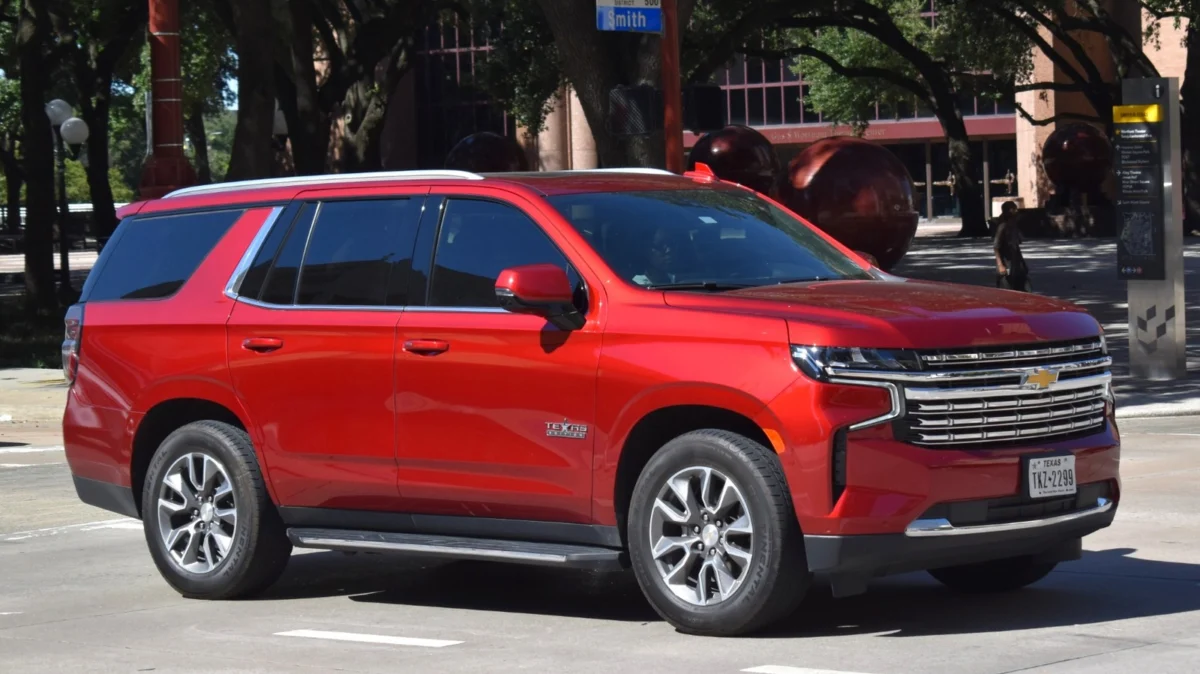
Since its inception for the 1995 model year, the Chevrolet Tahoe has cemented itself as the quintessential American full-size SUV. It sits comfortably in the General Motors hierarchy: more substantial than the crossover-based Traverse, yet more maneuverable and "standard-length" than its elongated sibling, the Suburban. However, as the 2021 model year—the inaugural year of the Tahoe’s fifth generation—reaches the five-year mark, prospective buyers and current owners are facing a sobering reality regarding the vehicle’s residual value. While the SUV remains a titan of utility, its financial trajectory over the last half-decade tells a complex story of market volatility, technological obsolescence, and shifting consumer sentiment.
Main Facts: A New Era of Size and Capability
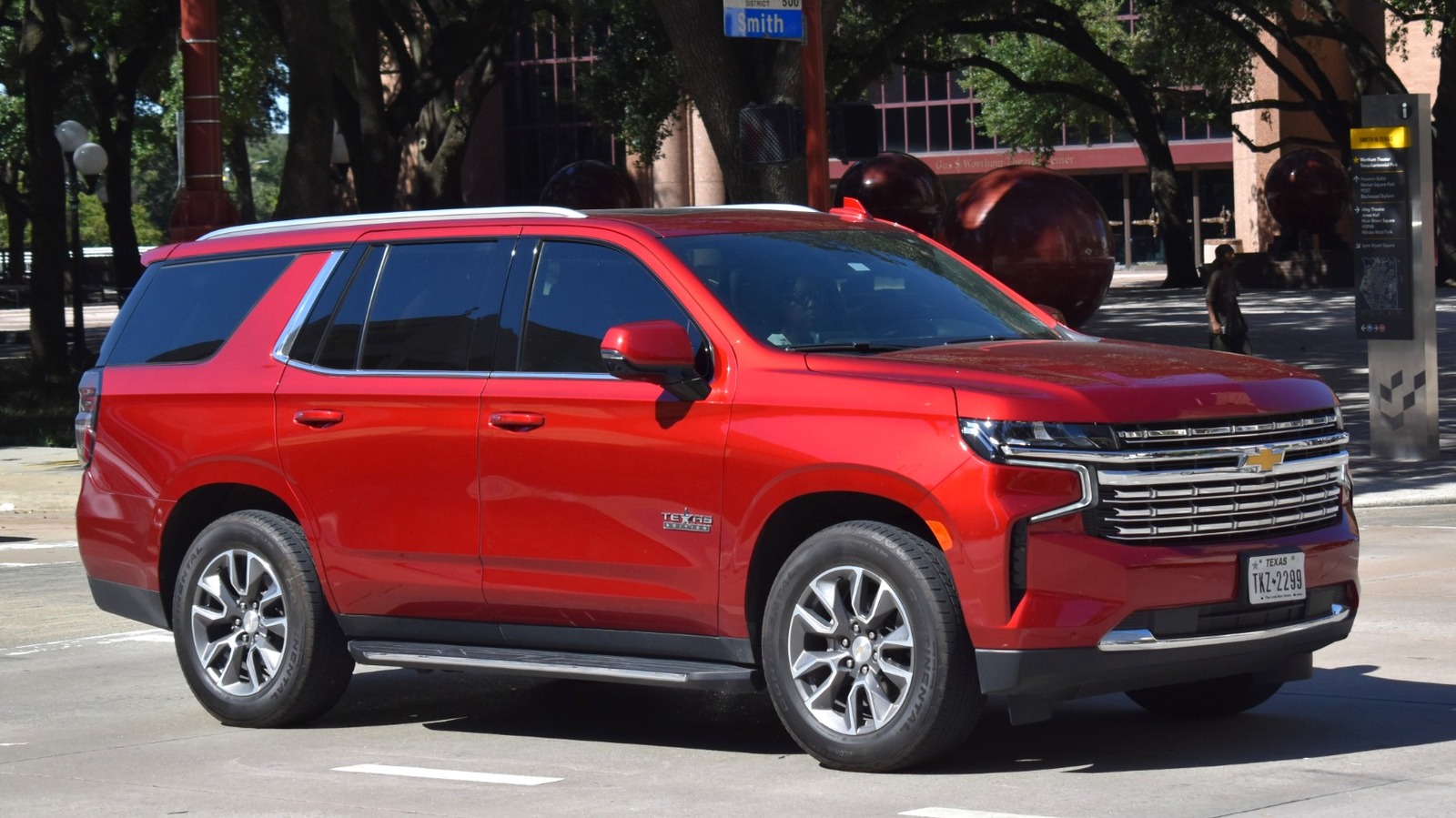
The 2021 Chevrolet Tahoe represented a radical departure from its predecessors. Built on a new platform, the fifth-generation model introduced a significant shift in engineering, most notably the adoption of an independent rear suspension. This design choice addressed one of the most long-standing criticisms of the previous generation: the cramped third-row experience. By moving to this setup, Chevrolet increased cargo capacity behind the third row by an impressive 66%, ballooning from a meager 15.3 cubic feet to a much more functional 25.5 cubic feet.
Under the hood, the 2021 lineup offered a trifecta of powertrains designed to cater to different segments of the market:
- The Workhorse: A 355-horsepower 5.3-liter V8.
- The Performer: A 420-hp 6.2-liter V8, reserved for the high-end High Country trim.
- The Efficient Alternative: A 277-hp 3.0-liter Duramax turbodiesel inline-6.
When these vehicles rolled off the assembly line, the pricing strategy reflected the premium nature of this redesign. The entry-level LS trim started at $50,295, while the top-tier High Country peaked at $69,395. Today, five years later, the market has recalibrated significantly. According to Kelley Blue Book (KBB) fair purchase price estimates, a 2021 LS model now trades hands for roughly $31,000, while a well-equipped Z71 hovers near $39,900.
Chronology: The Rise and Fall of Used SUV Values
To understand why the 2021 Tahoe has depreciated as it has, one must look at the broader macroeconomic timeline of the automotive industry.
2020–2021: The Pandemic Peak
The 2021 Tahoe launched into a market defined by supply chain constraints and an unprecedented demand for personal transportation. As the COVID-19 pandemic crippled new car production, used vehicle values skyrocketed. Auction prices, tracked by the Manheim Used Vehicle Value Index, reached an all-time high of 257.7 by the end of 2021. In this climate, a used Tahoe was often worth nearly as much as a new one.
2022–2023: The Market Correction
As manufacturing stabilized and interest rates began to climb, the artificial inflation of the used car market began to deflate. The Manheim Index plummeted, reaching 196.1 by June 2024—a 23.9% decline from the peak. The Tahoe, like most large SUVs, was hit hard. KBB data indicates that while 2021 models saw a temporary value bump in 2023, they suffered a massive $11,584 correction in 2024 alone.
2024–2025: The Refresh Effect
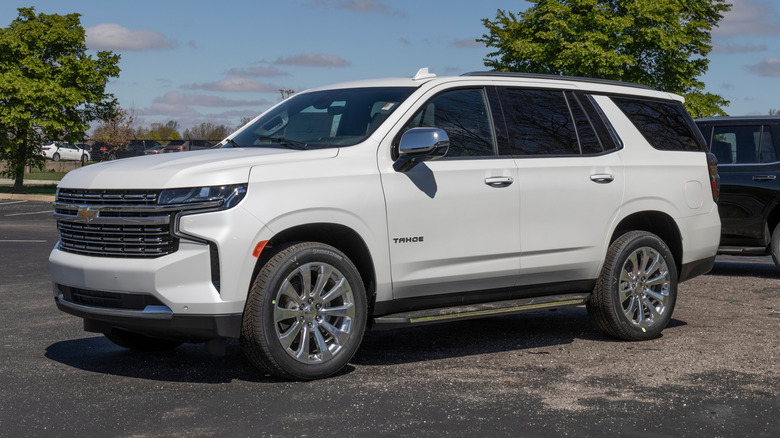
The final blow to the 2021 model’s residual value was the introduction of the 2025 mid-cycle refresh. Revealed in late 2023, the updated Tahoe featured a modernized interior, a larger infotainment screen with Google Built-in, and significant suspension refinements. This rendered the 2021 interior—once considered modern—suddenly "last-gen," further depressing demand for early fifth-gen models.
Supporting Data: Comparative Depreciation and Ownership Costs
When comparing the Tahoe to its peers, the data reveals a nuanced picture. A study covering the period from March 2025 to February 2026 by iSeeCars highlights that the Tahoe experienced a five-year depreciation of 45.3%. While this number may seem high, it is actually superior to the segment average for large SUVs, which stands at 52.1%.
For context, the Tahoe’s corporate cousins, the GMC Yukon and Yukon XL, depreciated by 48.0%, while the Chevrolet Suburban saw a 49.7% decline. While 45.3% is not ideal for the original purchaser, the Tahoe technically holds its value better than most of its direct competitors.
However, the cost of ownership remains a double-edged sword. CarEdge estimates that maintenance and repairs for the Tahoe will total approximately $9,967 over the first decade of ownership—lower than the average SUV—but this is offset by high insurance premiums, which average $2,527 annually. Furthermore, fuel economy remains a primary concern; with an average return of 16 to 24 mpg, the vehicle remains an expensive daily driver in an era of fluctuating fuel prices.
Official Responses and Consumer Sentiment
The perception of the 2021 Tahoe has been marred by early reliability concerns. Consumer Reports notably advised against the 2021 model year due to initial build quality issues and electronic gremlins common in the first year of a new platform.
Consumer feedback platforms echo these sentiments. On Edmunds, the 2021 Tahoe carries a 2.6 out of 5 rating across 84 reviews, with 39% of users awarding it a single star. KBB consumer reviews are slightly more forgiving at 3.4 out of 5, but only half of the respondents recommend the vehicle. These scores serve as a drag on secondary market demand. When prospective buyers research their next purchase, the prevalence of these negative reviews often leads them to either seek out a later model year (2022 or newer) or look toward more reliable competitors in the Toyota or Lexus lineups.
Implications: Is the 2021 Tahoe a Smart Buy?
The question of whether a five-year-old Tahoe is a "smart" purchase depends entirely on the buyer’s priorities.
The Argument for Acquisition
If you are a buyer who prioritizes raw interior volume, towing capacity, and the utility of a full-size frame, the 2021 Tahoe is an exceptional value proposition. At price points hovering between $30,000 and $35,000, you are getting a vehicle that provides a level of capability that would cost significantly more if purchased new. It remains one of the best vehicles in the sub-$30,000 category for families needing three rows of seating and substantial cargo space.
The Argument for Caution
Conversely, the "hidden" costs of the 2021 model cannot be ignored. The 3.5 out of 5 reliability rating from RepairPal places it 21st out of 26 midsize/large SUVs, which suggests that long-term ownership may come with unexpected repair bills. Furthermore, the lack of the 2025-refresh infotainment system and the associated cabin upgrades makes the 2021 model feel increasingly dated.
The Verdict
The 2021 Chevrolet Tahoe is no longer the "hot" commodity it was at the peak of the pandemic. It has transitioned into a utilitarian tool for those who need a large SUV and are willing to trade the latest tech and perfect reliability for space and capability. Prospective buyers should prioritize models with full service records and, if possible, look for the 5.3-liter V8, which has proven to be the most robust powertrain option in the stable. While it may not be the most "sensible" purchase in terms of fuel economy or maintenance, for the family that needs to move seven people and their gear, the 2021 Tahoe represents a steep, but potentially worthwhile, descent into affordability.
