

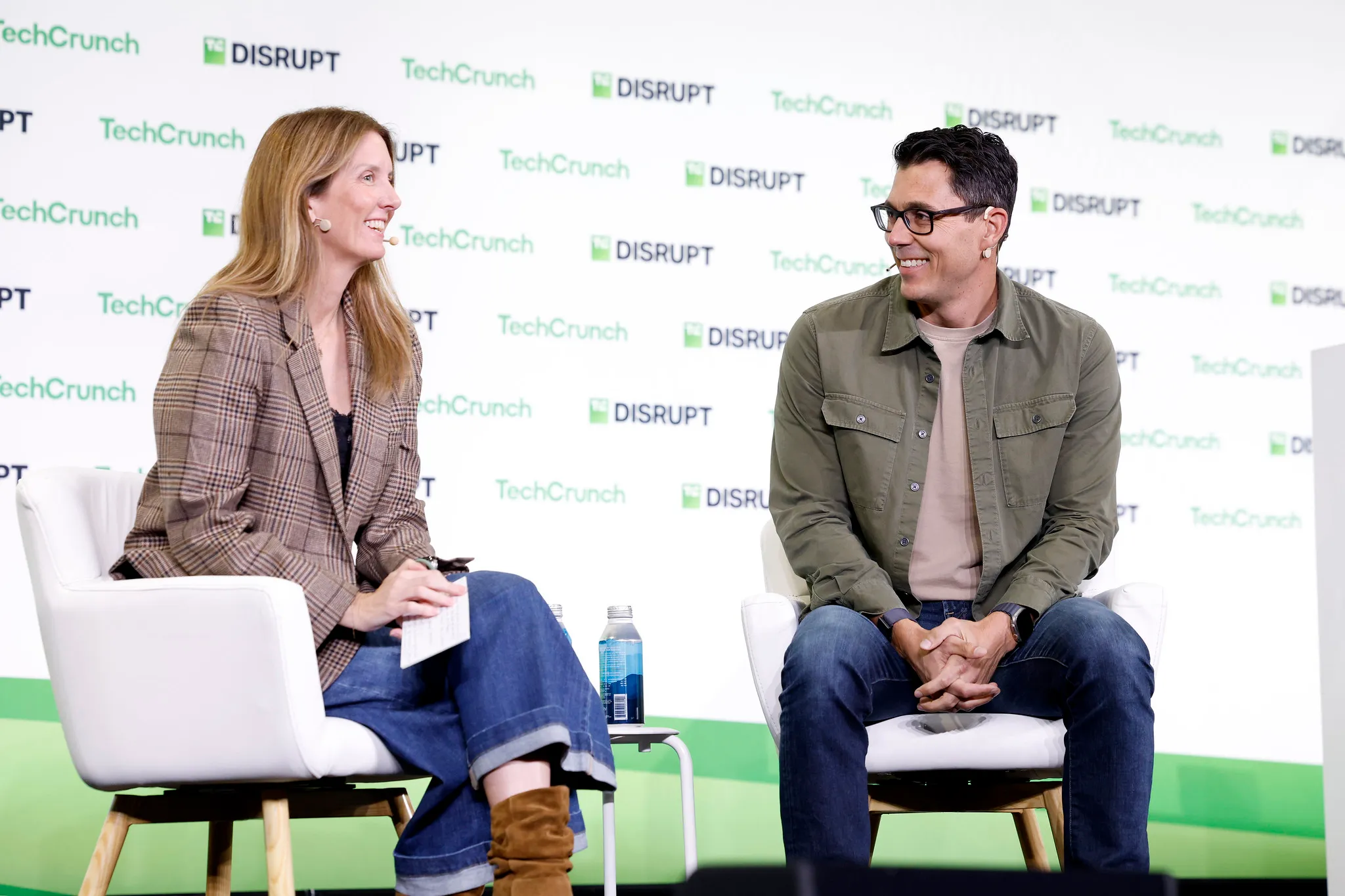
In the rapidly evolving landscape of automotive technology, Rivian is positioning itself not merely as a manufacturer of electric adventure vehicles, but as a software-first company. During this week’s TechCrunch Disrupt, Rivian founder and CEO RJ Scaringe unveiled a strategic pivot that could fundamentally change how drivers interact with their vehicles: the future integration of third-party, frontier AI agents directly into the Rivian operating system.
While the company has already begun deploying its own in-house voice assistant—capable of handling climate controls, seat adjustments, and basic information queries—Scaringe’s vision extends far beyond these utilitarian tasks. He envisions a vehicle that acts as a bridge between the driver’s digital life and their physical journey, potentially running sophisticated AI models like Anthropic’s Claude or Meta’s Muse to provide a more personalized and fluid experience.
The Evolution of the In-Car AI Ecosystem
Rivian’s journey into artificial intelligence has been marked by a deliberate, "build-it-ourselves" philosophy. Unlike many legacy automakers that rely heavily on Apple CarPlay or Android Auto to manage the infotainment experience, Rivian has invested heavily in developing its own proprietary software stack. This vertical integration has granted the company granular control over the vehicle’s hardware, allowing for a seamless marriage between the car’s mechanical functions and its digital interface.
The Current Capability
As of May 2024, Rivian’s native agent has reached a level of maturity that allows for integration with external productivity tools, such as Google Calendar. Drivers can currently engage with their vehicle to:
- Adjust environmental settings: Manage cabin temperature and heated/ventilated seating via natural language.
- Information retrieval: Request news summaries and perform basic web-based queries.
- Contextual management: Sync with scheduling software to manage upcoming appointments or commute requirements.
The "Traffic Light" Architecture
Scaringe explained that the current system operates on a sophisticated "traffic light" routing mechanism. When a user issues a command, the vehicle’s software determines the most efficient way to process it. Simple, safety-adjacent tasks are processed by an onboard, edge-based model to ensure low latency. More complex, abstract, or conversational queries are routed to the cloud, where more robust large language models (LLMs) can handle the request. This hybrid approach ensures that the vehicle remains responsive while maintaining the capability to handle increasingly nuanced user inquiries.
Chronology: From Utility to Intelligence
Rivian’s path toward an AI-driven future has been calculated and methodical. Understanding the timeline of these developments is crucial to grasping the magnitude of the company’s ambition.
- Foundation (2018–2021): Rivian prioritizes the development of its "Vehicle Intelligence Platform," a proprietary software architecture designed to control everything from battery management to infotainment, effectively insulating the brand from the limitations of third-party systems like Android Automotive.
- The Connected Era (2022–2023): The company rolls out over-the-air (OTA) updates that enhance voice command functionality, moving away from rigid, keyword-based controls to more natural language understanding.
- The Agentic Shift (Early 2024): Rivian introduces the capability for the vehicle to interface with external productivity suites like Google Calendar, marking the transition from a "voice-controlled car" to an "AI-assisted companion."
- The Disrupt Announcement (October 2024): CEO RJ Scaringe publicly signals the intent to open the platform to third-party frontier AI models, effectively turning the vehicle into a hardware node for global AI agents.
- The Road Ahead (December 2024 and beyond): The company is slated to provide deeper technical insights during its "AI & Autonomy Day," where it is expected to detail the safety protocols and technical infrastructure required to host these advanced agents.
The "Magical" Integration of Third-Party Agents
The promise of running models like Claude or Muse within a Rivian vehicle is, as Scaringe puts it, "where it becomes magical." The goal is to move from a vehicle that executes commands to one that understands context.
Imagine a scenario where a driver finishes a business call while parked in their Rivian. They might ask the car to turn on the ventilated seats, then seamlessly pivot to a brainstorming session regarding their weekend plans. Because the vehicle would have access to the user’s digital history—should the user grant permission—it could synthesize information from a conversation held on a smartphone the previous day, offering suggestions for a dinner party or organizing a travel itinerary based on previous discussions.
However, Scaringe is quick to emphasize that this integration is a massive engineering undertaking. "There’s a lot of plumbing behind the scenes we have to do," he stated at Disrupt. "It’s not just within Rivian; that’s also a lot of coordination with the labs to make sure they enable that plumbing."
Navigating the Safety Frontier
Perhaps the most critical aspect of Scaringe’s announcement is the firm boundary he draws between "assistant" functions and "vehicle-critical" systems. In an era where AI is being integrated into everything, the question of safety in a moving vehicle is paramount.
The Safety-Critical Firewall
Scaringe was unequivocal: AI agents will not have control over the fundamental physics of the vehicle. "You wouldn’t want an agent to determine, ‘Hey, it’s time to apply the brakes, or time to steer the vehicle,’" he noted. By maintaining a strict "air gap" between the infotainment AI and the vehicle’s drive-by-wire and braking systems, Rivian aims to prevent the catastrophic failure of safety systems due to a software hallucination or a faulty API call.
This approach mirrors the industry’s cautious stance on autonomous driving. While the AI may manage the atmosphere of the cabin, the operation of the vehicle remains governed by deterministic, hardened, and highly tested real-time operating systems that do not rely on generative AI.
Industry Implications and Competitive Dynamics
Rivian is not acting in a vacuum. The race to define the "AI-enabled car" is one of the most competitive sectors in the automotive industry.
Tesla and the Grok Precedent
Tesla has already moved to integrate its own AI ecosystem, allowing drivers to interact with Grok—the chatbot developed by xAI, Elon Musk’s AI startup. By bringing its own internal AI models into the driver’s seat, Tesla is betting on total ecosystem control.
Rivian’s strategy, conversely, appears more "open." By suggesting that it will work with external labs like Anthropic, Rivian is positioning itself as a platform. This allows Rivian to focus on the hardware and the "plumbing" while letting specialized AI companies focus on the intelligence. This distinction is vital; it suggests that a Rivian owner might one day be able to choose which AI "personality" or engine powers their vehicle’s assistant, a level of customization that could become a key differentiator in the luxury and premium EV market.
The Road to December: What to Expect
The automotive industry and tech analysts alike are now looking toward Rivian’s "AI & Autonomy Day" in December. This event is expected to serve as the blueprint for the company’s long-term strategy. Key areas to watch include:
- Technical Integration Standards: How will Rivian expose vehicle data to third-party models without compromising user privacy or vehicle security?
- Privacy Frameworks: As vehicles become more aware of a user’s calendar, emails, and conversations, how will Rivian ensure that this data is processed ethically and kept private from both the third-party AI providers and external bad actors?
- Latency and Edge Computing: Will Rivian announce new hardware (such as upgraded onboard computers) to facilitate the local running of these advanced models?
Conclusion
Rivian’s vision represents a fundamental shift in the definition of a car. For decades, a vehicle’s value was determined by its engine, its suspension, and its cabin materials. In the age of the AI-integrated vehicle, the value is increasingly determined by the intelligence of the software interface.
By attempting to bridge the gap between high-level generative AI and the physical act of driving, RJ Scaringe and his team are tackling one of the most difficult integration challenges in modern technology. If they succeed, the Rivian of the future will not just be a vehicle that takes you from point A to point B—it will be a companion that knows your schedule, understands your preferences, and helps you manage your digital life while you navigate the physical world.
The path is fraught with technical, ethical, and safety hurdles, but for an automaker that has consistently defied industry conventions, the integration of frontier AI may well be the next great frontier for the electric vehicle.
