

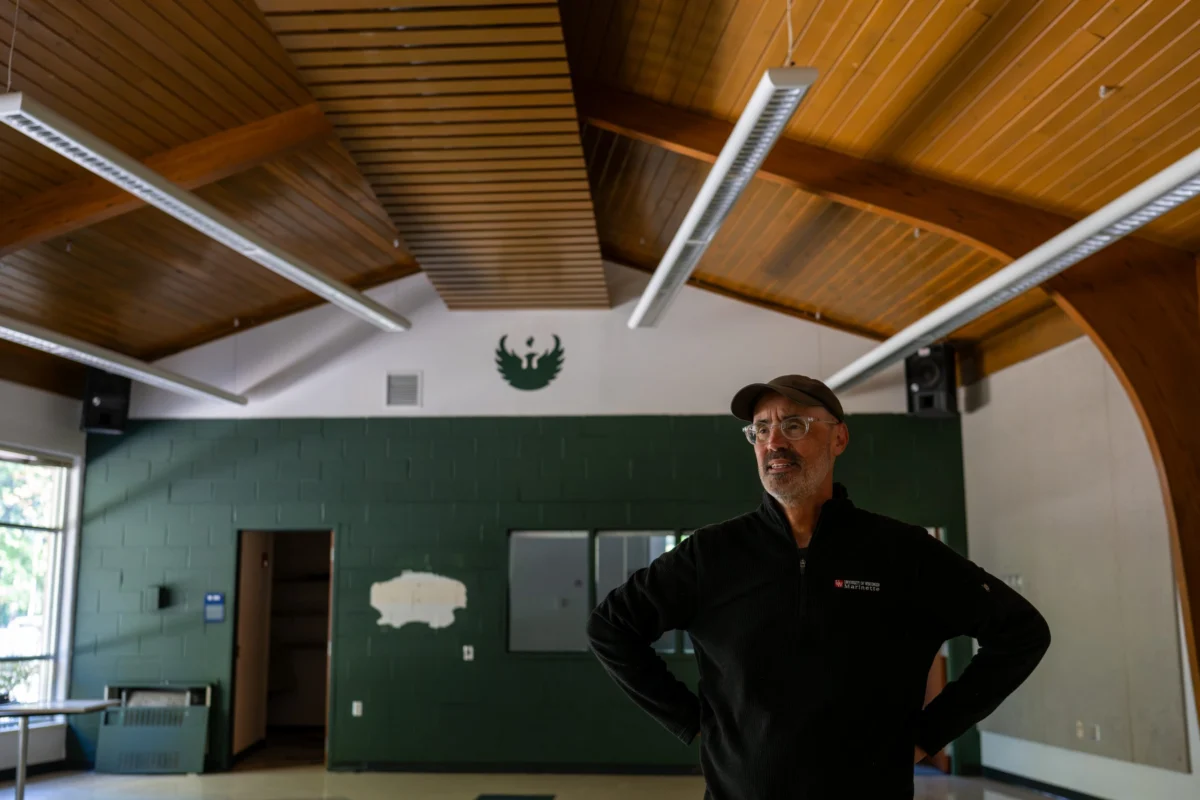
Last May, as the academic calendar neared its conclusion, the atmosphere at the University of Wisconsin-Platteville Baraboo Sauk County was not one of celebration, but of mourning. Faculty, staff, and students were delivered the news that had been looming like a storm front for months: the campus was closing.
For nearly 60 years, the school—affectionately known as "Boo U"—had been a bedrock of the local community. As the doors prepared to lock for the final time, the sense of loss was palpable. Students scrambled to find transfer pathways to other institutions, while employees navigated the uncertainty of a fractured job market within the UW system. By the end of the month, a vital pillar of south-central Wisconsin’s educational landscape had ceased to exist.
This was not an isolated tragedy. It was the latest casualty in a systematic contraction that has seen the University of Wisconsin shutter eight of its 13 two-year branch campuses in just three years. As these accessible, liberal-arts-focused institutions fade into history, educators and policymakers are left grappling with a sobering question: What happens to a state’s rural heartland when the "on-ramp" to higher education is removed?
A Chronology of Contraction
The decline of the UW branch campus system did not happen overnight; it was a slow-motion unraveling triggered by a series of political and economic decisions.
In 2017, the University of Wisconsin Board of Regents approved a sweeping merger, integrating the two-year colleges as regional branches of the state’s larger four-year institutions. Proponents argued the move would create operational efficiencies. In reality, it sparked a competitive scramble for students that pitted the under-resourced two-year schools against their larger, better-funded counterparts.
The pressure was exacerbated by years of austerity. Budget cuts, initiated under former Governor Scott Walker in 2015, combined with persistent tuition freezes, left the UW system among the most poorly funded in the nation. As revenue dried up, the branch campuses—which relied heavily on enrollment numbers to stay afloat—became unsustainable.

By the time the closures began, the numbers were stark. "Boo U," which once served more than 500 students a decade ago, had dwindled to just 100 in its final year. Similarly, the UW-Marinette campus ended in-person instruction in 2024, limping along with remote classes for one final year before total cessation. Dan Kallgren, a history professor who spent his career at Marinette, notes that by the time the merger took hold, "the writing was really on the wall."
The Geography of Opportunity: "Education Deserts"
The closure of these campuses is fueling what experts call "desertification" in higher education. Research by scholar Nicholas Hillman, a leading voice on the geography of opportunity, underscores a fundamental reality: physical proximity dictates participation.
Most students, particularly those from low-income or rural backgrounds, enroll at colleges within 20 miles of their homes. When that local option vanishes, the barrier to entry becomes insurmountable. As the distance between a student and a campus increases, the likelihood of enrollment drops precipitously.
"They’ve hollowed out the two-year schools and the liberal arts transfer mission, and now they’re sealing the coffin," says Hillman. "The question is, if you shut one door, have you opened another?"
The data suggests the answer is a resounding "no." Reports on rural college access indicate that enrollment of rural students in the UW system has dropped at a rate exceeding the general decline in college attendance. The shuttering of branch campuses is not merely a response to changing demographics; it is an active driver of the widening gap in educational attainment between urban and rural Wisconsin.
Official Responses and Justifications
University of Wisconsin officials have consistently pointed to the math as their primary motivation. With system-wide enrollment dropping by more than 10 percent since 2010, administrators argue that maintaining physical infrastructure for a handful of students is fiscally irresponsible. They maintain that students still have options, pointing to the remaining four-year schools and the state’s network of 16 technical colleges.

However, critics argue that this defense misses the forest for the trees. Technical colleges, while vital, serve a different mission than the liberal arts transfer colleges. For many students—like Alex Stevens, who grew up in the Upper Peninsula and relied on UW-Marinette to bridge the gap between his rural upbringing and his eventual history degree—the two-year campus was a place of intellectual exploration.
"I was rural, poor, and smart," Stevens recalls. "And UWM gave me a remarkable opportunity."
The shift toward a purely vocational model is further evidenced by a recent internal push to prioritize career-specific programs. In 2023, then-UW president Jay Rothman advocated for a move away from the humanities, particularly at institutions serving low-income students. Student journalists at UW-Madison subsequently found that of 82 academic programs cut across the system, the vast majority were in the humanities and social sciences.
The Human Cost and the "Brain Drain"
The implications of these closures extend far beyond the campus grounds. Wisconsin currently suffers from the second-highest rate of "brain drain" in the country, as young, educated workers leave the state for better opportunities elsewhere. By restricting access to higher education at the "front end," the state is effectively accelerating this trend.
Douglas Haynes, a professor of English at UW-Oshkosh and author of Teaching Toward Slow Hope, emphasizes that a college education is not just about a return on investment (ROI). "There is an increasingly narrow focus on vocational education," notes researcher Alyssa Ratledge. "But students also go to college to try things out and discover who they are."
When a student is deprived of the opportunity to discover their passion in a supportive, local environment, the entire community suffers. The "Wisconsin Idea"—the Progressive-era vision that education should extend beyond the classroom to improve the lives of all citizens—is increasingly being replaced by a transactional view of schooling.

A Diminishing Legacy
In Baraboo, the community is currently debating the fate of the empty buildings that once housed "Boo U." In Marinette, the theater arts program survives only through a precarious partnership with UW-Green Bay and private donations. Lauryn Albaugh, who oversees the theater program, remains one of the few people left on the site, witnessing a space that was once vibrant now occupied by little more than a weekly maintenance inspection.
The disappearance of these schools is not merely a logistical change; it is a profound cultural shift. As the physical infrastructure of rural higher education is dismantled, the state is effectively telling its rural youth that the path to a broader future is something they must travel alone, often far from the support systems that once nurtured them.
The closure of the UW branch campuses stands as a cautionary tale for the rest of the nation. As rural communities across the United States face similar pressures, the Wisconsin experience serves as a reminder that when we measure the value of a college solely by its bottom line, we often lose the very institutions that make democracy, social mobility, and local development possible.
The "Boo U" memorial, held by alumni and faculty to mark the school’s end, served as a final testament to what has been lost. As Karen DeSanto, a Wisconsin state legislator, remarked, "The students talked about how this place shaped and changed lives in this community. We don’t have that anymore."
For the rural students of tomorrow, the door to that same transformation is being quietly, but firmly, closed.
This article is part of a collaborative investigation into rural education, produced by the Institute for Nonprofit News and supported by the Ascendium Education Group.
