

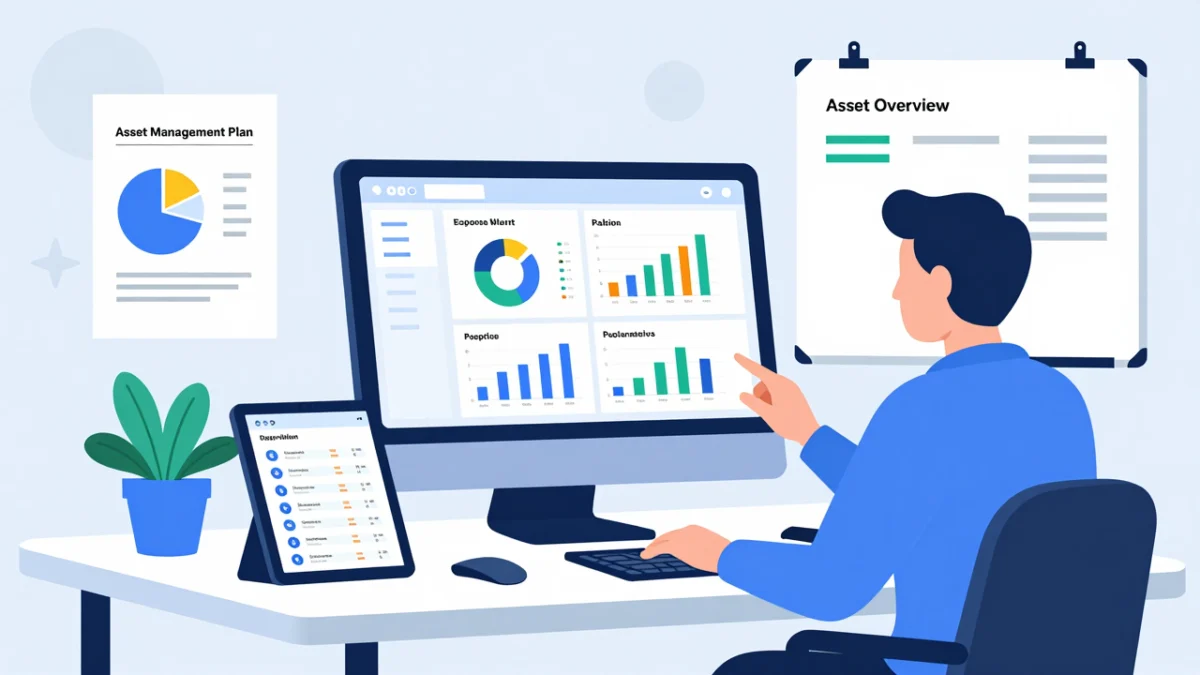
In the modern business landscape, an organization’s tangible assets—its machinery, vehicle fleets, IT hardware, and infrastructure—are the silent engines of productivity. Yet, for many small to mid-sized enterprises (SMEs), these assets remain a source of hidden costs and operational friction. Transitioning from antiquated, manual record-keeping to robust physical asset management software is no longer a luxury; it is a strategic necessity for those aiming to scale.
By automating the lifecycle of physical resources, businesses can move beyond reactive "firefighting" and into a realm of predictive, data-driven optimization. This article explores how digital oversight transforms the bottom line, enhances regulatory compliance, and secures long-term asset viability.

The Core Concept: What Is Physical Asset Management Software?
At its fundamental level, physical asset management software acts as a "single source of truth" for an organization’s tangible holdings. It is a specialized platform designed to track, manage, and optimize the lifecycle of fixed assets from the moment of procurement until final disposal.
Unlike simple spreadsheets, which are prone to human error and data silos, these systems leverage automation to manage complex workflows. Key functionalities typically include:

- Preventive Maintenance Scheduling: Automatically flagging when a piece of equipment requires service based on usage or time.
- Real-Time Tracking: Using GPS, RFID, or barcode technology to pinpoint the exact location and status of an asset across multiple facilities.
- Audit Readiness: Maintaining an immutable, digital trail of maintenance history, depreciation, and ownership that is essential for financial reporting and regulatory compliance.
By integrating these features, organizations can reduce the "phantom inventory" phenomenon—where assets are lost, stolen, or forgotten—and ensure that every dollar invested in capital equipment yields a return.
Chronology: The Evolution of Asset Oversight
To understand why this software is essential, one must look at the evolution of asset management.

The Era of Manual Ledgers (Pre-2000s)
Historically, businesses tracked assets using paper logs and manual entry. This was labor-intensive, rife with calculation errors, and offered no real-time visibility. Audits were stressful, time-consuming events that often revealed significant discrepancies.
The Spreadsheet Revolution (2000s–2015)
The introduction of spreadsheet software provided a digital alternative. While an improvement over paper, spreadsheets still required manual updates. They lacked integration with financial systems and failed to provide automated alerts, leading to delayed maintenance and reactive repairs.

The Intelligent Automation Era (2016–Present)
Today’s physical asset management solutions represent a paradigm shift. With the integration of the Internet of Things (IoT), cloud computing, and mobile accessibility, managers can monitor asset health from anywhere in the world. Modern platforms integrate directly with ERP (Enterprise Resource Planning) and accounting software, ensuring that asset values, depreciation schedules, and maintenance costs are always in sync.
Supporting Data: The Case for Investment
The financial argument for upgrading to dedicated asset management software is supported by compelling industry metrics:

- Cost Reduction: Organizations that implement automated tracking can see a reduction in asset-related expenses by up to 20%. Much of this is attributed to the elimination of redundant purchases and the reduction of lost items.
- Asset Utilization: According to recent industry benchmarks, effective tracking can lead to a 30% improvement in overall asset utilization. By identifying underused equipment, companies can redeploy resources rather than purchasing new ones.
- Extended Lifespan: Proactive maintenance, powered by automated triggers, extends the useful life of machinery by 15–20%. By performing service before failure, companies avoid the "catastrophic repair" costs that often plague reactive maintenance models.
Official Perspectives: Industry Standards and Compliance
Regulators and financial auditors increasingly demand higher levels of transparency. From IRS guidelines on depreciation to industry-specific safety standards (such as OSHA in the US), maintaining accurate records is a legal requirement.
"Manual tracking is the primary point of failure for most audits," notes one industry analyst. "When an auditor asks for a five-year maintenance history of a critical machine, a spreadsheet simply doesn’t hold the weight of a digital system that logs every action in real-time."

By using software that provides digital documentation, businesses insulate themselves against legal penalties. The ability to produce an audit-ready report with a single click not only saves time but also demonstrates institutional accountability, which is often a prerequisite for securing business insurance or bank loans.
Implications for Modern Operations
The shift to digital asset management has profound implications for how teams interact with their work environment.

Breaking Down Silos
In a traditional setup, the maintenance team, the accounting department, and the operations team often use different data sources. Asset management software acts as a bridge, ensuring that when the maintenance team logs a repair, the accounting team automatically sees the impact on the asset’s depreciation and residual value.
Empowering the Field Workforce
With mobile-first applications, field technicians no longer need to carry paper manuals or return to the office to report a repair. They can scan a barcode on a machine, view its service history, input current status updates, and trigger an automated request for parts—all from the factory floor or a remote job site.

Choosing the Right Solution: Key Features to Seek
Not all software is created equal. When evaluating platforms, decision-makers should prioritize the following:
- Scalability: Can the system grow as your fleet or inventory expands?
- Integration Capabilities: Does it play well with your existing accounting (e.g., QuickBooks, Xero) and ERP systems?
- User Experience (UX): If the interface is too complex, employee adoption will be low. Look for intuitive, mobile-friendly designs.
- Reporting and Analytics: Can the system generate customizable dashboards that track Key Performance Indicators (KPIs) like Mean Time Between Failures (MTBF)?
- Security: With sensitive data at stake, ensure the vendor provides robust, cloud-based security with regular backups.
Challenges in Transitioning
It is important to acknowledge that the implementation process is not without hurdles. The primary challenge is Data Cleansing. Migrating years of fragmented data from spreadsheets into a new system requires meticulous effort.

Furthermore, Cultural Resistance is a frequent barrier. Employees accustomed to old methods may resist the change to a new digital system. To mitigate this, organizations should treat the rollout as a change-management project rather than a simple software installation, providing adequate training and demonstrating the "what’s in it for me" (WIIFM) factor to the end-users.
Future Outlook: The Role of AI and Predictive Maintenance
As we look toward 2030, the integration of Artificial Intelligence (AI) into physical asset management will further revolutionize the sector. We are moving from "preventive" maintenance (based on schedules) to "predictive" maintenance (based on data).

AI algorithms will analyze vibration patterns, heat signatures, and usage rates to predict when a component is about to fail, weeks before it actually does. This level of foresight will turn maintenance from a cost center into a strategic competitive advantage, virtually eliminating unplanned downtime.
Conclusion: A Strategic Foundation
The transition to professional physical asset management software is a hallmark of a maturing organization. By centralizing data, automating compliance, and providing real-time visibility, businesses can reclaim time, reduce unnecessary capital expenditure, and focus on their core mission.

Whether you are managing a small fleet of vehicles or a complex manufacturing facility, the path forward is clear: the most efficient businesses are those that treat their physical assets with the same level of digital rigor as their financial and customer data. Start by assessing your current gaps, engaging your stakeholders, and selecting a tool that doesn’t just record the past, but helps you plan for a more productive future.
