

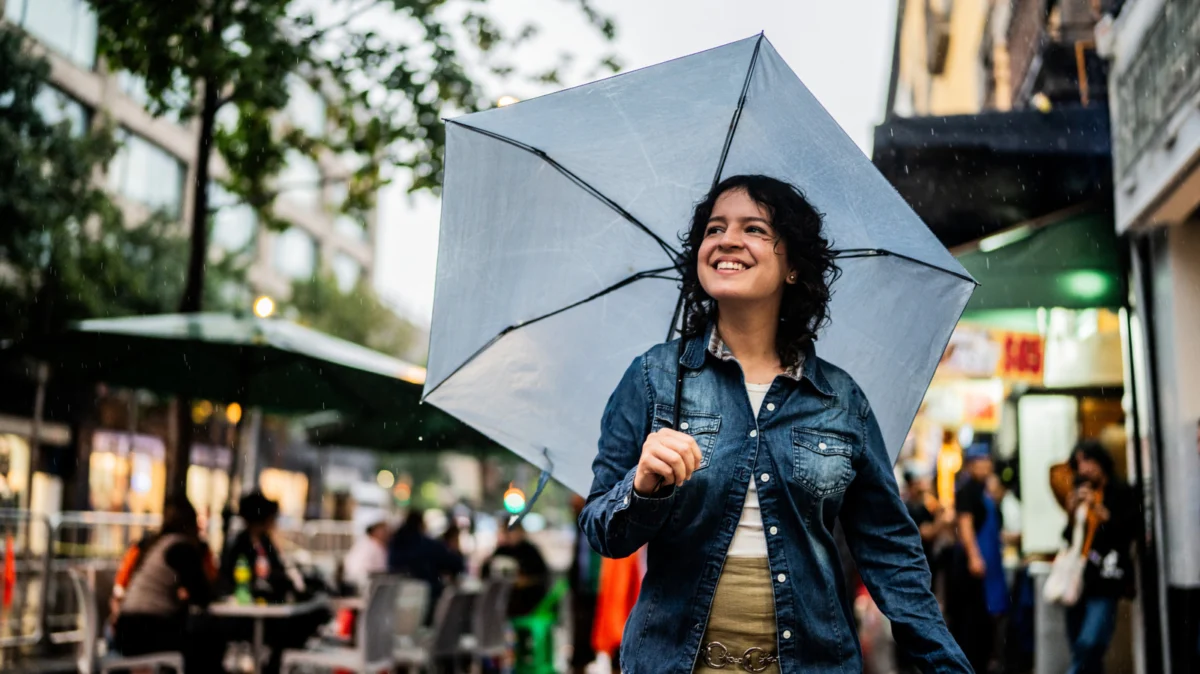
Rainy days often bring a familiar frustration: the challenge of managing dripping, saturated umbrellas. Whether you are stepping into your vehicle after a downpour or walking into your home, the residual water from a wet umbrella is more than just a nuisance—it is a potential source of interior damage. Puddles on hardwood floors can lead to warping and rot, while damp car interiors foster the growth of mildew and unpleasant odors.
Fortunately, a creative and highly practical solution has emerged from the intersection of environmental consciousness and home organization. By repurposing common household plastic waste—specifically empty plastic bottles—homeowners can craft a custom, drip-proof umbrella storage system that is as effective as it is inexpensive.
The Core Concept: Engineering a Drip-Capture System
At its most fundamental level, this DIY project leverages the waterproof properties of PET (polyethylene terephthalate) plastic. By modifying a standard beverage bottle, one creates a protective sleeve that catches runoff water before it touches your upholstery or flooring.
The functionality relies on the bottle’s natural shape. When the bottom of a bottle is removed, the remaining cylinder acts as a funnel. By storing an umbrella upside down—with the handle facing up and the canopy tucked into the bottle neck—gravity directs all excess water into the bottom of the vessel. The result is a contained, portable, and easily drainable system that prevents the "spread" of water throughout your living space.
A Chronology of the DIY Umbrella Holder
The evolution of the plastic bottle umbrella holder tracks closely with the broader "Upcycling Movement" of the 2010s and 2020s.
- Early Adoption (2015–2018): As awareness regarding plastic waste surged, social media platforms began highlighting "life hacks." The umbrella-in-a-bottle concept initially appeared in niche crafting forums as a way to handle wet gear during commutes.
- Refinement and Optimization (2019–2021): Early iterations were crude, often consisting of just a cut bottle. Designers began experimenting with tethering systems, using paracord, twine, and industrial-strength adhesive to ensure the bottle could hang securely from car headrests or coat hooks.
- Mainstream Integration (2022–Present): With the rise of platforms like YouTube and Pinterest, the project moved from a utilitarian fix to an aesthetic choice. Creators began integrating decorative elements—faux stone finishes, macramé wrapping, and paint—transforming waste into home decor.
Supporting Data: Why Moisture Management Matters
To understand the necessity of such a device, one must look at the physical implications of water damage in confined spaces.
1. The Threat of Mildew
According to the Environmental Protection Agency (EPA), mold and mildew thrive in environments where moisture is trapped. An umbrella left in a car’s footwell provides the perfect dark, damp, and stagnant environment for spore germination. A simple plastic sleeve acts as a moisture barrier, allowing the user to transport the water away from the car’s fabric.
2. Flooring Integrity
Hardwood floors are particularly susceptible to standing water. Even a small amount of moisture can penetrate the finish, leading to "cupping" or darkening of the wood fibers. An umbrella holder ensures that the drip point is localized to a plastic vessel rather than the floorboards.
3. Waste Diversion
On a macro level, the global production of plastic bottles remains a significant ecological challenge. While recycling is the ideal, "upcycling"—the practice of extending the life of a material by repurposing it—is considered the most effective way to prevent plastic from entering landfills prematurely. By using a bottle to store an umbrella, you are delaying its disposal for months or even years.
Official Guidelines for Construction
Creating your own umbrella holder requires minimal equipment and follows a straightforward, repeatable process.
Materials Required
- Plastic Bottle: A 2-liter soda bottle or a large juice container works best for full-sized umbrellas.
- Cutting Tool: A utility knife, heavy-duty scissors, or a specialized plastic cutter.
- Fasteners: High-strength twine, nylon rope, or decorative cord.
- Adhesive (Optional): A hot glue gun for decorative finishes.
- Cleaning Supplies: Dish soap and hot water to remove labels and residue.
Step-by-Step Fabrication
- Preparation: Thoroughly clean the interior and exterior of the bottle. Ensure all adhesive residue from the label is removed to prevent it from becoming tacky over time.
- The Cut: Carefully slice off the base of the bottle. The height of the cut should be roughly 70% of your umbrella’s length when collapsed.
- Hole Placement: Using a drill or a heated metal tool, create two small, equidistant holes near the cut edge. These will house your suspension cord.
- Tethering: Thread your chosen cord through the holes, securing them with robust knots. Create a loop at the top for easy hanging.
- Refinement: Sand the edges of the cut plastic to ensure they are smooth, preventing accidental scratches to your umbrella fabric or your hands.
Aesthetic Implications: From Waste to Decor
One of the primary critiques of DIY upcycling is that the final product often looks "unfinished" or "cluttered." However, modern techniques allow for a highly polished appearance.
- Faux Stone/Texture: By applying a mixture of paint and baking soda or using textured spray paints, a clear plastic bottle can be transformed into a vessel that mimics the look of heavy ceramic or stone.
- Textile Wrapping: Wrapping the exterior in jute, sisal, or decorative fabric can hide the plastic entirely. This adds a tactile, natural element that blends seamlessly with entryways or mudrooms.
- Decoupage: Using patterned paper or napkins to decoupage the exterior of the bottle can turn a functional object into a piece of art that matches the interior design of a home.
Maintenance and Best Practices
While this device solves the problem of water containment, it is not a "set-and-forget" solution. Proper maintenance is required to ensure the longevity of both the umbrella and the storage unit.
The "Drain and Dry" Rule
The most critical error users make is leaving the umbrella in the bottle indefinitely. Plastic is non-porous; it does not "breathe." If an umbrella is left inside for more than a few hours, the lack of airflow will encourage mold growth on the fabric of the umbrella itself.
Best practice: Use the bottle as a transit vessel. Upon reaching your destination (home or office), remove the umbrella, dump the collected water from the bottle, and place the umbrella in an open, ventilated area to dry completely. Once dry, it can be returned to the bottle for storage.
Safety Considerations
- Edge Safety: Always ensure that the cut plastic edge is either sanded down or covered with a protective layer (like decorative tape or glue) to prevent the plastic from fraying or cutting your skin.
- Structural Integrity: When using heavy-duty umbrellas, ensure the cord used for hanging is capable of supporting the weight when the bottle is filled with water. A snapped cord could cause the bottle to fall, spilling water exactly where you were trying to prevent it.
Conclusion: A Smarter Way to Live
The beauty of the plastic bottle umbrella holder lies in its simplicity. It does not require complex machinery or expensive hardware. It is a testament to the idea that small, conscious choices in home organization can yield significant benefits for both our living spaces and the environment. By rethinking how we treat our "trash," we can find innovative, functional tools that address the minor, everyday inconveniences that define our modern lives. Whether in the back of an SUV or hanging by a foyer door, this simple DIY project proves that being prepared for the weather doesn’t have to be complicated—or expensive.
