

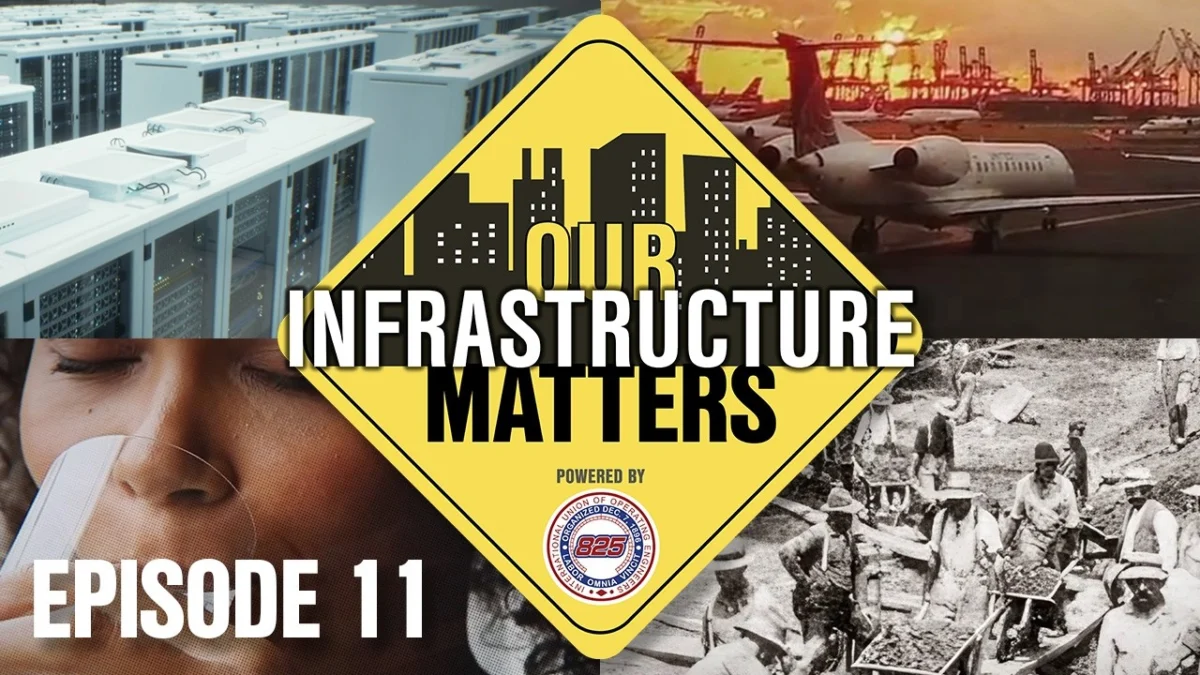
New Jersey, a state synonymous with innovation and a rich technological history, finds itself at the forefront of a silent, yet monumental, transformation. As artificial intelligence (AI) rapidly reshapes industries and permeates our daily lives, the often-overlooked infrastructure that powers this digital revolution – data centers – is emerging as a critical economic and societal linchpin. A recent exploration into "Our Infrastructure Matters – Episode 11" delves deep into the multifaceted role of these facilities, highlighting their indispensable contribution to AI, cloud computing, and the broader technological landscape, while also scrutinizing the significant opportunities and formidable challenges they pose for New Jersey’s economy, infrastructure, and communities.
The Pillars of the Digital World: Understanding Data Centers
At their core, data centers are more than just buildings filled with servers. They are sophisticated, highly secure environments designed to house and manage vast amounts of digital information. These facilities are the invisible backbone of our connected world, enabling everything from streaming services and online banking to the complex computations that drive artificial intelligence and cloud computing. Without them, the seamless flow of data that we have come to expect would simply cease to exist.
The exponential growth of data, fueled by the proliferation of smart devices, the internet of things (IoT), and the ever-increasing demand for sophisticated digital services, has placed an unprecedented strain on existing infrastructure. AI, in particular, is a voracious consumer of computational power and data storage. Training complex AI models requires immense processing capabilities, often distributed across thousands of specialized processors within data centers. The sheer volume of data needed for machine learning algorithms to learn and improve necessitates massive storage solutions, further underscoring the data center’s central role.
Cloud computing, another transformative technology, is intrinsically linked to data centers. Major cloud providers operate vast networks of these facilities, offering on-demand access to computing resources, storage, and applications over the internet. This model allows businesses and individuals to scale their digital operations without the need for substantial upfront investments in hardware, fostering agility and innovation.
New Jersey’s Strategic Advantage: A Hub for Data Infrastructure
New Jersey, with its strategic location, robust transportation networks, and a highly skilled workforce, is uniquely positioned to capitalize on the burgeoning data center industry. The state’s proximity to major metropolitan areas like New York City and Philadelphia, coupled with its extensive fiber optic connectivity, makes it an attractive destination for companies seeking to establish or expand their data center footprints.
The demand for data center space has surged globally, and New Jersey is experiencing a significant influx of investment in this sector. This growth is not merely about constructing more buildings; it represents a significant economic engine, creating jobs, stimulating local economies, and attracting further technological development. The construction of data centers requires specialized labor, from engineers and electricians to IT professionals and security personnel. Furthermore, the ongoing operation and maintenance of these facilities generate a consistent demand for skilled workers, contributing to long-term employment opportunities.
The "Our Infrastructure Matters" episode highlights how these facilities are becoming increasingly vital for New Jersey’s economic future. As the state diversifies its economy beyond traditional sectors, the data center industry offers a pathway to high-tech growth and job creation. The ability to support cutting-edge technologies like AI and advanced analytics can attract innovative companies and foster a thriving ecosystem of tech-related businesses.
The AI Imperative: Data Centers as the Foundation for Intelligence
The transformative power of artificial intelligence is no longer a futuristic concept; it is a present reality. From personalized recommendations and autonomous vehicles to medical diagnostics and scientific research, AI is revolutionizing how we live and work. However, the engine driving this intelligence is, undeniably, the data center.
AI algorithms learn from data. The more data they are exposed to, and the more computational power available for processing that data, the more sophisticated and accurate they become. Data centers provide the secure, high-performance environments necessary to store, process, and analyze these massive datasets. They house the powerful servers, specialized graphics processing units (GPUs), and high-speed networking equipment that enable the complex calculations required for AI training and deployment.
The episode underscores that the burgeoning AI revolution is inextricably linked to the expansion and advancement of data center infrastructure. As AI applications become more pervasive, the demand for data processing and storage will only intensify. This creates a symbiotic relationship: AI advancements drive the need for more powerful and efficient data centers, while robust data center infrastructure enables the continued development and deployment of AI technologies.
For New Jersey, this presents a significant opportunity to become a leader in the AI ecosystem. By fostering a strong data center presence, the state can attract companies developing AI solutions, research institutions pushing the boundaries of AI, and businesses leveraging AI to gain a competitive edge. This, in turn, can lead to the creation of high-value jobs and spur further innovation within the state.
Navigating the Challenges: Sustainability and Community Impact
While the economic benefits of data centers are substantial, their rapid expansion also brings a unique set of challenges that require careful consideration and proactive management. The episode implicitly and explicitly touches upon these critical issues, particularly concerning sustainability and the impact on local communities.
Energy Consumption: Data centers are notoriously energy-intensive. The constant operation of servers, cooling systems, and other essential equipment consumes vast amounts of electricity. As the demand for data processing grows, so does the potential for increased energy consumption, raising concerns about environmental sustainability and the strain on energy grids. The industry is actively exploring more energy-efficient technologies, renewable energy sources, and advanced cooling techniques to mitigate this impact. However, the sheer scale of operations means that energy remains a significant consideration.
Water Usage: Many data center cooling systems rely on water. In regions facing water scarcity, this can become a point of contention. The industry is exploring alternative cooling methods, such as air-cooling and liquid immersion cooling, to reduce reliance on water resources.
Environmental Footprint: Beyond energy and water, the construction and operation of data centers have an environmental footprint. This includes land use, waste generation, and the potential for noise pollution. Responsible site selection, sustainable building practices, and efficient waste management are crucial for minimizing these impacts.
Community Integration: The development of large data centers can have a significant impact on local communities. This includes considerations around land use, visual aesthetics, and the potential for increased traffic and utility demands. Open communication, community engagement, and thoughtful planning are essential to ensure that data center development is integrated harmoniously with existing communities.
The "Our Infrastructure Matters" episode likely emphasizes the need for a balanced approach, where economic development is pursued in conjunction with environmental stewardship and community well-being. New Jersey, as it continues to attract data center investment, must establish clear guidelines and incentivize best practices to ensure that this growth is sustainable and beneficial for all stakeholders.
The Chronology of Data Center Evolution and New Jersey’s Role
The concept of data storage and processing has evolved significantly over time, laying the groundwork for the modern data center.
- Early Computing (Mid-20th Century): The advent of mainframe computers marked the genesis of large-scale data processing. These early systems required dedicated rooms with controlled environments, precursors to today’s data centers, though far less sophisticated and with a fraction of the capacity.
- The Rise of Personal Computing and the Internet (Late 20th Century): The proliferation of personal computers and the dawn of the internet dramatically increased the volume of digital data being generated and transmitted. This led to the development of more specialized server rooms and the early stages of distributed computing.
- The Dot-Com Boom and Cloud Computing (Late 1990s – Early 2000s): The explosion of internet-based businesses created an unprecedented demand for reliable and scalable computing infrastructure. This period saw the emergence of dedicated colocation facilities and the foundational concepts of cloud computing, where companies would rent space and resources in specialized data centers. New Jersey, with its proximity to financial centers and its robust telecommunications infrastructure, began to see significant investment in this area.
- The Mobile Revolution and Big Data (2000s – 2010s): The widespread adoption of smartphones and mobile devices led to an explosion in data generation from social media, apps, and mobile internet usage. This era also saw the rise of "Big Data" analytics, requiring even more powerful data processing and storage capabilities. Data centers evolved to become more modular and scalable.
- The AI and IoT Era (2010s – Present): The current era is defined by the rapid advancement of artificial intelligence and the exponential growth of the Internet of Things. AI’s insatiable appetite for data and processing power has driven a new wave of data center innovation, with a focus on high-performance computing, specialized hardware like GPUs, and advanced networking. New Jersey has strategically positioned itself to attract these advanced facilities, recognizing the state’s potential as a hub for AI development and deployment. The "Our Infrastructure Matters" episode reflects this contemporary focus, examining how data centers are actively supporting and enabling the AI revolution.
Supporting Data and Economic Projections
The economic impact of the data center industry on New Jersey is substantial and projected to grow. While specific, up-to-the-minute figures for New Jersey’s data center market can fluctuate, general industry trends provide a strong indication of the scale of investment and job creation.
- Investment: The data center sector is a capital-intensive industry. Global investments in data centers have been in the tens of billions of dollars annually, and New Jersey consistently attracts a significant portion of this. Announcements of new data center builds and expansions by major players often involve investments of hundreds of millions, and in some cases, billions of dollars.
- Job Creation: Each data center project creates a dual job impact: during the construction phase, which can employ hundreds, and during the operational phase, which requires a steady workforce of IT professionals, engineers, security personnel, and facility managers. These are often high-paying, skilled positions.
- Tax Revenue: Data centers contribute significantly to local and state tax revenues through property taxes and other levies. This revenue can be reinvested in public services, infrastructure improvements, and education.
- Ancillary Industries: The growth of data centers also stimulates growth in ancillary industries, such as telecommunications providers, cybersecurity firms, and specialized equipment manufacturers.
The "Our Infrastructure Matters" episode likely draws on these broader trends to illustrate the tangible economic benefits New Jersey stands to gain. The state’s proactive approach to attracting and supporting this industry is crucial for harnessing its full potential.
Official Responses and Strategic Initiatives
Recognizing the immense economic potential and the critical infrastructure role of data centers, New Jersey officials and industry leaders are actively engaged in fostering a favorable environment for growth.
- Economic Development Incentives: To attract and retain data center investment, the state has implemented various economic development incentives, including tax credits and grants. These programs aim to offset the significant capital costs associated with building and operating data centers, making New Jersey a more competitive location.
- Infrastructure Development: Investments in robust fiber optic networks, reliable power grids, and efficient transportation systems are crucial for supporting the demands of the data center industry. State and local governments are working to ensure that the necessary infrastructure is in place to accommodate this growth.
- Regulatory Frameworks: Establishing clear and streamlined regulatory frameworks for data center development is essential. This includes addressing zoning, environmental permitting, and utility access to facilitate efficient project execution.
- Workforce Development: To ensure a skilled workforce is available to meet the demands of the data center sector, there is a focus on workforce development programs. This involves partnerships between educational institutions, industry, and government to train individuals in the specialized skills required for data center operations and maintenance.
- Sustainability Initiatives: In response to the environmental concerns, there is an increasing emphasis on promoting sustainable practices within the data center industry. This includes encouraging the adoption of renewable energy sources, promoting energy efficiency, and developing water conservation strategies. The state is likely exploring policies and incentives that support these green initiatives.
The "Our Infrastructure Matters" episode serves as a platform to disseminate information about these strategic initiatives and to foster a broader understanding of the state’s commitment to the data center industry.
The Broader Implications: Shaping New Jersey’s Digital Future
The burgeoning data center industry in New Jersey carries profound implications that extend far beyond the immediate economic benefits. It is fundamentally shaping the state’s digital future and its role in the national and global technological landscape.
- Innovation Hub: A robust data center infrastructure is a prerequisite for fostering innovation in advanced technologies like AI, machine learning, and big data analytics. By providing the necessary computing power and storage, New Jersey can become a magnet for companies and researchers at the cutting edge of these fields. This can lead to the development of new products, services, and solutions that address societal challenges and drive economic growth.
- Economic Diversification: The data center sector represents a significant opportunity for New Jersey to further diversify its economy. As the state seeks to reduce its reliance on traditional industries, the growth of high-tech sectors like data centers offers a pathway to sustainable and resilient economic development.
- Digital Resilience and Security: The presence of secure, well-managed data centers enhances New Jersey’s digital resilience. These facilities are crucial for storing and protecting critical data, ensuring business continuity, and supporting essential services, especially during times of crisis. Furthermore, a strong domestic data center presence can bolster national cybersecurity efforts by keeping sensitive data within secure national borders.
- Talent Attraction and Retention: The creation of high-skilled, high-paying jobs in the data center sector can attract and retain top talent within New Jersey. This creates a virtuous cycle, where a skilled workforce draws more innovative companies, further strengthening the state’s technological ecosystem.
- Global Competitiveness: In an increasingly digital world, the availability of advanced data center infrastructure is a key determinant of a region’s global competitiveness. By investing in and supporting this sector, New Jersey is positioning itself as a significant player in the global digital economy, capable of attracting international investment and fostering cross-border technological collaborations.
The "Our Infrastructure Matters – Episode 11" serves as a crucial reminder that the unseen engines of our digital world are not merely passive components but active drivers of economic prosperity, technological advancement, and societal progress. For New Jersey, embracing and strategically managing the growth of its data center infrastructure is paramount to securing a vibrant and innovative future.
