

If you have ever felt like a rusted machine before stepping into the gym, you aren’t alone. For many, the default response to pre-workout stiffness is a series of static, isolated stretches—holding a quad stretch here, reaching for a hamstring stretch there. However, modern movement science suggests that by focusing solely on individual muscles, you may be missing the forest for the trees.
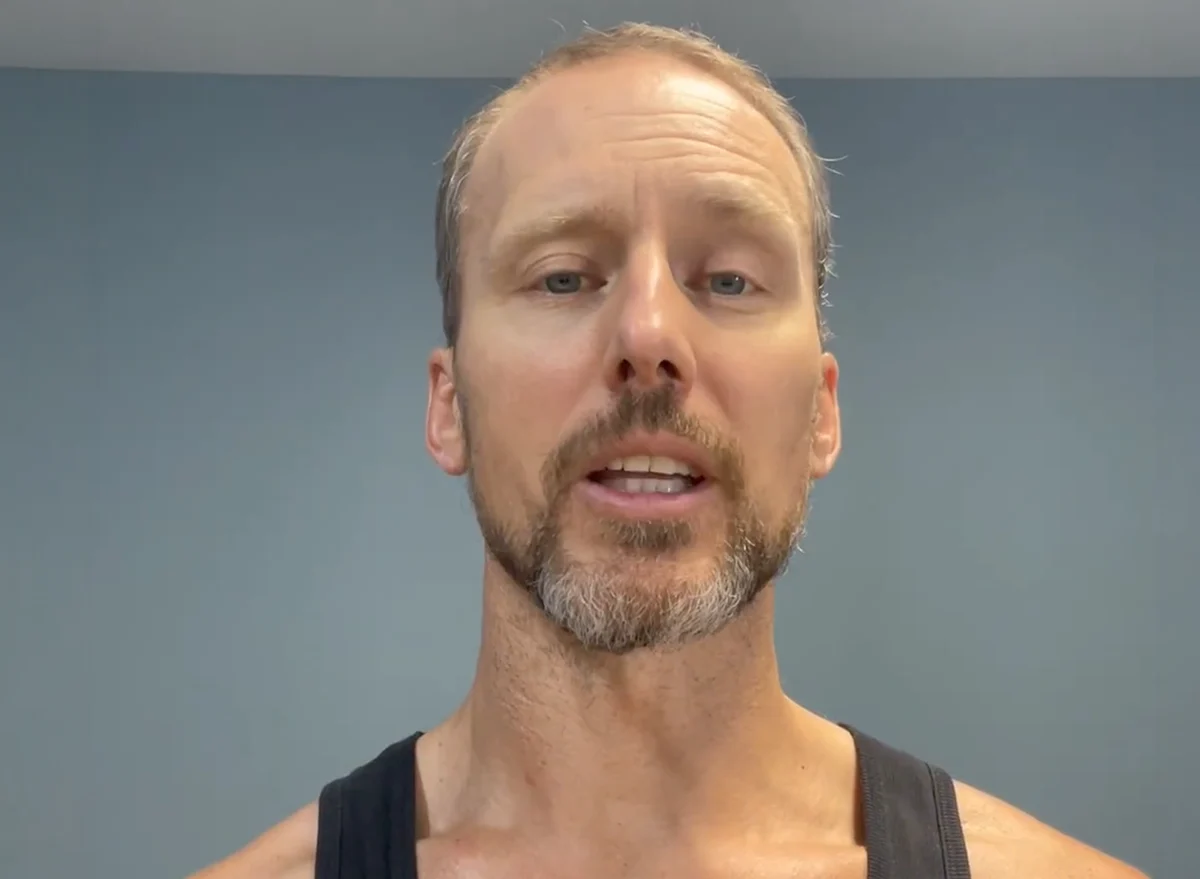
TJ Pierce, a renowned therapist and certified fitness coach at Pierce Family Wellness, argues that true athletic freedom lies in "going global." By shifting our focus from isolated muscles to the interconnected fascial lines of the body, we can improve our mobility, coordination, and athletic performance simultaneously.
The Science of Fascial Connectivity: Moving Beyond the Muscle
To understand why "global" movement is superior, one must first understand fascia. Fascia is the dense, connective tissue that surrounds and holds every organ, blood vessel, bone, nerve fiber, and muscle in place. Rather than functioning as a collection of separate parts, the body operates as an integrated web.
"One area I think gets overlooked is moving through your fascial lines and the different fascial patterns in your body," says Pierce. He often references Thomas Myers’ seminal work, Anatomy Trains, which serves as a foundational text for understanding the body’s structural integrity.
While segmental stretching—focusing on a specific portion of a muscle—is useful for rehabilitation or targeted tension release, it fails to prepare the body for the complexity of real-world movement. When you run, jump, or rotate, your body doesn’t isolate a single muscle; it engages chains of tissue. By utilizing dynamic, whole-body movements, we train these chains to work in harmony, effectively "oiling" the entire kinetic system before a heavy load is ever introduced.
The Philosophy of Global Mobility
The transition from segmental to global movement is a shift from "maintenance" to "performance." When you move through large, dynamic patterns, you aren’t just lengthening muscle fibers; you are challenging your nervous system.
"Movement is happening across multiple joints and through multiple areas of the body all at the same time," Pierce explains. "That’s what I want to explore. We’re asking the body to control that mobility while we shift our center of gravity."

This methodology addresses three critical pillars of physical health:
- Flexibility: Increasing the range of motion through active, rather than passive, means.
- Coordination: Training the brain to manage complex sequences of movement.
- Proprioception: Improving the body’s awareness of its position in space, which is vital for injury prevention.
The Warm-Up Protocol: A Functional Framework
Using these movements as a warm-up serves a dual purpose. First, it gradually raises your heart rate, preparing the cardiovascular system for the stress of a workout. Second, it systematically "wakes up" the fascial lines, ensuring that your body is neurologically primed to handle the range of motion required for your training session.
The Golden Rule: Never force a position. The goal of these movements is to explore your current capacity. As you move through the repetitions, you will find that your range naturally expands as your body temperature rises and your nervous system signals that it is safe to increase your range.
The 5 Essential Movements for Total-Body Integration
1. The Walkout
The walkout is the cornerstone of a dynamic warm-up. It forces the spine to articulate while requiring the hamstrings to lengthen under load.
- How to perform: Start standing tall. Slowly roll your spine downward, vertebra by vertebra, until your hands touch the floor. Walk your hands forward into a plank position, keeping your core braced. Pause, then walk your hands back toward your feet, keeping your legs as straight as possible to deepen the stretch in the posterior chain.
- Pro-Tip: Do not rush the roll-down. The benefit lies in the controlled articulation of the spine.
- Volume: 5–8 reps forward, 5–8 reps backward. One to two sets is sufficient.
2. Walkout With Crossover Leg
This progression adds a rotational element to the standard walkout, challenging the obliques and the lateral fascial lines.
- How to perform: Execute a standard walkout into a plank position. From here, kick one leg across your body toward the opposite side, dropping your elbow toward the floor. This forces a deep, rotational stretch that connects the shoulder to the opposite hip.
- Why it works: It forces the hips to stabilize while the upper body undergoes a rotational load, which is essential for athletes who throw, swing, or change direction.
- Volume: 5–8 reps per leg, forward and backward.
3. The Walking Archer
The Walking Archer is a sophisticated movement that integrates the upper and lower body. It mimics the mechanics of reaching and pulling, making it ideal for overhead athletes.
- How to perform: Step forward into a lunge. Simultaneously, pull your back heel toward your glute, reach the opposite arm toward the ceiling, and lean back slightly. The movement should feel like drawing a bowstring.
- Avoid: Do not arch the lower back excessively. Focus on extending through the thoracic spine (mid-back) and the hip flexor of the trailing leg.
- Volume: 5–8 reps per side.
4. Walking Glute Stretch
This movement targets the external rotators of the hip—a common area of tightness for those who sit at desks for long hours.

- How to perform: As you step forward, bring your foot up toward your opposite hand. Use your hand to support the foot while the other hand provides gentle pressure on the knee. This creates a "figure-four" stretch while you are in motion.
- The Benefit: It teaches the body to find stability on one leg while simultaneously opening up the gluteal muscles.
- Volume: 5–8 reps forward and backward.
Implications for Longevity and Performance
The transition to global movement patterns is more than just a training trend; it is a shift toward injury resilience. By focusing on how the body moves as a singular, integrated unit, we reduce the likelihood of "overuse" injuries—which often occur because one specific muscle is being asked to do the work that an entire chain should be sharing.
Furthermore, this approach acknowledges that fitness is not just about aesthetics or raw strength; it is about the quality of movement. In a world where sedentary behavior is the norm, reclaiming our ability to move through deep, fluid, and coordinated patterns is essential for long-term health.
As TJ Pierce emphasizes, these movements are designed to be accessible. Whether you are a competitive athlete looking to shave seconds off your time or an office worker trying to undo the damage of a nine-to-five, these five moves offer a gateway to a more mobile, responsive, and pain-free body.
Final Considerations
Before integrating these moves, ensure your environment is clear of obstacles. These exercises require active balance and space. If you feel pain—specifically sharp, shooting, or localized joint pain—discontinue the movement immediately. The goal is a deep, productive stretch that feels like "productive discomfort," not injury.
By dedicating just ten minutes to these global patterns, you aren’t just warming up; you are investing in the long-term integrity of your fascial system, ensuring that when it comes time to lift heavy, run fast, or simply move through life, your body is ready to perform.
