

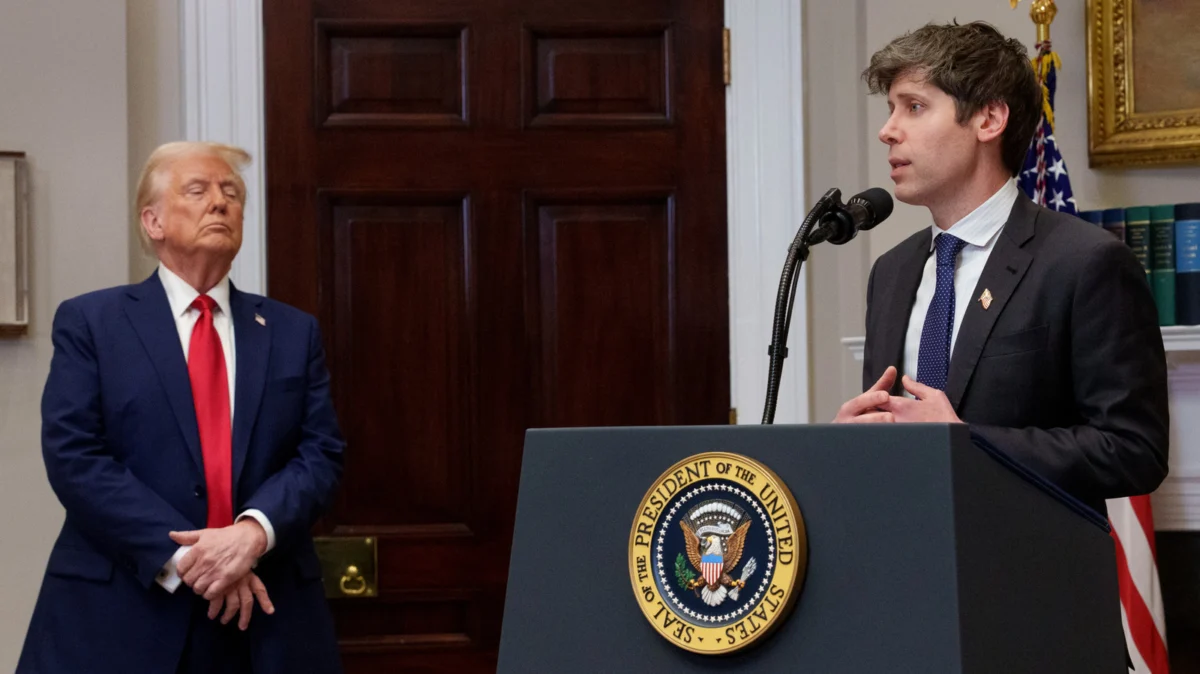
In a move that signals a seismic shift in the relationship between Silicon Valley and the federal government, reports have emerged that the Trump administration is currently in active discussions regarding a potential equity stake in OpenAI. If finalized, this deal would represent one of the most significant public-private partnerships in the history of the American technology sector, positioning the U.S. government as a direct stakeholder in the development of artificial general intelligence (AGI).
While the specifics remain fluid and no formal agreement has been inked, the dialogue suggests a strategic pivot toward integrating national interest with the rapid, often volatile, pace of AI innovation.
The Core Facts: A Strategic Partnership in the Making
The reports, initially broken by NOTUS and corroborated by CNBC, indicate that senior U.S. officials have been engaged in high-level talks with major AI firms, with OpenAI occupying a central role in these negotiations. The impetus for this arrangement appears to be twofold: a desire for the U.S. government to secure a seat at the table of the most influential AI laboratory in the world, and a desire by OpenAI to align its long-term corporate mission with the stability of national policy.
According to sources familiar with the matter, the concept of a government stake was not an imposition by the administration, but rather a strategic proposal first floated by OpenAI CEO Sam Altman as early as 2025. By offering the government a slice of equity, OpenAI is looking to build a framework for its vision of a "Public Wealth Fund"—a mechanism intended to distribute the economic dividends of AI-driven growth to the American populace.
Chronology: From Concept to Negotiation
To understand the current state of affairs, one must look at the timeline of the evolving relationship between OpenAI and the Trump White House.
2025: The Genesis of the Idea
During the early months of the administration, Sam Altman initiated a series of dialogues with policymakers in Washington. Recognizing that AI would inevitably become a matter of national security and economic infrastructure, Altman proposed a model where the government would hold an equity stake in AI development. This was framed as a way to ensure that the "intelligence age" would benefit the broader public rather than solely private shareholders.
April 2026: The Industrial Policy Outline
OpenAI formalized these thoughts in a white paper titled Industrial Policy for the Intelligence Age. The document advocated for a massive, coordinated national effort to build the infrastructure required for AGI, suggesting that the government should play an active role in financing and governing these capabilities.
Mid-2026: Escalating Engagement
As the Trump administration began formulating its approach to tech oversight, the dialogue shifted from theoretical policy to concrete financial negotiations. Throughout the summer of 2026, Altman has been a frequent visitor to Washington, meeting with key figures to discuss both the regulatory landscape and the mechanics of a potential equity-for-oversight swap.
Present Day: The Regulatory Intersection
This week, the conversation reached a new peak as the administration signed an executive order mandating government oversight of AI models prior to public release. OpenAI’s immediate compliance with this order—pledging to allow federal regulators access to its latest models—demonstrates a commitment to this emerging partnership.
Supporting Data: The Precedent of Public Equity
The idea of the U.S. government taking a stake in a private company is not unprecedented, though it remains rare in the technology sector. The most recent and notable comparison is the government’s involvement with Intel.
Under the CHIPS and Science Act, the U.S. government secured a 10 percent stake in Intel in exchange for a nearly $9 billion investment. This move was intended to bolster domestic semiconductor manufacturing—a foundational element of the AI supply chain.
The potential OpenAI deal is, however, structurally different. While the Intel deal was a capital injection to support manufacturing capacity, the OpenAI talks center on equity in exchange for regulatory alignment and the "Public Wealth" model. Analysts suggest that if the government secures a stake, it would likely be through a specialized investment vehicle or a direct equity grant, mirroring the "sovereign wealth" models seen in other industrialized nations.
Official Responses and Stakeholder Perspectives
The atmosphere in Washington is one of cautious optimism. Proponents of the deal argue that it provides the government with a "golden share" of influence, ensuring that the most powerful AI tools are developed with American values and security concerns at the forefront.
OpenAI’s Stance
OpenAI has remained publicly committed to its mission of ensuring that AGI benefits all of humanity. By inviting the government into its cap table, the company is attempting to mitigate the existential risks associated with AGI while gaining a powerful political ally. Altman has consistently argued that AGI is too significant to be governed solely by private enterprise.
The Administration’s View
For the Trump administration, the deal is a win for "America First" tech policy. By gaining a stake in the leading AI firm, the administration effectively hedges against the influence of foreign competitors, particularly in the race for supremacy in LLMs (Large Language Models) and generative agents.
Industry Skepticism
Not all industry participants are on board. Privacy advocates and smaller tech firms have expressed concerns that this partnership creates a "crony-capitalist" environment where only the most politically connected companies can thrive. There is also the concern that if the government becomes a shareholder, it will be incentivized to stifle competition that threatens the value of its own investment.
Implications: A New Era for AI Regulation
The ramifications of a government-backed OpenAI are profound and reach into several critical areas:
1. The Blurring of Private and Public Interests
If the U.S. government becomes a shareholder, the traditional lines of corporate governance become blurred. Will the government push for profit, or will it push for social policies, such as aggressive hiring in specific regions or the prioritization of national security over market expansion?
2. The Regulatory "Capture" Risk
There is a distinct possibility that this partnership leads to a form of regulatory capture. If the government has a financial interest in OpenAI’s success, will it be more inclined to write regulations that favor OpenAI while creating high barriers to entry for startups and open-source alternatives? This could effectively ossify the current AI market, favoring incumbents who have already struck deals with the state.
3. Global Geopolitical Competition
The U.S.-OpenAI partnership is a clear signal to China and other global powers that the U.S. views AI as a strategic national asset. This could trigger a global "arms race" of similar partnerships, where other nations attempt to nationalize their own AI champions, potentially leading to a fragmented "splinternet" of AI models that are incompatible with one another.
4. Economic Distribution
The "Public Wealth Fund" concept is perhaps the most radical component of the deal. If successful, it could theoretically provide a mechanism for every American citizen to benefit from the productivity gains of AI. However, the technical and legal challenges of implementing such a fund are enormous, requiring a level of transparency that Silicon Valley has historically been loath to provide.
Conclusion: The Path Forward
As the Trump administration continues to refine its AI strategy, the talks with OpenAI will serve as a bellwether for the future of the technology industry. We are witnessing the end of the era of the "move fast and break things" approach, replaced by a new model of state-directed technological development.
While the details of the equity stake remain behind closed doors, the implications are clear: the federal government intends to be a primary architect of the intelligence age. Whether this leads to a safer, more equitable future or a stifled, government-entangled tech industry remains to be seen. For now, all eyes are on Washington and San Francisco as they attempt to define the terms of this historic marriage between the state and the most powerful tool ever created by humanity.
