

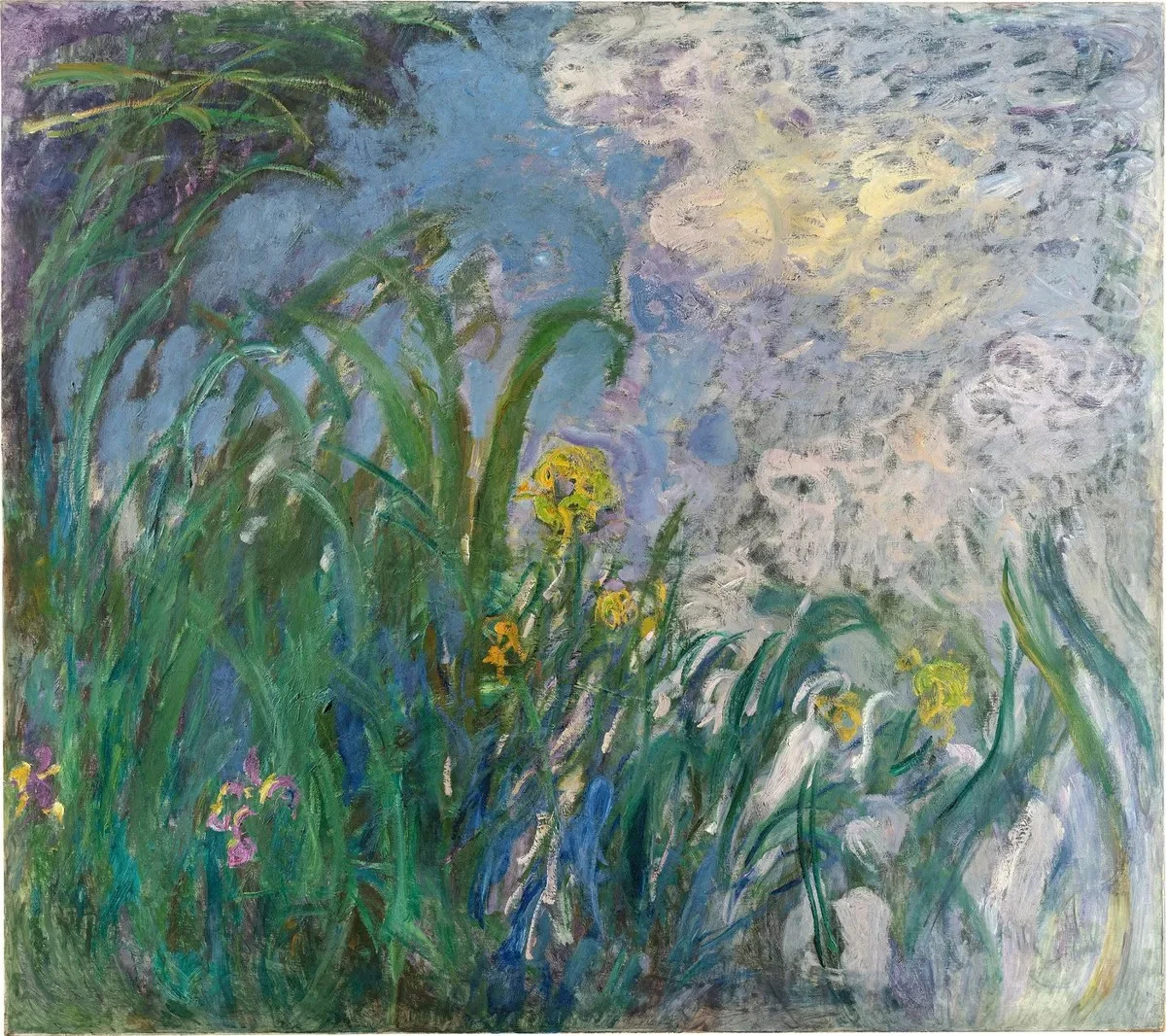
In a momentous event for the global art market, a previously unseen masterpiece by Impressionist titan Claude Monet has set the stage for a dramatic shift in valuation. On Thursday, Sotheby’s Paris facilitated the sale of Iris, a luminous depiction of the artist’s iconic water garden in Giverny, for a staggering $56 million. The acquisition, finalized after a grueling forty-five-minute bidding war, saw the painting claimed by Jen Hua, Deputy Chairman of Sotheby’s Asia, acting on behalf of an anonymous client.
This sale, while falling short of the record-breaking $110.7 million achieved by Monet’s Meules (Grainstacks) in 2019, represents a significant milestone. It highlights not only the enduring, aggressive appetite for late-career Monet works but also the rarity of "fresh-to-market" pieces that have been sequestered in private collections for decades.
The Provenance of a Hidden Gem: A Chronological Retrospective
To understand the significance of the $56 million price tag, one must first look at the history of the canvas itself. Iris is believed to have been painted en plein air—the hallmark of the Impressionist movement—circa 1924–25. This period represents the twilight of the artist’s life, a time when his brushwork became increasingly bold, abstract, and preoccupied with the ephemeral nature of light and reflection.
1926: The End of an Era
The year 1926 marked the passing of Claude Monet, an event that fundamentally changed the trajectory of Western art. The sale of Iris coincides with the centennial of his death, a timing that adds a poignant layer of historical gravity to the transaction. As the art world commemorates his legacy, the resurfacing of a work from his final years serves as a reminder of his evolution from a recorder of pastoral landscapes to a pioneer of modern abstraction.
1957: The Schlumberger Acquisition
For nearly seven decades, Iris was effectively invisible to the public eye. In 1957, the painting was acquired by Jeanne Schlumberger, a renowned heiress to the Schlumberger energy fortune. Schlumberger, a formidable patron of the arts, navigated the purchase through the esteemed Parisian dealer Katia Granoff.
Schlumberger’s collection was legendary for its breadth, housing a variety of Impressionist and modern works. However, according to Thomas Bompard, a senior international specialist at Sotheby’s Paris, Iris held a special, hermetic place in her life. "Once the painting arrived in her house, it left the world," Bompard noted in a recent interview. Indeed, the painting had never been exhibited, surviving in the private sanctum of the Schlumberger estate until the recent decision by her descendants to liquidate twenty-six works from her collection.
Supporting Data: The Market Dynamics of Monet
The sale of Iris did not happen in a vacuum. It was the result of a high-stakes competitive environment involving six prospective buyers who battled over the phones for nearly an hour. This intensity reflects a broader trend in the art market where blue-chip Impressionist works are increasingly viewed as a "safe harbor" for capital.
Comparative Market Analysis
To grasp the scale of the $56 million figure, one must consider the historical valuation of Monet’s late works. Private art dealer Cyrille de Gunzburg noted that he negotiated the sale of a Monet from the same period for $15 million in 2013. A leap from $15 million to $56 million in little more than a decade illustrates the rapid appreciation of "museum-quality" late-period Monets.
While the 2019 Meules sale remains the gold standard at $110.7 million, Iris occupies a unique niche. Unlike the Grainstacks series, which has been widely studied and exhibited, Iris possessed the "X-factor" of total exclusivity. In an industry where collectors often prioritize ownership of works that have never been documented in public catalogs, the lack of public exposure for Iris significantly drove up the final hammer price.
Official Responses and Expert Commentary
The auction house executives involved in the sale have been quick to frame Iris as a transformative addition to any serious collection. Helena Newman, Sotheby’s worldwide chairman of Impressionist and modern art, underscored the caliber of the piece in a post-sale briefing.
"This painting could be benchmarked against the great Monets in the museums of Paris," Newman stated. "It was a true museum-quality work." By placing the painting in the same category as the permanent collections of the Musée d’Orsay or the Musée de l’Orangerie, Sotheby’s aimed to validate the investment not just as a financial asset, but as a piece of cultural heritage.
The narrative crafted by the auction house—emphasizing the mystery of the "hidden" painting and the prestige of the Schlumberger collection—was instrumental in generating the buzz required for such a high-value transaction. The presence of Jen Hua, acting for an Asian client, further confirms the shifting geography of the art market, where wealth in the East is increasingly dictating the movement of Western European masterpieces.
Implications for the Future of the Art Market
The sale of Iris carries several profound implications for the future of the art market and the preservation of historical works.
1. The "Freshness" Premium
The most significant takeaway from the $56 million result is the massive premium placed on provenance and scarcity. Collectors are no longer merely buying art; they are buying a narrative of discovery. The fact that Iris had never been seen by the public before its auction created a "freshness" that effectively insulated the work from the market volatility that can sometimes affect pieces that have been traded frequently at auction.
2. The Shift to Private Wealth in Asia
The involvement of a high-profile Asian buyer is consistent with the decade-long trend of wealth migration toward East Asia. As major institutions and private collectors in China, Singapore, and South Korea continue to build world-class collections of Western art, the center of gravity for Impressionist masterworks is moving away from traditional European and American strongholds. This suggests that the next generation of "undiscovered" masterpieces may eventually disappear into private vaults in Asia, potentially limiting their accessibility for future Western museum retrospectives.
3. The Ethical Dilemma of Private Ownership
The sale also reignites the debate regarding the ethics of private ownership versus public access. While the Schlumberger family’s decision to keep the work out of the public eye for decades allowed for its pristine preservation, it also denied the public the opportunity to study a significant late-period work by one of history’s most influential artists. As we move forward, the art community must grapple with the tension between the rights of private collectors and the global interest in preserving, exhibiting, and studying artistic milestones.
4. A Bull Market for Late-Period Impressionism
Finally, the sale serves as a bellwether for the health of the Impressionist market. Despite concerns about global economic instability, the appetite for high-end art remains robust. The success of the Iris sale suggests that collectors are continuing to seek out "blue-chip" assets that provide a hedge against inflation. For the foreseeable future, works by Monet—particularly those from the final, more experimental phase of his career—are likely to remain among the most sought-after and expensive assets in the global art market.
Conclusion
The $56 million sale of Iris is more than a simple transaction; it is a chapter in the history of art. It marks the transition of a masterpiece from the private, hidden world of the Schlumberger estate into the global public consciousness, where its value will be judged anew. As the art world continues to celebrate the centennial of Monet’s death, the rediscovery of this work serves as a testament to the artist’s undiminished power to captivate, inspire, and define the value of beauty in our modern age. Whether this painting will eventually reach a public museum or remain in another private collection is a question for the future, but for now, the world has been reminded once again that even a century later, the vision of Claude Monet remains a force of nature.
