

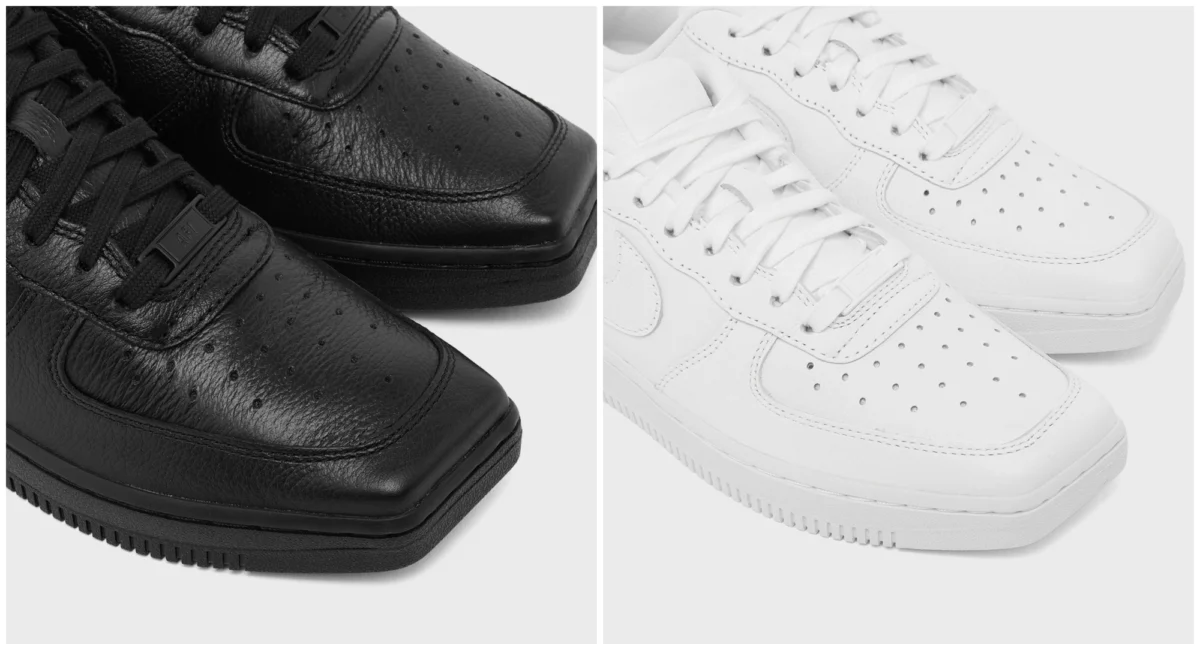
The sneaker industry has long been defined by the tension between heritage and innovation. Few silhouettes embody this tension more than the Nike Air Force 1. Designed by Bruce Kilgore in 1982, the shoe has remained largely unchanged for over four decades, serving as the cornerstone of streetwear culture and a multi-billion dollar asset for the Beaverton-based sportswear giant. However, in a bold move that signals a new era of geometric experimentation, Nike is officially launching the Air Force 1 Low SQT "Square Toe"—a radical reconstruction of the classic "Uptown" that swaps its iconic rounded silhouette for a sharp, architectural aesthetic.
Set to debut in November 2024, the Air Force 1 Low SQT represents one of the most significant structural alterations to the model’s DNA in recent memory. This women’s-exclusive release aims to bridge the gap between high-fashion footwear and traditional athletic heritage, offering a "dressier" alternative to the sneaker that conquered the world.
Main Facts: The Evolution of a Legend
The Nike Air Force 1 Low SQT (Square Toe) is characterized by a dramatic redesign of the toe box. While the traditional Air Force 1 features a soft, rounded front with a perforated leather vamp, the SQT version introduces a boxy, squared-off edge. This modification extends to the outsole and midsole, creating a chiseled, geometric profile that mimics the look of contemporary high-fashion boots and loafers.
Key Release Details:
- Official Launch Date: November 6, 2024 (Select regions and global rollout).
- Retail Price: $150 USD.
- Colorways: Debut "Triple White" (Style Code: JF7766-100) and "Triple Black" (Style Code: JF7766-001).
- Availability: Nike SNKRS app, select global boutiques including Above the Clouds and Naked Copenhagen.
- Target Demographic: Women’s exclusive sizing.
Beyond the staple monochromatic colorways, Nike has confirmed that the SQT line will expand into more experimental materials. Upcoming iterations include a premium suede version featuring Western-inspired hardware and textile versions utilizing mismatched, colorful plaid prints. This suggests that the "Square Toe" is not merely a one-off collaboration but a new pillar in Nike’s lifestyle portfolio.
Chronology: From the Runway to the Retail Shelf
The journey of the Air Force 1 SQT from a design concept to a commercial product reflects Nike’s strategic focus on the intersection of sport and luxury fashion.
June 2024: The Paris Debut
The world got its first glimpse of the square-toed remix during the Men’s Paris Fashion Week in June. While the shoe is a women’s-exclusive model, its debut in the epicenter of global fashion signaled Nike’s intent to position the SQT as a "style-forward" piece rather than a performance-oriented sneaker. Fashion insiders immediately drew comparisons to the avant-garde designs of brands like Balenciaga and Bottega Veneta, both of which have popularized exaggerated, geometric footwear in recent seasons.
October 2024: The SNKRS Preview
In early October, Nike officially loaded the product onto its SNKRS app. The brand’s marketing copy described the shoe as being "sleeker, squarer, and designed to force a double take." This preview confirmed the $150 price point—a $35 premium over the standard $115 Air Force 1 Low—positioning the SQT as a "tier-zero" or "specialty" lifestyle product.
Late October 2024: Early Retailer Access
Ahead of the official November 6 launch, boutique retailers such as Naked Copenhagen and Australia’s Above the Clouds began releasing limited stock. This "soft launch" generated significant buzz on social media platforms like TikTok and Instagram, where the shoe’s polarizing design sparked heated debates among sneaker enthusiasts.
Supporting Data: The AF1’s Market Dominance and Innovation Cycle
To understand why Nike would take the risk of altering its most famous silhouette, one must look at the current state of the footwear market. The Air Force 1 is consistently one of the top-selling sneakers globally. According to market research data from firms like Circana (formerly NPD Group), the Air Force 1 often holds the number one spot for revenue in the "lifestyle" category.
However, the "Triple White" Air Force 1 has faced criticism in recent years for market saturation. To maintain the model’s relevance, Nike has historically introduced "iterative" variations:
- The AF1 Shadow: A layered, "doubled-up" version that became a massive hit with female consumers.
- The AF1 Pixel: An earlier attempt at a geometric redesign, featuring a distorted, "glitched" midsole.
- The AF1 PLT.AF.ORM: A platform version designed to compete with the rising popularity of chunky-soled shoes.
The SQT Square Toe is the most aggressive of these iterations. By moving away from the rounded toe—a design element that has been a constant since 1982—Nike is testing the elasticity of the Air Force 1 brand. Data from luxury resale platforms suggests that "square-toe" boots saw a 45% increase in searches over the last two years, indicating that Nike is moving to capture a trend that has already matured in the high-fashion sector.

Official Responses and Design Philosophy
While Nike executives have not held a formal press conference for the SQT launch, the brand’s internal design team has provided insights through the SNKRS app and promotional materials. The philosophy behind the SQT is rooted in "reconstructionist" fashion.
According to Nike’s product description, the goal was to create a shoe that feels "sharper" and "more intentional." The brand noted:
"The Air Force 1 Low SQT is a sharp, geometric edge applied to a street classic. It’s for the consumer who loves the heritage of the AF1 but wants a silhouette that pairs as easily with tailored trousers as it does with denim."
This shift toward "dressier" sneakers is a direct response to the "Quiet Luxury" and "Clean Girl" aesthetics that have dominated fashion in 2023 and 2024. By squaring the toe, Nike has effectively transformed a basketball shoe into something that resembles a leather derby or a contemporary loafer, allowing it to move into more formal wardrobe spaces.
Implications: What This Means for the Sneaker Industry
The release of the Air Force 1 SQT has several long-term implications for Nike and the broader footwear landscape.
1. The "Fashion-First" Strategy
For years, Nike’s innovation was focused on performance (Air, Flyknit, ZoomX). However, as the brand faces increased competition from "lifestyle-first" brands like New Balance and Adidas (particularly with the Samba and Gazelle), Nike is pivoting toward aesthetic innovation. The SQT is a clear signal that Nike is willing to sacrifice "athletic purity" for "fashion relevance."
2. The Expansion of the Women’s Market
Nike has identified the women’s footwear market as its largest growth opportunity. The SQT is tailored specifically for this demographic. By offering "Triple Black" and "Triple White" in a fashion-forward cut, Nike is attempting to lock in female consumers who may find the standard AF1 too "bulky" or "sporty."
3. The Future of the "Uptown"
The Air Force 1 is currently in a period of transition. While the SQT pushes the boundaries of the silhouette, other upcoming releases—such as the Supreme "Camo" collaboration and various "Pony Hair" iterations—show that Nike is attacking the market from all angles. The SQT serves as the "avant-garde" wing of this strategy. If successful, it could pave the way for other icons, such as the Dunk or the Air Jordan 1, to receive similar "architectural" treatments.
4. Polarization as a Marketing Tool
In the modern digital economy, a polarizing design is often more valuable than a safe one. The SQT has already divided the "sneakerhead" community, with purists decrying the change and fashion-forward enthusiasts praising its boldness. This "clash of opinions" drives engagement, ensuring that the Air Force 1 remains at the center of the cultural conversation.
Conclusion
The Nike Air Force 1 Low SQT Square Toe is more than just a new shoe; it is a testament to the enduring versatility of Bruce Kilgore’s 1982 masterpiece. By daring to "square the circle," Nike is challenging consumers to rethink what a sneaker can be. Whether the SQT becomes a new standard or remains a niche experimental piece, its arrival on November 6 marks a pivotal moment in the history of the world’s most famous sneaker. For $150, consumers are not just buying a pair of shoes; they are buying into a version of the future where the lines between the basketball court and the fashion runway have finally, and sharply, blurred.
