

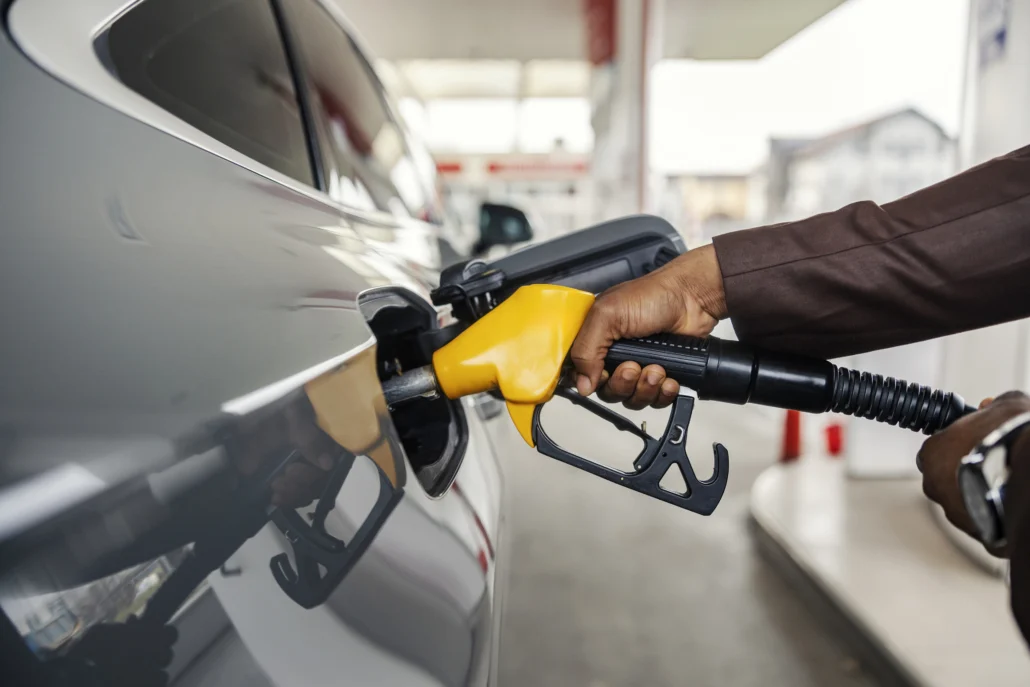
WASHINGTON, DC — In a move that has sent shockwaves through the consumer advocacy and environmental sectors, the Trump administration has finalized a sweeping regulatory overhaul that significantly weakens federal fuel economy standards for automobiles, pickup trucks, and SUVs. The new mandate, marketed under the administration’s banner of “Freedom Means Affordable Cars,” effectively dismantles the previous trajectory toward greater energy efficiency, slashing the fleet-wide average fuel economy requirement from 50.4 miles per gallon (mpg) to just 34.9 mpg by the 2031 model year.
For critics, the timing of this policy shift could not be more precarious. With gasoline prices hovering near $4.50 per gallon and diesel costs reaching unprecedented peaks, the decision to prioritize lower manufacturing standards over fuel efficiency is being characterized by industry watchdogs as a direct assault on the American pocketbook.
The Core of the Conflict: Policy vs. Reality
The administration’s rationale for the rollback rests on the premise that current standards artificially inflate the cost of new vehicles. By easing the technological requirements for manufacturers, officials claim the government will save American families tens of billions of dollars in upfront purchase costs. Furthermore, the final rule includes optimistic, if not controversial, internal projections suggesting that gasoline prices will remain under $3 per gallon for the better part of two decades, spanning from 2026 through 2040.
However, consumer groups are aggressively challenging the mathematical and economic foundations of these claims. Daniel Greene, the Senior Director of Consumer Protection & Product Safety at the National Consumers League (NCL), did not mince words when addressing the announcement.
“Today, the Trump administration dealt perhaps its greatest blow to affordability and common sense: gutting federal fuel economy standards in the midst of skyrocketing gasoline prices and an impending energy crisis,” Greene said. “Doubling down on failed policies that inflict pain at the pump and exacerbate the affordability crisis will not get us out of this mess.”
A Chronology of Declining Standards
To understand the weight of this decision, one must look at the regulatory history of the automotive industry over the last several decades. For years, the federal government had pushed for a consistent climb in fuel efficiency, recognizing that energy independence and consumer savings were inextricably linked.
- The Early 2000s: Industry standards saw slow but steady progress, with manufacturers balancing comfort and safety features with incremental improvements in engine efficiency.
- The Mid-2010s: Federal mandates were set on an ambitious path toward 50.4 mpg, designed to insulate the economy from the volatility of global oil markets and reduce the carbon footprint of the domestic transportation sector.
- Recent Years: A series of sustained legislative and executive actions began to erode these standards. Proponents of the rollback argued that the technology required to meet the 50.4 mpg threshold was driving up the "sticker price" of vehicles, making new cars inaccessible to average working families.
- Present Day: The finalization of the "Freedom Means Affordable Cars" rule marks the culmination of this deregulation push, resetting the clock on fuel efficiency standards to a target nearly 30% lower than the original goal.
Data Analysis: The Cost of "Affordability"
The central tension of this debate lies in how the government defines "affordability." The administration views it through the lens of the initial transaction—the price on the window sticker. Conversely, consumer advocates view it through the lens of Total Cost of Ownership (TCO).
According to a February report titled Sticker Shock, published by the National Consumers League, the administration’s focus on the initial purchase price ignores the long-term savings inherent in efficient vehicles. The report reveals a compelling discrepancy:
- Fuel Savings Outpace Upgrades: Since 2002, improvements in fuel economy have saved the owners of newer pickup trucks and SUVs an average of $9,920 over the life of the vehicle. For standard passenger cars, that savings figure stands at $9,100.
- The Marginal Cost of Efficiency: Over the same period, the total cost increase for all vehicle equipment upgrades—including fuel economy technology, enhanced safety features, comfort, and convenience—amounted to just $3,040.
Essentially, the data suggests that consumers have received a net financial benefit from stricter standards. By reducing the mandates, the administration may be lowering the barrier to purchase by a few thousand dollars today, only to force consumers to pay significantly more in fuel costs over the next decade.
Official Responses and Political Maneuvering
The reaction from the consumer advocacy community has been swift and unified. Earlier this month, a coalition of 25 prominent consumer organizations sent a formal letter to Congress, urging lawmakers to block any resolutions that would invalidate existing tailpipe emission standards. These standards, already adopted in full or in part by 18 states and the District of Columbia, serve as a defensive bulwark against the federal rollback.
The NCL and its allies characterize the administration’s projections as "voodoo economics." The belief that gasoline will remain cheap for the next 15 years is viewed by many energy analysts as a dangerous gamble that ignores the realities of geopolitical tension and the global transition toward cleaner, more reliable energy sources.
“The administration may be satisfied with the status quo—content to hoist a metaphorical ‘Mission Accomplished’ banner across every gas pump in the nation,” Greene noted. “But there is a better path for consumers. We must ambitiously support clean energy technologies and strengthen fuel economy standards, because costs are low when fuel economy standards are high.”
Implications for the Future: Economic and Environmental
The implications of this rule are far-reaching, touching upon national security, economic stability, and the future of the automotive manufacturing sector.
1. Energy Independence
By lowering fuel economy standards, the domestic fleet will inevitably consume more gasoline. This increases the nation’s reliance on foreign oil imports and leaves the American consumer more vulnerable to the price fluctuations of the global market. In an era where energy is increasingly tied to national security, this policy represents a pivot away from the strategy of self-sufficiency.
2. The Innovation Gap
Many analysts fear that by lowering the bar for fuel efficiency, the U.S. automotive industry will fall behind international competitors. As Europe and Asia continue to invest heavily in electric vehicle (EV) infrastructure and high-efficiency combustion engines, American manufacturers may find themselves lacking the competitive edge needed to lead in the global marketplace of the 2030s.
3. Impact on Household Budgets
With inflation already weighing heavily on the American middle class, the prospect of permanently higher fuel consumption is a significant concern. For the average family, the vehicle is often the second-largest expense behind housing. By removing the incentive for manufacturers to produce high-efficiency, low-cost-to-operate vehicles, the administration may inadvertently lock low-to-middle-income families into a cycle of "fuel poverty."
Conclusion: A Call for a Different Path
The administration has framed its rule as a victory for the consumer—a move that prioritizes the upfront purchase price and, theoretically, protects the average person from the "hidden" costs of environmental regulation. However, as the National Consumers League and other advocates point out, the empirical data suggests otherwise.
The debate is no longer just about miles per gallon; it is a fundamental disagreement about the role of government in protecting the financial well-being of its citizens. As the nation grapples with the transition away from fossil fuel dependence, the decision to lower efficiency standards appears, to many experts, to be a step backward.
"No more false choices," concluded Greene. "Let’s choose affordability and energy independence, economic vitality, and national security."
As the automotive industry adjusts to these new regulations, the real-world impact will be felt at the pump, in the showroom, and eventually, in the household budgets of millions of Americans. Whether this gamble on low fuel prices will pay off remains to be seen, but the consensus among consumer advocates is clear: the path to true affordability lies not in weakening standards, but in the relentless pursuit of technological efficiency.
