

By Viknesh Vijayenthiran | March 21, 2025
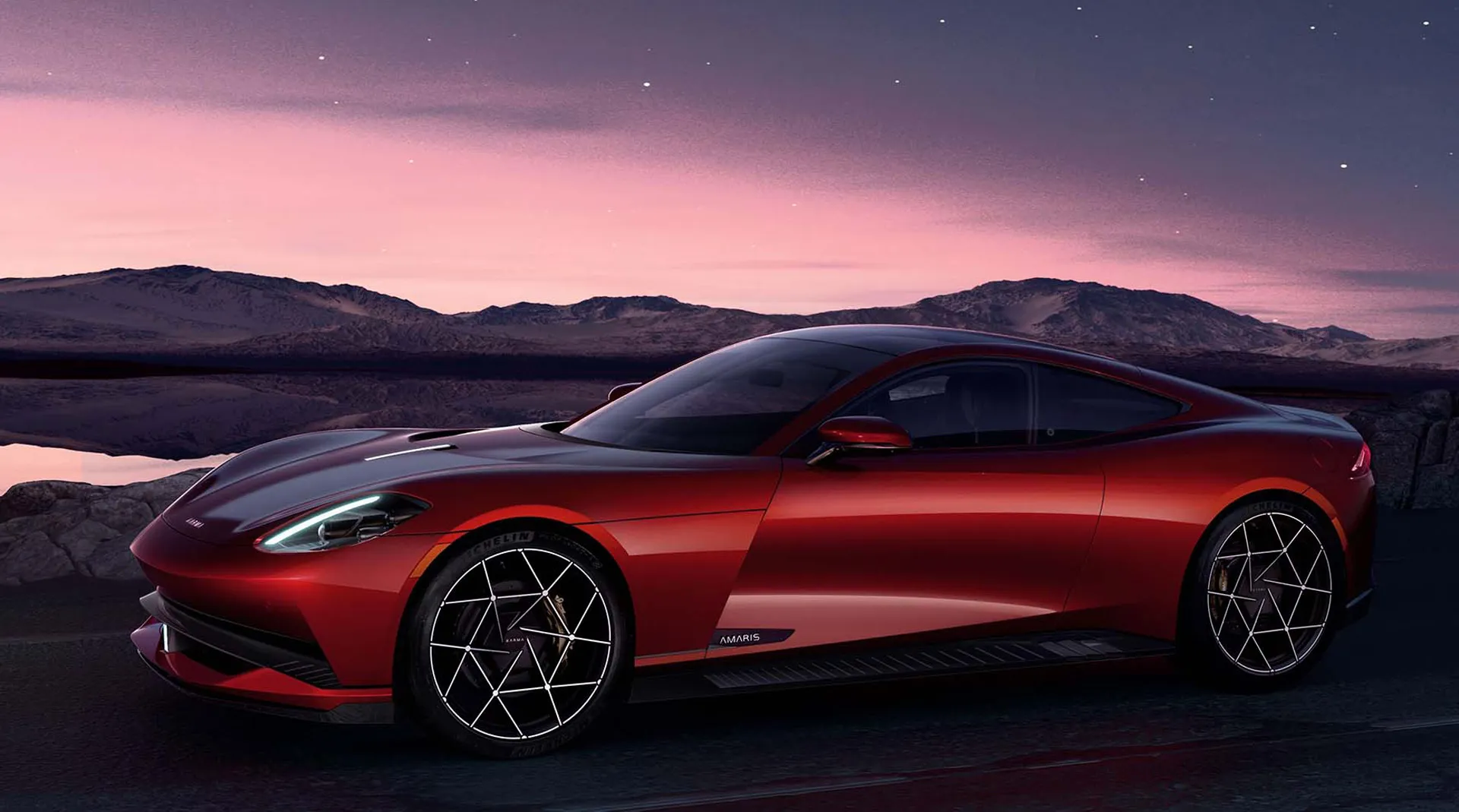
In a significant strategic realignment aimed at navigating the cooling enthusiasm for pure battery-electric vehicles (BEVs) in the luxury sector, Karma Automotive unveiled a comprehensive roadmap during its inaugural "Create Karma" event in Irvine, California. The centerpiece of the announcement is the brand-new Amaris series plug-in hybrid coupe, a vehicle designed to bridge the gap between internal combustion heritage and the electric future.
This pivot marks a pivotal moment for the California-based automaker. While the industry has spent the last five years racing toward an all-electric horizon, Karma is betting that the "worry-free" convenience of extended-range electric vehicles (EREVs) will better serve its discerning clientele.
Main Facts: The Amaris and the Shifting Portfolio
The Amaris is a performance-oriented plug-in hybrid coupe, positioned to act as a crucial mid-term offering in Karma’s expanding lineup. While the company initially intended to lead its next generation with the high-performance, fully electric Kaveya, shifting market dynamics have forced a delay. The Kaveya, originally touted for its 1,000-hp potential, has been pushed to a 2027 launch window.
In its place, the Amaris will arrive in late 2026, offering a sophisticated alternative for buyers who want the instant torque of an electric drivetrain without the "range anxiety" often associated with pure battery-electric luxury cars. The vehicle will utilize a modernized version of the existing Revero platform—a chassis with a storied, if complex, history that traces its lineage back to the original Fisker Karma.
Simultaneously, Karma announced that the Gyesera—previously introduced as a dedicated BEV—will now launch as a series plug-in hybrid. This move serves to standardize the company’s powertrain philosophy across its upcoming sedan and coupe offerings, creating a cohesive "series-hybrid" identity.
Chronology: From Fisker Legacy to the Create Karma Era
To understand the weight of these announcements, one must look at the timeline of Karma Automotive:

- 2013: The original Fisker Automotive, creator of the iconic Fisker Karma, files for bankruptcy.
- 2014: Wanxiang Group acquires the assets of the defunct Fisker, forming the foundation of what would become Karma Automotive.
- 2017: The Karma Revero is launched, keeping the silhouette of the original Fisker alive while modernizing the technology.
- 2024: Karma unveils the Gyesera as a pure electric sedan, signaling an aggressive push toward electrification.
- March 2025: During the "Create Karma" event in Irvine, the company announces a strategic pivot: the Gyesera is converted to a plug-in hybrid, the Kaveya (EV) is delayed to 2027, and the Amaris plug-in hybrid is introduced as the new bridge to the future.
This history illustrates a company that has spent a decade refining a specific chassis architecture, finally deciding to leverage that platform’s strengths rather than abandoning it entirely in favor of an unproven, pure-electric infrastructure.
Supporting Data: Engineering the Series-Hybrid Experience
The core of Karma’s new strategy lies in the "series-hybrid" architecture. Unlike a traditional parallel hybrid, where a combustion engine may drive the wheels directly, a series hybrid utilizes the engine purely as an onboard generator.
Technical Specifications
- Powertrain: A turbocharged 4-cylinder engine acts as the primary generator, replacing the 3-cylinder unit found in the current Revero.
- Performance: The Amaris is targeted to achieve a 0-60 mph time of under 3.5 seconds, with an electronically limited top speed of 165 mph.
- The Revero Benchmark: The current Revero utilizes a 28-kWh battery, offering roughly 80 miles of pure electric range. It is expected that the new architecture in the Amaris and Gyesera will build upon these figures, likely offering improved battery density and higher electric-only mileage.
By utilizing a 4-cylinder generator, Karma aims to solve the "high-load" power deficit that plagued earlier series-hybrid designs. When the driver demands maximum acceleration, the system can draw power from both the battery and the generator simultaneously, ensuring that the electric motors are never starved for current.
Official Responses: The Philosophy of "Worry-Free" Performance
Marques McCammon, President of Karma Automotive, framed the decision as a response to the practical realities of the modern luxury automotive market.
"We’re building a range of vehicles that will deliver exceptional EV torque and performance paired with worry-free cruising range, a combination that only [series plug-in hybrids] can deliver," McCammon stated during the event.
The sentiment from Karma’s leadership is clear: the market is not yet ready to abandon the combustion engine entirely, particularly in the premium segment where spontaneity and long-distance travel are expected. By pivoting, Karma is attempting to capture the "early majority" of EV buyers who are interested in electric driving dynamics but are not yet comfortable relying solely on a charging infrastructure that remains inconsistent in many regions.
Implications: What This Means for the High-End EV Market
The decision to delay the Kaveya—a flagship EV intended to challenge the likes of Lucid and Rimac—is a sobering indicator of the current state of the high-end electric sector.

1. The Death of "EV-Only" Dogma
Karma’s shift suggests that for boutique luxury manufacturers, the capital-intensive nature of building a dedicated, ground-up EV platform is risky. By modifying the existing Revero platform, Karma can bring the Amaris to market faster and at a lower cost than a clean-sheet design would allow.
2. The Resurgence of the EREV
The series-hybrid (or EREV) model is gaining renewed attention. As major manufacturers grapple with plateauing EV sales, the EREV offers a middle ground. For the consumer, it provides the "cool factor" of a high-torque electric drive without the logistical hurdles of long-range charging stops.
3. Manufacturing Stability
By keeping production at the Moreno Valley, California plant, Karma is doubling down on its domestic roots. This allows for tighter quality control and a more boutique customer experience, which is essential for a brand competing in the $100,000+ price bracket.
4. The Future of the Gyesera
The Gyesera’s transformation into a plug-in hybrid is perhaps the most significant change. Originally intended to be the standard-bearer for Karma’s electric future, its move to a hybrid powertrain indicates that the company sees more immediate revenue potential in a hybrid model. It will replace the aging Revero, which has served the company since 2017, providing a necessary facelift to the brand’s volume seller.
Conclusion: A Measured Path Forward
Karma Automotive is currently walking a tightrope. It must maintain its image as a cutting-edge, design-forward luxury brand while simultaneously ensuring financial viability in a market that has become increasingly skeptical of pure-electric exclusivity.
The Amaris series is the physical embodiment of this middle path. It offers the aesthetic allure and performance characteristics of a high-end sports car, backed by the pragmatic engineering of an extended-range hybrid. As the company prepares for the eventual arrival of the Ivara electric SUV in 2027 and the delayed Kaveya, the Amaris will serve as the anchor of the brand’s identity.
For the automotive enthusiast, the news is a reminder that the transition to electrification is rarely a straight line. Sometimes, the most progressive path involves looking back at the strengths of existing platforms and refining them to meet the demands of a changing world. Karma’s "Create Karma" event proved that the company is no longer interested in chasing the industry trends of yesterday—it is focused on building the cars that its customers actually want to drive today.
