

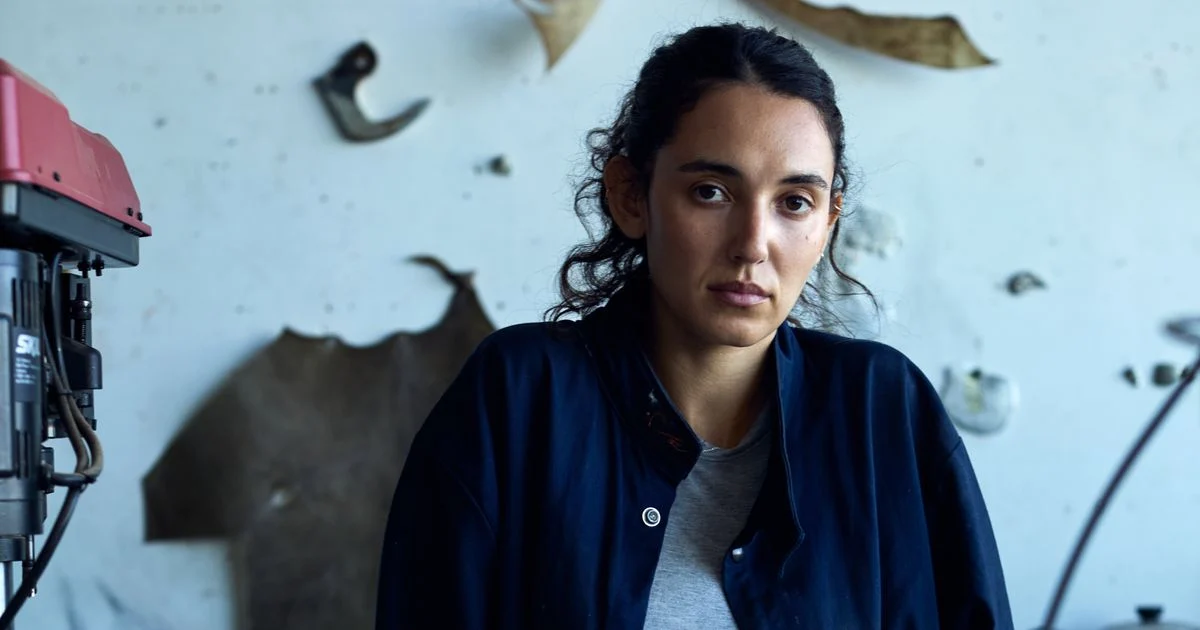
In the industrial landscape of Bushwick, Brooklyn—a neighborhood defined by the clatter of heavy machinery, the hum of logistics centers, and the encroaching polish of luxury redevelopment—Madeline Coven operates a studio that serves as both a laboratory and a sanctuary. Situated in a building that balances its gritty heritage with the aesthetic trappings of a modern members’ club, Coven’s workspace is a microcosm of her design philosophy: a chaotic, productive tension between the raw and the refined. Here, amidst floor-to-ceiling storage and the rhythmic drone of drill presses, Coven is redefining the boundaries of functional art, transforming organic materials into vessels that feel less like manufactured objects and more like geological survivors.
The Genesis of a Material-First Practice
To understand Madeline Coven’s work is to understand her relationship with the "natural error." Unlike industrial designers who often pursue a trajectory of mass-producible perfection, Coven approaches her objects as a sculptor might approach a living organism. Her background, which includes a formative stint in the studio of acclaimed designer Minjae Kim, provided the framework for this methodology.
"He taught me how to do so much with so little," Coven says of her time with Kim. "He showed me that you don’t need the most expensive tools or unlimited access to create something that feels complete. It’s about the idea, the resourcefulness, and the courage to let the material dictate the form."
Before her time in New York, Coven’s path was forged in the art schools of Los Angeles and influenced by a childhood in Albuquerque. Her father, an herbalist, was instrumental in shaping her observational skills. "He would take me on these walks along the irrigation ditches near our home," she recalls. "It would take us hours to go just a few blocks because he’d stop to document every single plant. That habit of slow, deep observation—that is the foundation of everything I make."
Chronology: From Fossil Imprints to Leather Vessels
Coven’s career has been marked by a deliberate evolution of material exploration, moving from traditional sculpture to hybrid furniture and, most recently, to a series of experimental, non-functioning vessels.
- The Early Period: After completing her studies in sculpture, Coven spent years as an artist’s assistant in Los Angeles, honing her technical craft.
- The Collaborative Launch: Three years ago, Coven collaborated with fellow designer Jenna Graziano. Their debut piece—a chair featuring a sand-cast recycled aluminum frame and a cowhide sling—established the material language that would become her signature.
- The Sconce Series (2025): For gallerist Jacqueline Sullivan in Tribeca, Coven developed a series of sconces that paired animal hides with intricate pewter embellishments, effectively bridging the gap between historical craft and modern lighting design.
- St Vincents Collaboration (Early 2026): Coven produced a set of mahogany tables for the Antwerp-based St Vincents, incorporating cowhide edging and pewter hardware that evoked the utilitarian aesthetic of vintage belt buckles.
- The Galerie Was Debut (November 2026): Her upcoming exhibition at the Lower East Side’s Galerie Was represents a maturation of her "vessel" studies, featuring sculptural forms made from cow- and goat-hide, fastened with cold-poured pewter.
The Science of the "Living" Material
Coven’s process is inherently experimental. She does not design a finished product on a computer; she initiates a dialogue with her materials. In her current series, the process begins with soaking hides in water. Once pliable, the material is wrapped around welded steel armatures. As the hide dries, it shrinks and shifts, creating folds and textures that Coven neither strictly controls nor attempts to mask.
"There’s something very alive about it," she notes, gesturing to a piece that has warped slightly in the dry air of the studio. "I’ve had finished pieces move over time. It reminds you that the material is still living, still reacting to its environment. I’m not trying to fix that; I’m trying to honor it."
This approach to material is a radical departure from the standard industrial design ethos, which typically treats "warping" or "stretching" as failures of production. For Coven, these are marks of authenticity. She sources her hides from a specialty leather-and-furs shop in Albuquerque, preferring them to synthetic alternatives like fiberglass. When viewed up close, these pieces reveal the history of the animal—the follicles, the fat-retention marks, and the irregularities that speak to a life lived.
Supporting Data: The Mechanics of the Studio
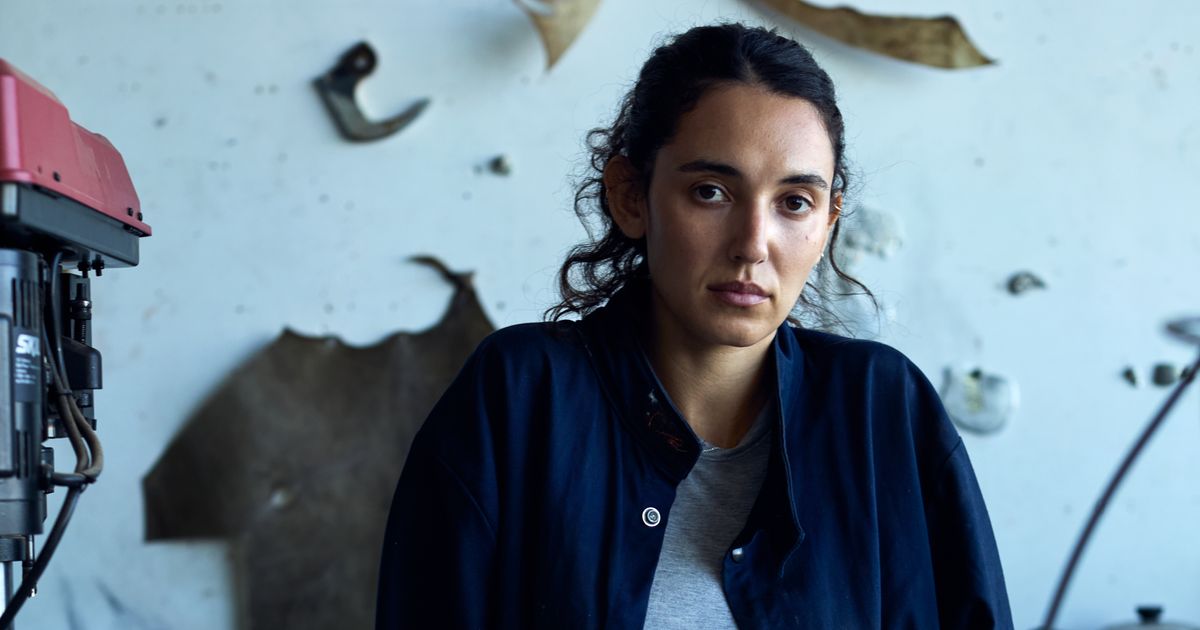
The studio itself is a testament to this iterative, lab-like approach.
- Material Sourcing: Hides are sourced from specific, small-batch suppliers to ensure high quality and traceability.
- Casting Techniques: Coven utilizes sand-casting for her aluminum components, a process that allows for high levels of texture and, occasionally, "happy accidents" where the heat of the metal alters the surface of the mold.
- Pewter Manipulation: Pewter is favored for its low melting point and malleability. Coven uses a hot plate at her workstation to turn the metal into a viscous state, allowing her to pour it into molds or manipulate it by hand as it cools, creating the "flinty" textures that characterize her recent work.
- Environmental Sensitivity: The studio utilizes ventilation hoses to manage the fumes from metal casting, ensuring the workspace remains viable for long-term experimentation.
Philosophical Implications: The Weight of the "Once-Living"
Coven’s use of animal hides naturally invites scrutiny regarding the ethics of her materials. She is acutely aware of the "heaviness" inherent in her work. "It’s dead, and that feels heavy," she acknowledges. "I’m not trying to ignore that weightiness. There’s an eeriness to it, for sure."
This tension was brought into sharp relief during the installation of her tables at St Vincents, where a dog, sensing the organic origin of the material, attempted to treat the furniture as a chew toy. It was a humorous, yet sobering, reminder of the primal nature of her medium.
For Coven, this is not a deterrent but a central theme of her work. She argues that the modern design world is often too sanitized, too removed from the reality of the materials we consume. By using hides—materials that are undeniably visceral—she forces a confrontation between the observer and the object. Her work asks a fundamental question: Is there an ethical way to transform the remnants of the natural world into objects of beauty and utility?
While she may not have a definitive answer, her willingness to grapple with the question in the public sphere is part of what makes her practice so compelling. She is not merely making "stuff"; she is making objects that carry the burden of their own history.
Future Outlook: Moving Beyond Function
As Coven prepares for her upcoming show at Galerie Was, she has turned her focus to the history of canteens—vessels traditionally made from hides and sealed with beeswax to retain water. By studying the historical utility of these forms, she is pushing her own designs toward a state of "non-function."
"I’ve mostly been making tests so far," she says, flipping through a sketchbook filled with drawings of vases that possess thick, muscular bodies and narrow, pursed lips. The goal is no longer to hold water or support weight, but to hold space.
In a design climate that often prizes the quick, the digital, and the disposable, Madeline Coven’s work stands as a defiant, slow-moving counter-narrative. Her vessels are not perfect, and they are not intended to be. They are, however, remarkably human—the product of a designer who is willing to listen to the material, accept the risks of the process, and embrace the beautiful, haunting reality of the "perfectly imperfect."
