

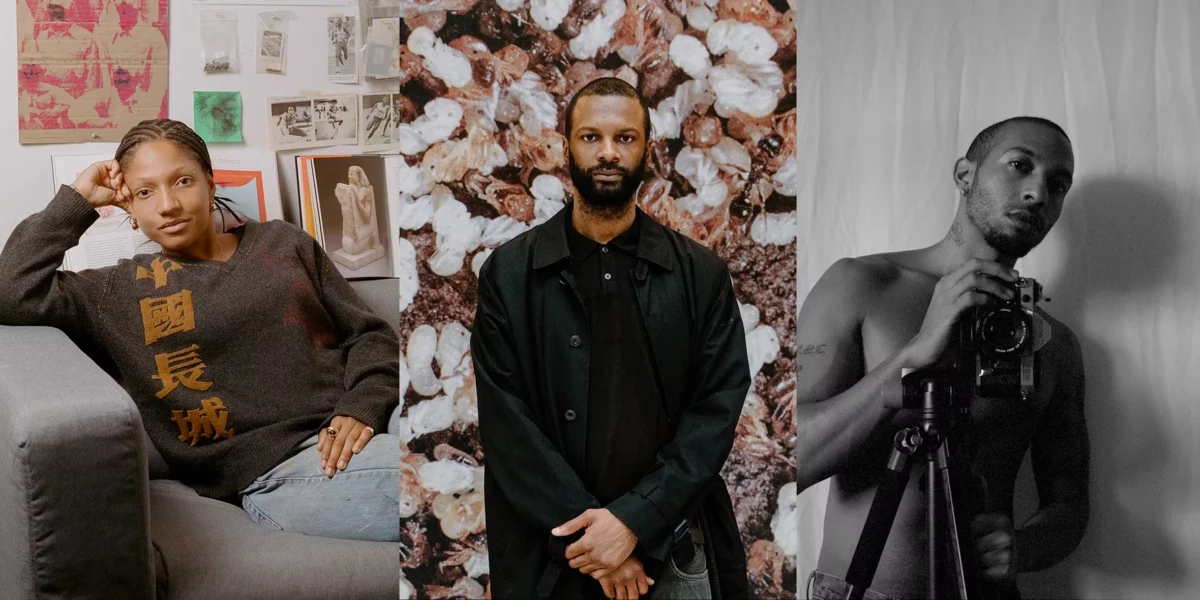
The Studio Museum in Harlem, a cornerstone of contemporary art in New York City and an unparalleled incubator for artists of African and Afro-Latinx descent, has officially unveiled the three participants for its highly anticipated 2026–2027 Artist-in-Residence (AIR) program.
Turiya Adkins, Timothy Yanick Hunter, and Clifford Prince King have been selected for this prestigious cohort. This group represents the second class of artists to occupy the museum’s state-of-the-art, purpose-built facility on 125th Street. The residency, which spans twelve months—beginning in November 2026 and concluding in October 2027—serves as a vital professional bridge, providing the chosen practitioners with essential material support, dedicated studio workspace, and the institutional mentorship necessary to propel their careers to a global stage.
A Legacy of Excellence: The AIR Program’s Historical Impact
Since its inception, the Artist-in-Residence program has been more than a simple fellowship; it has been an engine of art history. The program has supported more than 150 artists, many of whom have gone on to become the most influential figures in contemporary culture. The alumni list reads like a survey of the most significant voices in 20th and 21st-century art, featuring luminaries such as David Hammons, Julie Mehretu, Wangechi Mutu, Kerry James Marshall, Jordan Casteel, and Lauren Halsey.
The program is uniquely designed to foster an environment where artistic experimentation is encouraged and community engagement is prioritized. By placing emerging artists at the heart of the Harlem community, the museum ensures that the work produced is deeply informed by the social, political, and cultural dialogue of one of the world’s most significant Black cultural hubs. The residency culminates in a highly anticipated group exhibition held at the museum, accompanied by a scholarly publication that documents the artists’ development and contributions during their time in the program.
Meet the 2026–2027 Cohort
The selection process for the residency is rigorous, involving a panel of experts who evaluate thousands of applicants for their conceptual depth, technical rigor, and potential for growth. The three artists chosen for the 2026–2027 cycle offer a diverse array of mediums and intellectual inquiries.
Turiya Adkins: Mapping Mythology and Black Worldmaking
Brooklyn-based multidisciplinary artist Turiya Adkins works at the intersection of drawing, painting, and printmaking. Her practice is defined by the construction of dense, abstract visual worlds that serve as vessels for investigation into mythology and Black worldmaking. Adkins’s work challenges traditional notions of representation, favoring instead a language of fluid abstraction that invites viewers to reconsider historical and speculative narratives.
Having previously exhibited at the Hannah Traore Gallery in New York and Frieze Cork Street in London, Adkins is poised for a significant institutional breakthrough. Her time at the Studio Museum is expected to deepen her engagement with the material possibilities of printmaking and large-scale painting.

Timothy Yanick Hunter: Archival Sampling and the Diaspora
Toronto-based artist Timothy Yanick Hunter brings a research-driven, interdisciplinary approach to the residency. His work utilizes methodologies of recording and sampling to parse the aesthetic and experiential dimensions of the Black diaspora. Hunter is particularly known for his nuanced use of historical photographs, museum archives, and obscure internet ephemera, which he weaves together with music and spoken-word recordings.
Hunter’s inclusion in the 2022 Toronto Biennial of Art and his longlisting for the 2024 Sobey Art Award underscore his position as a rising international star. His works, already held in the permanent collections of the National Gallery of Canada and the Studio Museum in Harlem itself, demonstrate an artist capable of bridging the gap between historical preservation and contemporary digital culture.
Clifford Prince King: Capturing Intimacy and Social Realities
Clifford Prince King is a photographer and filmmaker whose work captures the quiet, profound moments of vulnerability within domestic and natural spaces. His lens often focuses on the intersection of race, sexuality, and desire, utilizing natural light to frame personal objects in a way that imbues them with historical weight.
King’s trajectory has been marked by rapid institutional adoption. Following his first solo museum exhibition at the Carolyn Campagna Kleefeld Contemporary Art Museum in 2023, he has continued to gain critical acclaim for his public-facing work. Notably, his 2023 commission by the Public Art Fund—which saw his photographs displayed on transit infrastructure across New York, Chicago, and Boston—demonstrated his ability to engage with the public sphere. With a second solo museum show opening at MoCA Tucson in October 2026, his residency at the Studio Museum will coincide with a period of significant professional momentum.
Official Institutional Response
Thelma Golden, Director and Chief Curator of the Studio Museum in Harlem, emphasized the residency’s foundational importance in a recent press release.
"Our Artist-in-Residence program has served as the essence of this institution’s mission since our founding," Golden stated. "It embodies our commitment to ensuring early-career artists of African descent are supported and nourished, and exemplifies our work to bring artists together with the Harlem community. I am thrilled that this cohort’s three outstanding artists, Turiya Adkins, Timothy Yanick Hunter, and Clifford Prince King, will be with us during this year."
The sentiment reflects the museum’s ongoing commitment to its "open door" policy, which invites the neighborhood to participate in the artistic process, transforming the museum from a static gallery space into a living, breathing laboratory of culture.

Implications for the Future of Contemporary Art
The residency program at the Studio Museum acts as a barometer for the future of the art market and academic discourse. By providing these artists with the resources to produce work without the immediate pressure of commercial viability, the museum allows for a period of "deep work" that often results in the most experimental and intellectually challenging pieces of the artists’ careers.
Furthermore, the physical space—the new building on 125th Street—represents a massive leap forward in the museum’s capability to host these artists. With expanded studio space and enhanced technical facilities, the 2026–2027 cohort will be the first to truly test the limits of the new architecture.
The Broader Context: Harlem as a Global Center
The residency program also serves as a vital anchor for Harlem’s identity as a global center of creative production. In an era where gentrification and rising costs of living have threatened to displace artists from major metropolitan hubs, the Studio Museum’s residency provides a rare, protected space for Black and Afro-Latinx artists to remain in, and contribute to, the neighborhood.
By integrating these artists into the social fabric of the city through talks, studio visits, and community outreach, the museum ensures that the evolution of contemporary art remains tethered to the lived experiences of the people it represents. As the 2026–2027 residency begins this November, the art world will once again turn its eyes to Harlem, waiting to see how the next generation of creative minds will translate the complexities of the current era into a new visual language.
The upcoming months will involve not only the development of individual practices but also a collective exchange of ideas, as Adkins, Hunter, and King engage with one another and the seasoned curatorial staff at the Studio Museum. The culmination of this residency—a major exhibition in 2027—will be a landmark moment, not just for the artists, but for the trajectory of contemporary art in the 21st century.
