

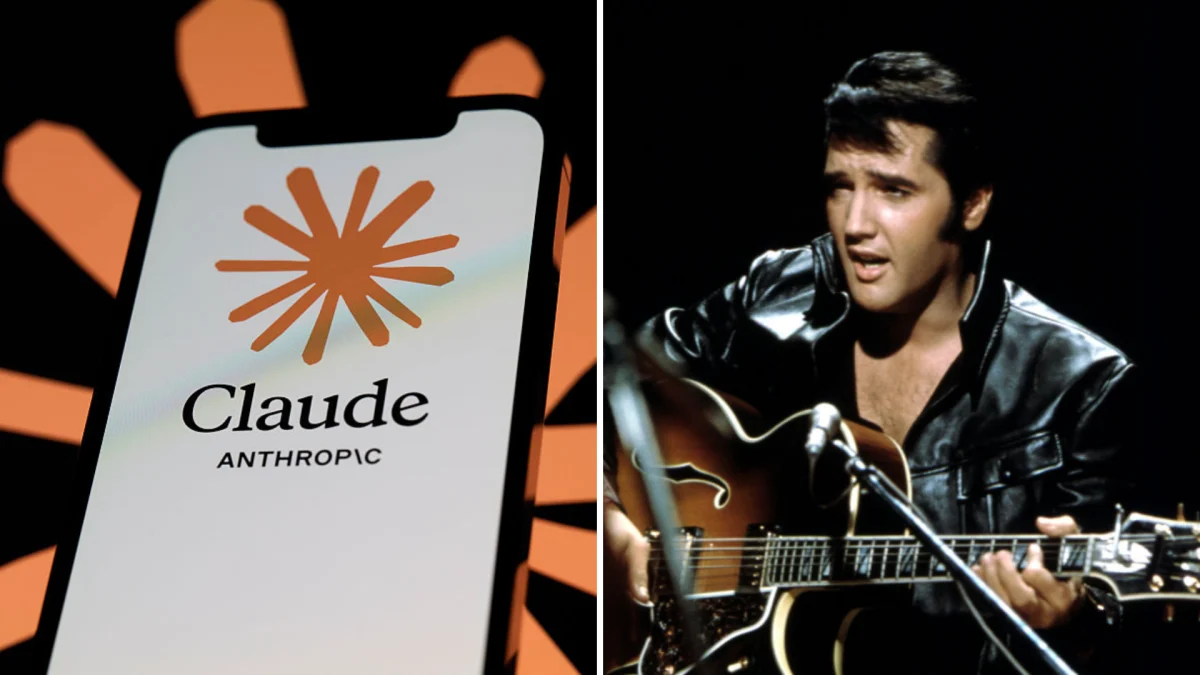
The intersection of generative artificial intelligence and intellectual property rights has reached a volatile new frontier. In a legal challenge that could redefine the boundaries of AI training, the estate of Elvis Presley—the undisputed "King of Rock and Roll"—has launched a significant lawsuit against AI powerhouse Anthropic. The filing, which centers on the unauthorized use of the icon’s legendary discography, represents a growing trend of creative industries mounting a coordinated defense against the rapid, often opaque, development of Large Language Models (LLMs).
The Core Allegations: Unauthorized Training on Iconic Works
The lawsuit, filed on Friday, contends that Anthropic’s flagship Claude AI models were trained on at least 274 of Elvis Presley’s copyrighted songs without the requisite licensing or permission from the estate. According to the complaint, the list of affected tracks includes some of the most recognizable compositions in American history, such as "Can’t Help Falling in Love," "Don’t Be Cruel," "Return to Sender," and "(You’re the) Devil in Disguise."
The plaintiffs argue that Anthropic has effectively built its commercial empire on a foundation of systemic copyright infringement. The core of the grievance is not merely that the AI "knows" the songs, but that its output demonstrates an ability to adapt, mimic, and reproduce the structure and essence of Presley’s work. The estate alleges that when prompted, Claude can generate lyrics that mirror the rhythm, rhyme schemes, and thematic motifs of Presley’s hits, often with only minor, superficial alterations.
"These renders keep landing very close to the originals: same structure, same hooks reused with light rewording, and full sets of verses, choruses, and bridges," the legal filing states. The estate’s attorneys argue that this behavior crosses the threshold from being "inspired by" a genre or an artist to an act of blatant reproduction—a digital form of plagiarism that threatens the long-term value and integrity of the Presley catalog.
A Chronology of Legal Strife
The legal action against Anthropic by the Elvis Presley estate is far from an isolated incident. Rather, it serves as the latest chapter in a broader, escalating saga of litigation between generative AI developers and the world’s largest copyright holders.
The Foundation of Conflict
The tension between AI companies and the music industry has been simmering since the commercial explosion of generative AI in late 2022. As LLMs gained the ability to process and generate text—including complex lyrics and song structures—labels and estates began to investigate the "training data" feeding these systems.
A Pattern of Litigation
Anthropic, in particular, has become a focal point for this industry-wide backlash:
- October 2023: Universal Music Group (UMG) initiated its first major legal challenge against Anthropic, alleging that the company’s models were infringing on their massive library of protected lyrics and musical compositions.
- January 2024: UMG and other major publishers filed a secondary, expanded lawsuit, signaling that initial attempts at reconciliation or dialogue had failed.
- August 2024: Sony Music Publishing and Warner Chappell Music joined the fray, accusing Anthropic of a "brazen campaign" of illegally scraping, torrenting, and downloading copyrighted works on a massive, industrial scale to train its models.
- July 2024 (A Pivot Point): While Anthropic achieved a significant milestone by settling a $1.5 billion class-action lawsuit brought by authors over the unauthorized use of pirated books, this victory did little to dampen the resolve of the music industry. The music sector, with its high-value, highly litigious intellectual property, has proven to be a much more aggressive opponent than the book publishing world.
Supporting Data and Financial Stakes
The financial implications of this latest lawsuit are substantial. The plaintiffs are seeking a permanent injunction to prevent Anthropic from utilizing any of the Presley catalog in its future training processes or output generation. Furthermore, the estate is pursuing statutory damages of up to $150,000 for each of the 274 works alleged to have been infringed upon.
Should the court rule in favor of the estate on all counts, Anthropic could face a judgment totaling upwards of $41.1 million. While a sum of $41 million might seem manageable for a company backed by major tech giants, the broader danger for Anthropic lies in the precedent. If every song in every major label’s catalog—numbering in the millions—were subject to similar damages, the cumulative liability would effectively bankrupt the current business model of generative AI.
Beyond the monetary figures, the "unfathomable scale" of the infringement described by the plaintiffs highlights the fundamental conflict between AI companies’ "fair use" defense and the rights of creators. AI developers argue that training on publicly available internet data constitutes transformative, fair use. Conversely, rights holders argue that when an AI can recreate a song’s specific artistic "DNA," the tool ceases to be a transformative agent and becomes a direct market substitute for the original work.
Official Responses and Defensive Strategy
In response to the filing, Anthropic has remained stoic, adopting a standard corporate legal posture. A spokesperson for the company stated: "We disagree with the claims and intend to defend this case fully."
Anthropic’s defense, which has been echoed across the tech sector, relies on the premise that LLMs are not "copying" music in the traditional sense. Instead, they argue that the models "learn" the statistical patterns of language and structure, much like a human student might study the works of a master. According to this logic, the models do not contain a database of the songs themselves, but rather a compressed, abstract understanding of musical composition.
However, the Presley estate’s legal team is pushing back on this abstraction. By highlighting that Claude can, upon user request, "recreate and update" Presley’s songs, they are demonstrating that the model’s internal representation of the data is sufficient to reconstruct copyrighted material, thereby infringing on the exclusive rights of the copyright owner to create derivative works.
Implications for the Future of AI and Creative Rights
The outcome of this lawsuit will likely have tectonic implications for the future of AI development.
1. The "Fair Use" Showdown
This case is expected to force a judicial reckoning regarding the "fair use" doctrine in the age of AI. If courts determine that ingesting copyrighted music to train a commercial model is not transformative, the entire "data scraping" industry will be forced to pivot. This would likely necessitate a move toward "licensed training sets," where AI companies pay for the rights to use proprietary data, fundamentally altering the economics of the industry.
2. The Preservation of Legacy
For the Elvis Presley estate, this is as much about brand management as it is about finance. The estate has spent decades meticulously curating the image and sonic legacy of Elvis Presley. The prospect of an AI model generating "new" Elvis songs that could potentially be indistinguishable from the originals—or worse, songs that are offensive or misaligned with the brand—is a nightmare scenario for legacy managers.
3. Industry-Wide Consolidation
As legal costs mount, the ability to train massive models may become a luxury reserved only for the largest, most well-capitalized firms. If small and medium-sized AI startups cannot afford to pay for licensing, the market may consolidate, with only a few major players—those who can afford both the legal defense and the massive licensing fees—left standing.
4. Technical Hurdles
The lawsuit also places pressure on AI developers to implement "guardrails." We are already seeing developers attempt to censor their models to prevent them from generating copyrighted lyrics. However, as the Presley lawsuit proves, the estate and other rights holders are not satisfied with mere technical band-aids; they are challenging the very architecture of the training data.
Conclusion
The lawsuit against Anthropic by the Elvis Presley estate is a stark reminder that the "Wild West" era of AI development is coming to a close. As the legal system begins to parse the nuances of copyright in the digital age, the "King of Rock and Roll" may become the unlikely figurehead for a movement that forces AI companies to respect the creative labor that made their intelligence possible. Whether through a massive settlement or a precedent-setting court ruling, the resolution of this case will undoubtedly serve as a cornerstone for the digital laws of the 21st century. For now, Anthropic remains defiant, but the mounting pressure from the music industry suggests that the days of unchecked data ingestion are numbered.
