

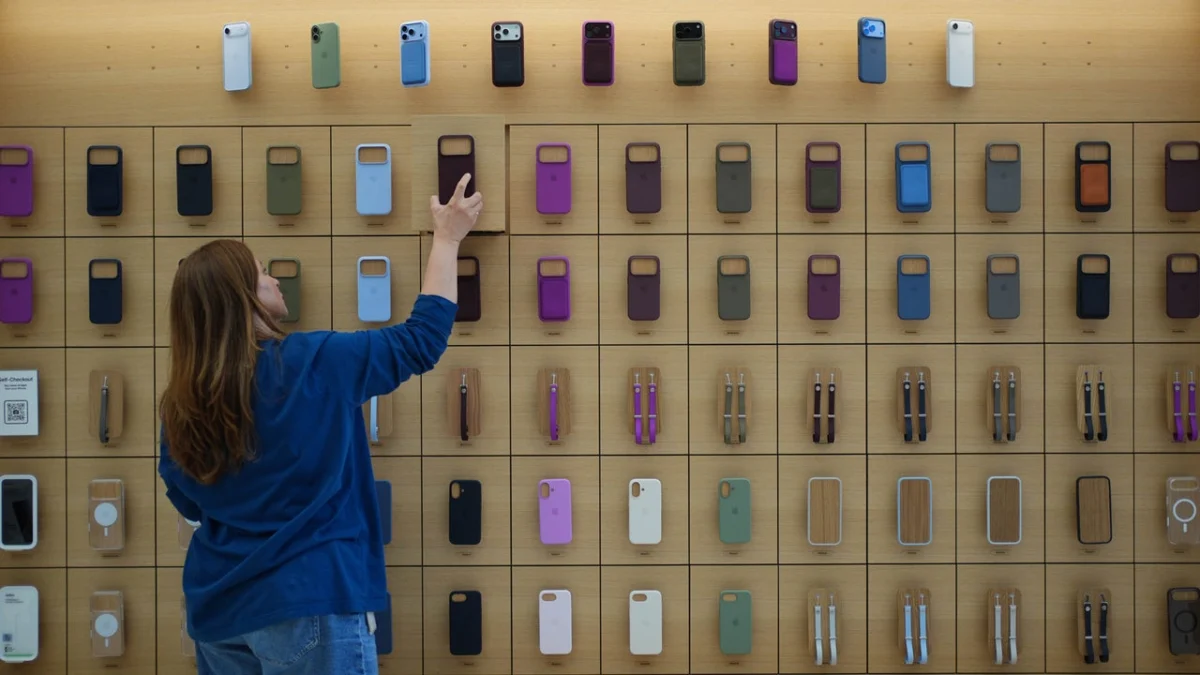
There is a familiar, somewhat unsettling rhythm to the modern Apple Store experience. You have just spent upwards of $1,200 on the latest flagship iPhone, a masterpiece of silicon and titanium engineering. You are prepared to leave, wallet already feeling significantly lighter, when the salesperson offers a final, seemingly benign suggestion: "Would you like a case and a charging brick to go with that?"
What follows is an almost ritualistic "minor mugging." A $49 silicone case, a $39 charging brick, and perhaps a $29 USB-C cable are added to your tab, inflating the total cost of your upgrade by nearly 10%. While these accessories are sold with the assurance of perfect compatibility, the premium pricing often leaves consumers questioning whether they are paying for quality or merely the iconic fruit logo.
Apple’s accessory division is a masterclass in retail strategy. By cultivating an image of a "walled garden," the company has built a multibillion-dollar side business that thrives on the psychological assumption that only official gear can safely sustain an expensive device. However, as the third-party market matures and regulatory pressures mount, this narrative is beginning to crack. For the savvy consumer, the question is no longer whether to buy Apple or "off-brand," but rather where the premium is justified and where it is simply an exercise in brand-tax exhaustion.
The Chronology of the "Accessory Tax"
To understand the current state of Apple’s accessory strategy, one must look back at the company’s pivot from a computer manufacturer to a lifestyle brand.
- The Early Days (2001–2007): During the iPod era, accessories were largely peripheral. Apple focused on white earbuds and proprietary 30-pin cables. Third-party manufacturers were quick to fill the gaps, but Apple maintained tight control over functionality.
- The Lightning Era (2012): With the introduction of the Lightning connector, Apple solidified its control. By requiring a "Made for iPhone" (MFi) certification, Apple ensured that any third-party accessory—from cables to game controllers—met specific standards. This was presented as a quality-control initiative, but it also functioned as a licensing revenue stream.
- The Great Unbundling (2020): The decision to remove the charging brick from the iPhone 12 box was a watershed moment. Apple cited environmental concerns—reducing carbon emissions by shrinking box sizes and eliminating redundant chargers. Critics, however, pointed to the $19–$39 cost of individual chargers, suggesting it was a calculated move to drive high-margin accessory sales.
- The USB-C Transition (2023–Present): With the iPhone 15 moving to USB-C, the MFi program’s influence waned slightly, opening the door for universal cables. Yet, Apple’s ecosystem lock-in remains strong through proprietary wireless standards like MagSafe.
Supporting Data: The Margin Game
The profitability of Apple’s accessory segment is not publicly broken out in granular detail, but financial analysts estimate that margins on branded accessories often exceed 50% to 70%.
Consider the $19 Polishing Cloth. While it became a meme of late-stage consumerism, it is a perfect example of Apple’s ability to commoditize the mundane. When you scale that logic to $39 dongles and $49 silicone cases, the cumulative revenue is staggering. According to recent quarterly earnings reports, Apple’s "Wearables, Home, and Accessories" category consistently generates over $8 billion in revenue per quarter.
In contrast, third-party manufacturers—often operating on razor-thin margins—must compete on price and innovation. Companies like Anker, Satechi, and Belkin have built empires by offering "Apple-certified" or "Apple-compatible" gear that often outperforms the official versions in terms of power output and versatility, frequently at 40% to 60% of the cost.
Buy Official: Where the Markup Justifies the Engineering
Despite the allure of cheaper alternatives, there are specific instances where Apple’s proprietary engineering provides tangible benefits that third-party manufacturers struggle to replicate perfectly.
MagSafe Wireless Chargers and Thermal Management
The official $39 Apple MagSafe charger is the gold standard for a reason. Beyond the aesthetic, it contains proprietary hardware modules that communicate directly with the iPhone’s internal thermal management system.
When you attach a device to a standard "Qi" wireless charger, it is essentially a "dumb" power transfer. The official MagSafe ecosystem, however, is a two-way street. The phone tells the charger how much heat it is generating, and the charger adjusts its output to ensure the battery is not degraded by excessive heat. While third-party MagSafe-compatible chargers (those with the magnetic ring but without the official Apple MFi chip) are improving, the official charger remains the safest bet for long-term battery health and peak charging speeds (up to 25W on the latest models).
Precision-Fit Cases (MagSafe Alignment)
The $49 silicone case is often criticized for its price, but it offers a level of magnetic alignment that is difficult to manufacture. Because Apple designs the magnets within the iPhone chassis, their cases feature perfectly calibrated magnetic arrays. Third-party cases often suffer from "magnetic drift," where the case interferes with the strength of the connection, causing your phone to slip off a car mount or fail to trigger the charging animation on a nightstand dock.
When to Look Elsewhere: The "Smart" Alternatives
For almost everything else, the "Apple Tax" is avoidable. Here is how to navigate the market:
Charging Bricks (GaN Technology)
Never buy a single-port 20W charger from Apple for $19. It is archaic technology. Instead, look for third-party Gallium Nitride (GaN) chargers from reputable brands like Anker or Ugreen. For the same price or less, you can get a 30W or even 65W charger that is smaller, more efficient, and capable of charging your laptop, phone, and tablet simultaneously. These manufacturers have essentially lapped Apple in the race for power density.
USB-C Cables
Since the transition to USB-C, the need for Apple-branded cables has vanished. As long as a cable is "USB-IF Certified" (look for the logo on the packaging), it will provide the exact same charging and data transfer speeds as an Apple-branded cable. Save your $29 and buy a braided, high-durability cable from a reputable third party for $10.
Dongles and Hubs
Apple’s dongles are notoriously fragile and expensive. If you need an HDMI or SD-card adapter, look to companies like Satechi. They offer high-quality aluminum hubs that match Apple’s aesthetic while providing additional ports that Apple refuses to include in their own minimalist designs.
Official Responses and Corporate Stance
Apple’s official position remains unchanged: they emphasize "seamless integration," "safety," and "user experience." In various press briefings, Apple representatives have argued that their MFi program exists to prevent "low-quality, potentially dangerous accessories" from causing hardware failures or fire risks.
From a legal perspective, Apple has defended its ecosystem control as a necessary feature of its privacy and security model. By controlling the communication between accessories and the device, they argue they can ensure that malicious data cannot be transferred through a compromised charging cable—a rare but theoretically possible security vector.
However, regulatory bodies in the European Union have a different take. The forced transition to USB-C was a direct result of the EU’s Common Charger Directive, which aims to reduce electronic waste and consumer frustration. This suggests that the "official" ecosystem is being slowly dismantled by legislative action, forcing Apple to share the stage with universal standards.
Implications: The Future of the Accessory Market
The implications of this shift are twofold. First, consumers are becoming more educated. The "Apple logo equals quality" heuristic is fading, replaced by a more nuanced understanding of tech specifications like GaN, Power Delivery (PD) standards, and thermal throttling.
Second, Apple is likely to shift its accessory focus toward more "experiential" products. As basic cables and bricks become commoditized, Apple will lean into high-margin lifestyle accessories like the Vision Pro’s proprietary batteries, premium leather-alternative goods, and integrated health-monitoring gear. They are moving away from being a "utility" provider and toward being a "luxury" provider.
The Verdict: A Balanced Strategy
The best strategy for the modern Apple user is a hybrid one.
- Invest in Official: If it interacts with the internal thermal management, power efficiency, or core magnetic stability of the iPhone, buy official Apple hardware.
- Save on Utility: If it is a passive bridge—like a cable, a wall-plug, or a mounting solution—look to top-tier third-party manufacturers.
By refusing to pay the premium for items that serve as mere conduits for power or data, you reclaim the agency that the Apple Store’s aggressive sales tactics seek to undermine. Your iPhone is a significant investment; your accessory budget, however, should remain an exercise in rational economics. The goal is to keep your device running at peak performance without subsidizing the company’s profit margins on glorified plastic and copper. In the long run, your wallet—and your phone’s battery—will thank you.
