

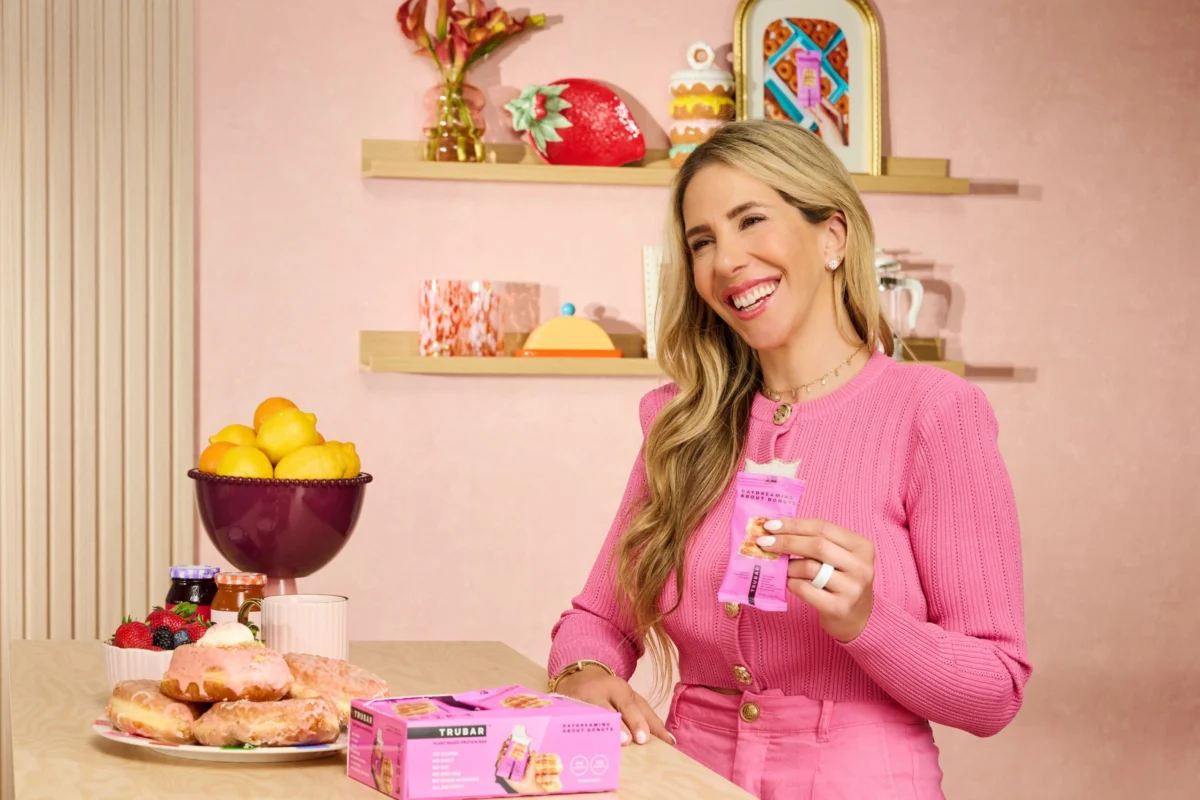
It started with a wooden tray, a handful of protein bars, and a simple, scrappy proposition for local shop owners: "Put these on your counter and see if customers buy them."
What began as a modest experiment by Erica Groussman, a stay-at-home mother with a vision, has transformed into a powerhouse in the "better-for-you" snack industry. Today, Trubar is a national phenomenon, stocked in 32,000 retail locations across the United States. In 2026, the company shipped nearly 46 million units and generated roughly $100 million in gross revenue. This trajectory culminated in a landmark $173 million acquisition by the Turkish snack giant Eti Gida in early 2026—a deal that solidified Groussman’s transition from a kitchen-table entrepreneur to the CEO of a globally backed enterprise.
The Core Facts: A Masterclass in Persistence
Trubar’s success is not merely a story of a good product; it is a testament to the power of operational grit. While many founders seek perfection before launch, Groussman championed a philosophy of iterative growth. By focusing on sensory experience—specifically, creating a protein bar that offers the indulgence of a dessert without the digestive discomfort common in the industry—she carved out a unique market niche.
The company’s growth has been defined by three distinct phases:
- The Grassroots Phase (2018–2020): Direct-to-retail, counter-top placement in local delis and salons.
- The Scaling Phase (2020–2024): Strategic entry into retail giants like Whole Foods and Costco.
- The Institutional Phase (2024–Present): Transitioning into a public company entity and eventual acquisition by Eti Gida.
A Chronology of Growth: From Disney Trips to Global Markets
The Epiphany
The origins of Trubar lie in a seemingly mundane moment: a family trip to Disney. While snacking on a popular protein bar, Groussman experienced a familiar, unpleasant physical reaction—a distended, uncomfortable stomach. This moment of physical discomfort became the catalyst for her business model. She set out to build a brand that tasted like a "cheat meal" but possessed the nutritional profile of a health supplement.
The Lean Startup Years
After collaborating with a food scientist to perfect textures and eliminate the chemical aftertaste associated with many health bars, Groussman launched in 2018. Her early distribution strategy was purely analog. She would walk into local businesses—juice bars, boutique gyms, and salons—and ask owners to display her bars. If they sold, she returned with more. This direct feedback loop allowed her to validate flavors like "Daydreaming About Donuts" and "Oh Oh Cookie Dough" before committing to large-scale manufacturing.
The Near-Collapse
The journey was not without significant peril. Early in the company’s life, Groussman brought on an outside operator to manage the business, allowing herself more time for family. It was a decision that almost destroyed her venture. The operator’s spending far exceeded revenue, leading to a staggering $7 million in debt. While her husband suggested she cut her losses and move on, Groussman refused. "It’s a part of me," she said, choosing to fight for the company’s survival rather than surrender to insolvency.
Breakthroughs in Retail
The company’s survival required a pivot to larger retail. By leveraging persistent, direct outreach on platforms like LinkedIn, Groussman secured a trial in 30 Whole Foods locations. Despite having zero marketing budget, the bars became top-sellers, outperforming legacy brands. A subsequent expansion into Costco provided a valuable lesson in global strategy; while a Canadian launch struggled due to brand unfamiliarity and pricing, the U.S. rollout proved that once a product finds its audience, the barrier to entry significantly lowers.
Supporting Data and Financial Performance
The financial data behind Trubar illustrates a business that has mastered both product-market fit and operational efficiency:
- 2025 Gross Revenue: Approximately $100 million.
- 2026 Volume: Nearly 46 million bars shipped.
- Retail Footprint: 32,000 locations across the U.S.
- Acquisition Valuation: $173 million (February 2026).
These figures reflect a company that evolved from a scrappy startup to a mature brand capable of sustaining high-volume production while maintaining the quality standards that defined its early, smaller-scale successes.
Official Stance: The CEO’s Philosophy
Groussman’s leadership style is defined by a "hands-on" approach that borders on protective. Even as the CEO of a multi-million dollar company, she remains involved in the granular details of the business—from vetting ingredients to solving supply chain bottlenecks.
"I will not ask you to do something that I wouldn’t do myself," she says. This was evidenced during a critical Walmart launch, where a shipping delay threatened their timeline. Instead of relying solely on logistics partners, Groussman personally called packaging suppliers until she found one that could meet their deadline. When a labeling error occurred, she and her team were on-site, manually applying stickers to thousands of boxes to ensure the product hit the shelves on time.
On Hiring and Culture
Groussman advocates for a specific hiring philosophy: "Interview for the resume, but hire for chemistry." In an environment where the company culture is built on rapid decision-making, she prioritizes candidates who exhibit initiative. Her advice to fellow CEOs is clear: "Just get 80%, just go. Start etching away and moving in the direction."
Implications: The Future of Trubar
The acquisition by Eti Gida represents more than just an exit; it serves as a catalyst for international expansion. For the snack industry, Trubar’s success highlights a shift in consumer demand toward "permissible indulgence." Consumers are no longer willing to sacrifice taste for health, and they are increasingly skeptical of brands that prioritize marketing over ingredient integrity.
Scaling and Diversification
With the backing of a major global entity, Trubar is now moving beyond the single-bar model. The company has already launched "Trubar Kids" and "Trubar Pro," signaling an intent to capture various demographics.
The implications for other founders are profound. Groussman’s journey proves that:
- Debt is not always the end: Strategic restructuring and sheer willpower can overcome even severe financial crises.
- The "Counter-top Test" is timeless: Even in a digital-first world, physical proof of sale remains the most reliable indicator of potential.
- The Founder’s Role is Fluid: The ability to wear every hat—from salesperson to crisis manager—is what separates brands that survive from those that thrive.
As Trubar looks to the future, Groussman remains the heartbeat of the operation. Despite the $173 million acquisition, she has no plans to step away. "I’m not done," she insists. "It’s my baby."
The story of Trubar is a reminder that the most successful businesses are often built not by those with the most capital, but by those with the most conviction. Whether it was the early days of placing bars on local counters or the high-stakes negotiation of a nine-figure sale, Groussman’s career offers a masterclass in the relentless pursuit of an idea. The "better-for-you" snack market is crowded, but as Trubar has demonstrated, there is always room for a product that truly understands what the consumer wants—and for a leader who knows exactly how to get it into their hands.
