

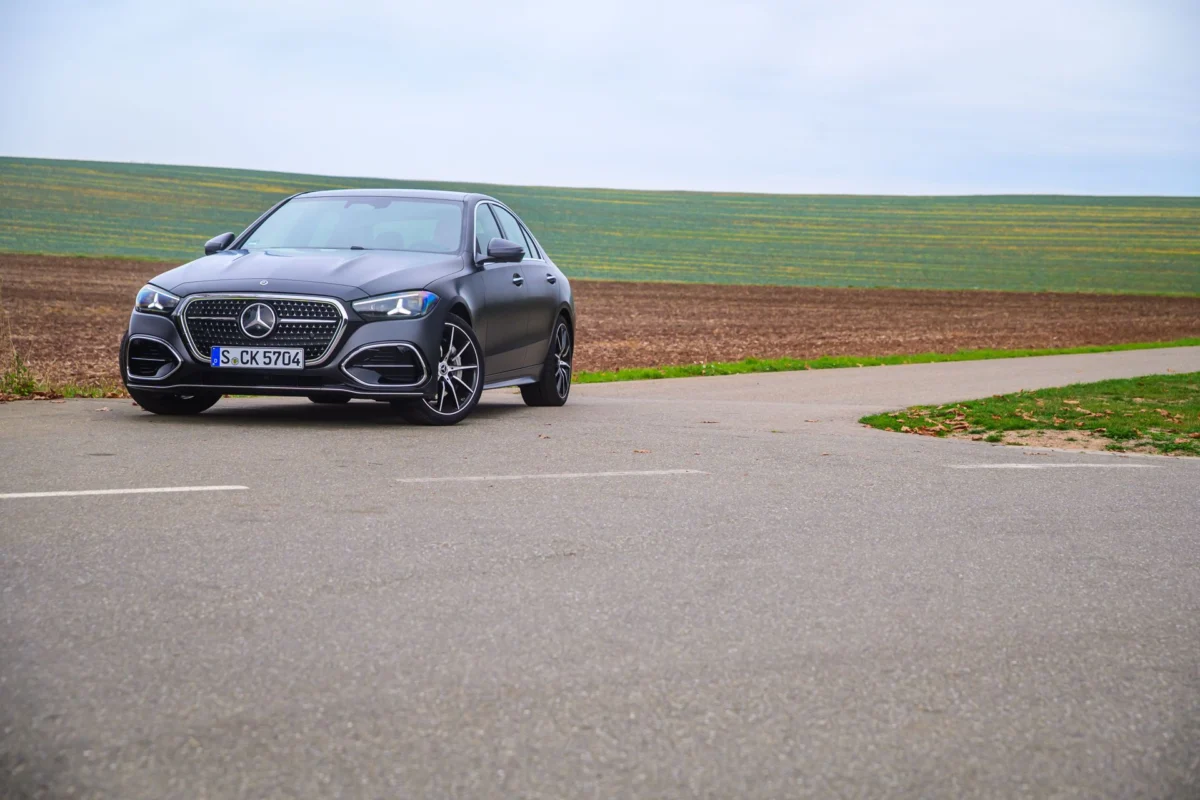
Mercedes-Benz has long been a master of the "if it isn’t broken, evolve it" philosophy. However, in the rapidly shifting landscape of 2026, the German automaker finds itself navigating a complex transition. Only six months after introducing the revolutionary, ground-up electric 2027 C-Class, the company has pulled the veil back on its combustion-powered sibling. The result is the 2027 Mercedes-Benz C 350 4Matic—a car that, while visually familiar, represents a significant, if somewhat contradictory, effort to modernize the internal combustion experience while the industry pivots toward an electric-first future.
The Dual-Path Strategy: A Study in Transitions
The 2027 C 350 4Matic is a "digital refresh" of the W206-generation C-Class that has been a staple of the Mercedes lineup since 2021. To the casual observer, it might look like a simple model-year update. In reality, it is a strategic maneuver designed to bridge the gap between traditional luxury buyers and the brand’s ambitious electrification goals.
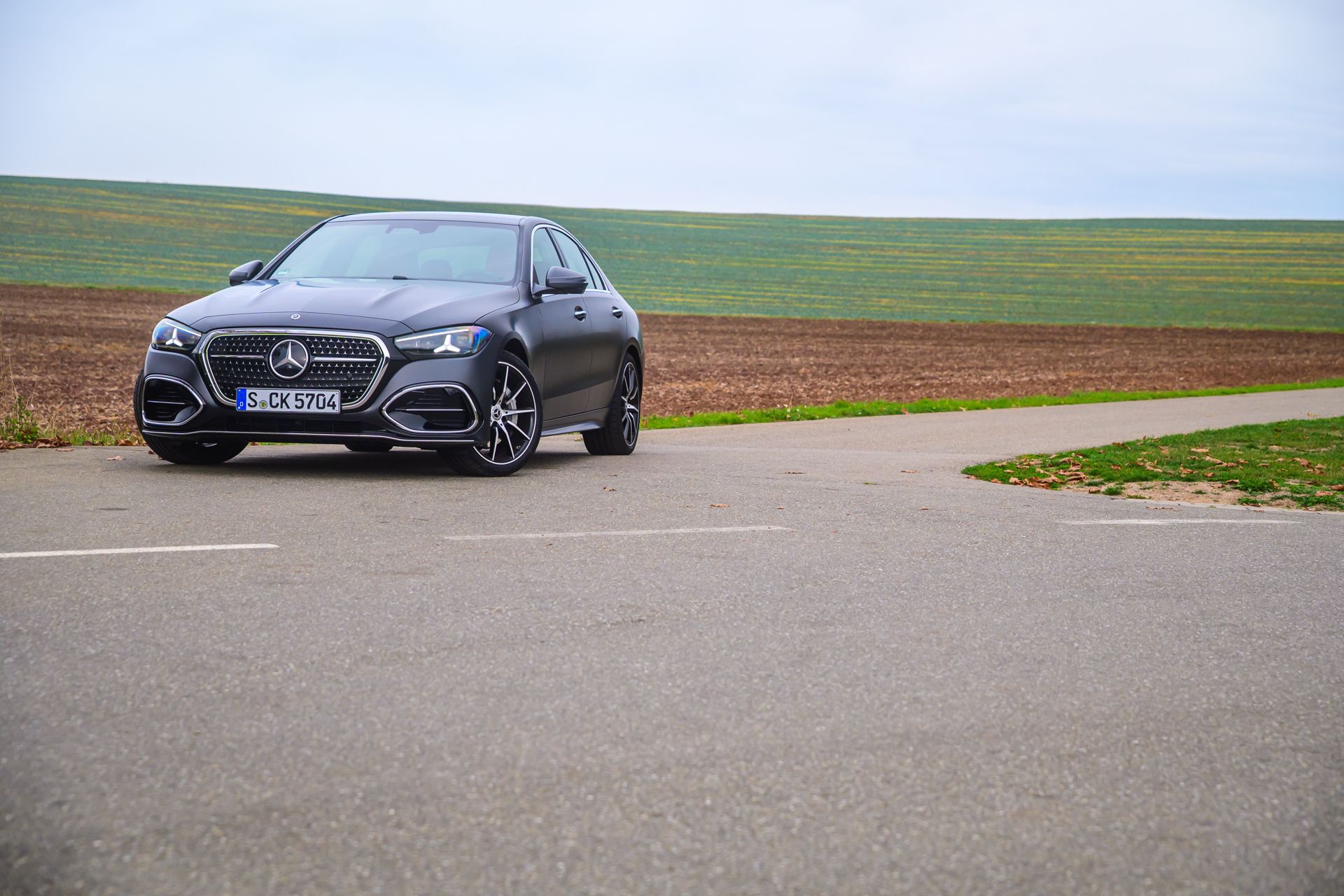
Mercedes is currently running a parallel strategy. For those ready to commit to the battery-electric revolution, there is the purpose-built, sleek, new-gen electric C-Class. For the customer who is either hesitant about EV infrastructure or simply prefers the visceral familiarity of a turbocharged gasoline engine, the C 350 4Matic offers a continuation of the combustion lineage.
This approach mirrors the company’s efforts with the GLC crossover, where gasoline and electric versions coexist in the same showroom. It is an acknowledgment that the transition to pure electric power is not a monolith; for many, it is a multi-year, even multi-decade, migration.

Under the Skin: The "Evo" Powertrain
While the exterior styling of the 2027 C 350 4Matic remains largely unchanged from its predecessor, the "newness" of the vehicle is concentrated entirely under the sheet metal. To comply with the stringent upcoming Euro-7 emissions standards, Mercedes has updated its proven M 254 four-cylinder engine, now dubbed the "M 254 Evo."
The C 350 4Matic is the sole combustion offering for the Canadian market. It utilizes a 2.0-litre turbocharged four-cylinder engine, paired with a 48-volt mild-hybrid "integrated starter-generator" (ISG). This system is far from a full hybrid, but it serves a vital purpose: providing a 23-horsepower and 151-pound-foot torque assist during acceleration, effectively smoothing out the power delivery and reducing the load on the internal combustion engine.

A unique feature of this powertrain is the auxiliary compressor—essentially an electric supercharger—which works in tandem with the exhaust-gas turbocharger. By providing boost pressure before the conventional turbo has reached its peak spinning speed, the system eliminates traditional turbo lag, ensuring that the 255 horsepower and 295 pound-feet of torque are delivered with the immediacy expected of a premium German sedan.
However, the experience is not without its caveats. While Mercedes has increased the application of sound-deadening materials and improved windshield seals, the four-cylinder engine can still sound somewhat "clattery" under heavy acceleration. It is a reminder that even with the best engineering, a four-cylinder mill lacks the acoustic refinement of the multi-cylinder engines that once defined the C-Class experience.

Digital Architecture: Future-Proofing the Combustion Car
The most significant update for the 2027 model year is the overhaul of the vehicle’s computing architecture. As the automotive industry shifts toward "software-defined" vehicles, Mercedes is ensuring that its gasoline cars do not become obsolete relics.
The new central computer is significantly more powerful, designed to manage the data streams from the car’s 17 sensors and eight cameras. It also creates "headroom" for future over-the-air (OTA) updates and connected-vehicle integrations. While the infotainment interface—the 11.9-inch central touchscreen and 12.3-inch driver display—appears familiar, the underlying speed and processing capability have been vastly improved.

A notable change is the retirement of the fingerprint authenticator in favor of facial recognition, powered by a driver-monitoring camera discreetly integrated into the center air vent. While some might find the "big brother" aspect of this camera unsettling, it offers practical utility for the modern, connected professional. The system now supports Microsoft Teams integration, allowing for video calls from the car. While the prospect of taking a boardroom meeting from a parking lot might be a dystopian vision for some, it is the new reality of the mobile office.
The AI Integration: A Double-Edged Sword
Mercedes-Benz has leaned heavily into Artificial Intelligence, integrating models from OpenAI, Microsoft, and Google into the MBUX infotainment system. The goal is to move the "Hey, Mercedes" voice assistant beyond simple commands and into a more conversational, intuitive role.

The company claims the new MBUX Virtual Assistant can now analyze context to identify music or podcasts that suit the driver’s mood or current environment. While the technology is impressive, it raises legitimate questions regarding data privacy. Mercedes states that all voice data sent to its servers is anonymized, and the brand has generally performed well in independent privacy studies.
However, the rapid expansion of AI in vehicles suggests a "boiling frog" scenario. As consumers become accustomed to these features, the threshold for what is considered an acceptable level of data collection continues to shift. Drivers should remain wary of accepting terms and conditions for new features without understanding the long-term implications of their data trail.
Driving Dynamics: Plush Over Performance
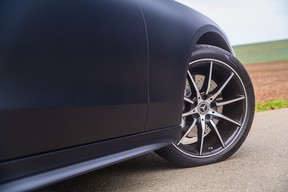
On the road, the 2027 C 350 4Matic is a reminder of why the C-Class remains the brand’s second-best-selling model worldwide. The suspension has been recalibrated with new electronically controlled damping, prioritizing comfort over sportiness.
On pockmarked urban roads, the suspension performs admirably, soaking up bumps and imperfections with a plushness that is quintessentially Mercedes. It does not offer the razor-sharp handling of the BMW 3 Series, but that is clearly by design. The C-Class is engineered for the long haul, designed to turn a grueling commute into a serene experience.

The adaptive cruise control (ACC) has also seen updates, though its performance was inconsistent during testing. While it is capable of decelerating for upcoming bends and speed zones, it occasionally displayed a reactive, jerky nature when following other vehicles. These are likely software-based calibration issues that could be refined with future OTA updates, but in their current state, they lack the smoothness one expects from the luxury leader.
Navigation and Augmented Reality
One of the highlights of the new system is the integration of Google Cloud’s Automotive AI Agent for navigation. When it works, it is brilliant. The heads-up display (HUD) provides augmented-reality (AR) overlays that project "Mario Kart-style" floating arrows directly onto the road surface, making complex turns intuitive and stress-free.

However, the reliance on cloud-based processing revealed some teething problems. During testing, the navigation route occasionally went blank, even in areas with strong network connectivity. On several occasions, the system issued incorrect turn prompts, leading to unnecessary detours and wildly fluctuating ETAs. While these issues are likely fixable via software patches, they serve as a reminder that as cars become more dependent on the cloud, they become susceptible to the same connectivity glitches as a smartphone.
Implications for the Market
The 2027 Mercedes-Benz C 350 4Matic is a fascinating study in corporate strategy. By continuing to produce a high-tech combustion model alongside a new-gen EV, Mercedes is attempting to satisfy two distinct market segments.

The strategy is not unique—Porsche is following a similar path with the Macan and Cayenne, offering both ICE and EV versions simultaneously. However, Mercedes’ execution is distinct in its focus on bringing the "intelligence" of its EV flagship down to the combustion model.
The biggest challenge facing the C 350 4Matic is the looming shadow of the EV version. As more consumers transition to electric, the market for a high-end gasoline sedan will inevitably shrink. By "future-proofing" the combustion model with advanced computing, Mercedes is attempting to extend the lifecycle of its traditional products as long as possible.

Final Verdict: A Sophisticated Stopgap
The 2027 Mercedes-Benz C 350 4Matic is a car of contradictions. It is a traditional gasoline sedan wrapped in the latest silicon-valley-inspired software. It is a vehicle that offers immense comfort and cutting-edge augmented reality, while also being saddled with the "creep factor" of ever-expanding AI integration and the occasional reliability hiccups of a nascent software suite.
For the buyer who wants the latest tech but isn’t ready to jump into an electric vehicle, the C 350 4Matic is a compelling, if imperfect, choice. It bridges the gap between the mechanical past and the digital future with style and substance. While we wait for pricing to be officially confirmed, we can expect a premium over the 2026 C 300’s $62,500 MSRP.
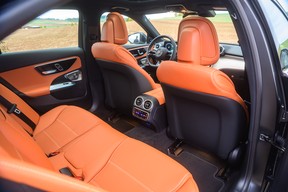
Ultimately, the C 350 4Matic is a testament to the fact that while the engine may eventually go quiet, Mercedes-Benz is determined to ensure that the luxury, technology, and comfort that define the C-Class remain as relevant as ever—even if it means embracing a bit of "slop" in the form of intrusive AI and complex cloud dependencies along the way. Whether this strategy will hold up in a rapidly electrifying world remains to be seen, but for now, the C-Class remains a benchmark for the traditional executive sedan.
