

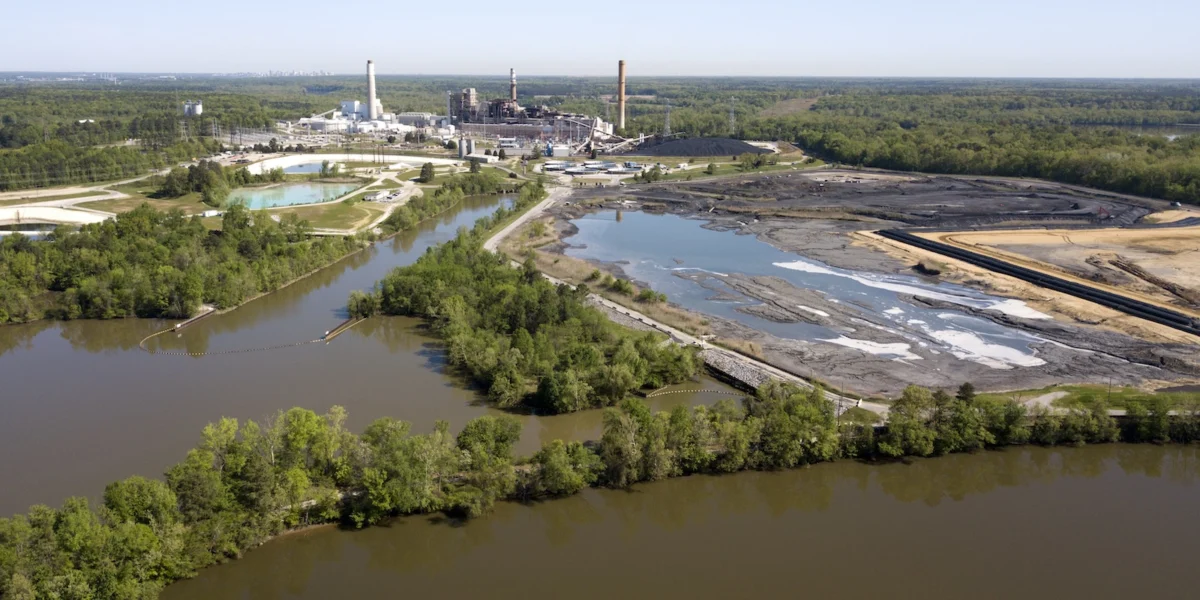
Across the American landscape, from the lush banks of Georgia’s Chattahoochee River to the industrial corridors of the Midwest, a silent, subterranean threat looms. Hundreds of massive, unlined lagoons serve as final resting places for coal ash—the toxic byproduct of decades of coal-fired electricity generation. These impoundments contain millions of tons of heavy metals, including arsenic, mercury, and lead, which have increasingly begun to migrate from their containment ponds into the surrounding groundwater and local river systems.
As the Trump administration pivots toward a policy of "cooperative federalism," the oversight of these toxic sites is being rapidly transferred from federal jurisdiction to state control. Critics, however, warn that this shift is creating a regulatory vacuum, leaving vulnerable communities to contend with powerful utility interests and diminishing state environmental oversight.
The Toxic Stew: A National Environmental Crisis
Coal ash, the powdery residue left behind after coal is burned, contains a concentrated cocktail of hazardous substances. For decades, utilities disposed of this material in unlined ponds, often located dangerously close to waterways. These lagoons, numbering more than 670 across the United States, range in size from modest, few-acre basins to massive, thousand-acre impoundments.
The risks are not merely theoretical. History is punctuated by catastrophic failures of these structures. In 2008, a dike failure at a Tennessee Valley Authority plant in Kingston, Tennessee, unleashed over a billion gallons of toxic sludge, burying homes and leaving a legacy of health crises for the surrounding community. Similar disasters, including spills on North Carolina’s Dan River and in parts of eastern Kentucky, have underscored the volatility of these aging structures.
A Chronology of Regulatory Flux
The path toward federal oversight began in earnest during the Obama administration. In 2015, the EPA introduced the first national standards for coal ash management, requiring utilities to monitor groundwater for contamination and mandating that new ponds be lined. The rules were designed to force companies to close leaking units, either by draining them or excavating the hazardous material.
However, the 2015 rule was riddled with loopholes. It failed to address "legacy ponds"—inactive sites at retired plants—and ignored "dump sites" used to store ash before it reached the lagoons. Utilities frequently exploited these gaps, attributing groundwater pollution to exempt areas rather than their active impoundments.
The Shift to State Primacy
In an effort to address these shortcomings, the EPA began allowing states to assume primary regulatory authority, provided they met federal minimums. Georgia was among the first to receive this "primacy" in 2019. Yet, the transition proved controversial almost immediately. In its first major permitting action, the Georgia Environmental Protection Division (EPD) allowed Georgia Power to leave coal ash submerged in groundwater—a decision that drew sharp rebukes from both local advocacy groups and the federal EPA.
Despite this initial friction, the trend of delegating authority has accelerated. Under the current administration, the EPA has moved to approve programs in states including Oklahoma, Texas, North Dakota, and Wyoming, with Virginia currently in the pipeline. This strategy is framed by EPA Administrator Lee Zeldin as an advancement of "cooperative federalism," intended to empower states to manage local issues with federal guidance.
Supporting Data: The Impact of Budgetary Erosion
A critical concern for environmental advocates is the intersection of increased state authority and the systematic decline in state agency funding. According to a recent analysis by the Environmental Integrity Project—a nonprofit organization founded by former EPA officials—environmental agency budgets have been slashed in more than half of U.S. states over the last 15 years.
The data reveals a stark reality:
- Mississippi: Budget for environmental oversight has plummeted by over 70%.
- South Dakota: Funding has been cut by 61%.
- Georgia, Texas, and Wyoming: All three states, which now hold coal ash oversight, have seen budget cuts of at least 20%. Specifically, Georgia has reduced its environmental staffing by roughly 16%.
These financial constraints hamper the ability of state regulators to perform rigorous inspections or challenge the influence of major utility providers. In many of these states, utilities remain the most powerful political entities, often dictating the terms of their own regulatory compliance.
Case Study: The Altamaha Riverkeeper and Plant Scherer
The human cost of regulatory failure is perhaps best illustrated in Monroe County, Georgia. Six years ago, the Altamaha Riverkeeper nonprofit conducted testing near the coal-fired Plant Scherer. Their findings confirmed that local groundwater had been contaminated with compounds synonymous with coal ash.
The local government eventually installed municipal water lines, but the economic burden remains a barrier for many. Fletcher Sams, executive director of the Altamaha Riverkeeper, highlights that in this rural community, where the median household income hovers around $30,000, many residents simply cannot afford the monthly fees or the costs to hook up to the new system. As a result, families continue to rely on church-provided water stations, a symbol of the failure of the state to protect its most vulnerable citizens from industrial pollution.
Official Responses and Political Rhetoric
The EPA and the Georgia EPD have remained largely silent, failing to respond to repeated requests for comment regarding these concerns. However, the official stance from the federal level is clear. In press releases surrounding the proposed exemptions for inactive and older coal ash sites, Administrator Zeldin has defended the policy shift, arguing that "state partners" are best positioned to deliver results for the American people.
Conversely, the Biden-era EPA attempted to close the loopholes of the 2015 rule in 2024 by extending coverage to all legacy ponds. The current administration’s attempt to unwind these protections has been met with immediate legal and grassroots resistance. In rare instances, the federal government has pushed back; in 2024, the EPA rejected Alabama’s application for coal ash authority, explicitly noting that the state’s program failed to adequately address groundwater contamination during the closure of disposal units.
Implications for Public Health and the Environment
The broader implications of this regulatory shift are profound. By delegating oversight to states that are both underfunded and politically beholden to utility companies, the EPA is effectively abdicating its role as a safeguard for public health.
The "Rubber Stamp" Risk
Nick Torrey, a senior attorney with the Southern Environmental Law Center, suggests that the current administrative trend signals a "real retreat" from the EPA’s core mission. "We’ve seen that state agencies, when given the power to issue permits, have not been rigorous in enforcing standards," Torrey said. "When you combine that with the weakening and choking of funds, it means people are getting dramatically less protection from pollution."
The concern is that the EPA is moving toward a "rubber stamp" culture, where state applications for oversight are approved with little to no scrutiny regarding their capacity to manage environmental hazards. If this trend continues, the cumulative impact on the nation’s water table could be irreversible.
The Future of Environmental Regulation
The shift in coal ash oversight is not an isolated event; it is part of a larger campaign to decentralize environmental protection. From the transfer of wetlands permitting in Florida to the expansion of state authority over underground carbon sequestration in West Virginia, Arizona, and Texas, the federal government is systematically shrinking its footprint.
For communities living in the shadow of coal ash ponds, the shift represents a terrifying loss of recourse. When local agencies lack the resources to monitor, the funding to enforce, and the independence to challenge, the burden of proof—and the burden of sickness—falls squarely on the public. As the nation grapples with the long-term storage of these toxic residues, the question remains: Can a decentralized system protect the environment, or is it merely creating a path of least resistance for the entities that created the pollution in the first place?
