

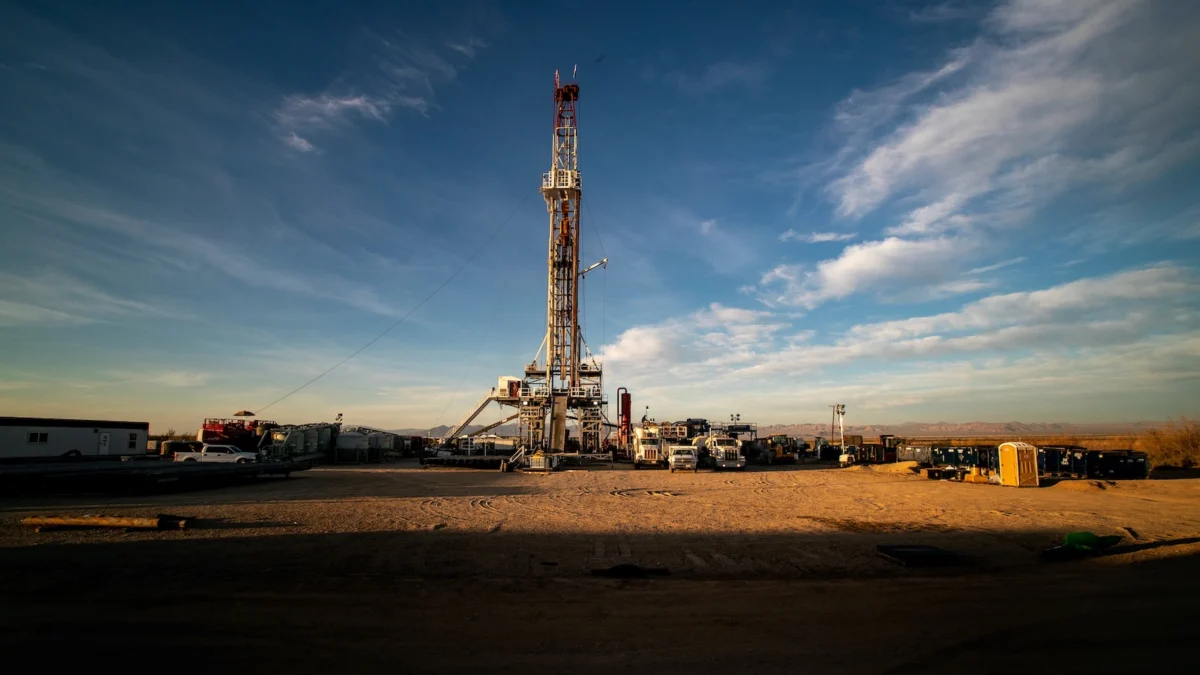
When the NASDAQ bell rings this Wednesday morning, a new ticker symbol—FRVO—will officially enter the trading floor, marking what financial analysts and climate experts are calling a watershed moment for the renewable energy sector. Fervo Energy, the Houston-based geothermal pioneer, is set to go public with a staggering $1.8 billion capital raise. With a targeted valuation of approximately $7.4 billion, this initial public offering (IPO) stands as one of the most significant debuts for a clean energy company in U.S. history, challenging long-held assumptions about the scalability of subterranean power.
The Core Facts: Revolutionizing Earth’s Internal Battery
Geothermal energy has long been the "forgotten" sibling of the renewable family. While wind and solar have dominated headlines and investment portfolios for over a decade, geothermal—the process of tapping into the Earth’s natural heat to produce steam and drive electricity-generating turbines—has remained largely relegated to regions with unique volcanic geology.
Fervo Energy is changing that narrative. By deploying advanced horizontal drilling techniques and sophisticated fiber-optic sensing technology—tools originally perfected by the oil and gas industry—Fervo is unlocking geothermal potential in locations previously deemed unsuitable for energy production. This "Next-Gen Geothermal" approach allows the company to reach deeper, hotter rock strata, making the power source not only more accessible but also significantly more reliable. Unlike solar and wind, which are inherently intermittent, geothermal offers "baseload" power: electricity that flows 24/7, regardless of weather conditions or time of day.
A Chronology of Growth: From Nevada Breakthroughs to Wall Street
The journey to the NASDAQ has been defined by rapid technical validation and strategic partnerships:
- Proof of Concept: Fervo successfully deployed its proprietary technology in Nevada, demonstrating that it could generate sufficient clean energy to power roughly 2,600 homes. This success provided the empirical data necessary to attract institutional-grade capital.
- The Scale-Up: Recognizing the need for utility-scale impact, the company initiated the development of "Cape Station" in Utah. This facility, currently in the final stages of construction, is slated to come online later this year and is projected to produce over 100 times the electricity output of the Nevada pilot project.
- Strategic Alliances: Fervo’s trajectory caught the eye of heavy hitters early. Bill Gates’s Breakthrough Energy Ventures and Alphabet (Google’s parent company) were among the first to commit. Google, in particular, signed landmark contracts with Fervo to power its energy-hungry data centers with carbon-free, constant geothermal energy.
- The IPO Surge: Initially announcing a goal of 55.6 million shares at $21–$24, the company was met with such overwhelming investor interest that it upsized its offering to 70 million shares at a higher price point of $25–$26.
Supporting Data: The Economics of Heat
The transition of geothermal from an experimental niche to a mainstream power source relies on cost reduction. Currently, the industry estimates that geothermal costs hover around $7,000 per kilowatt. Fervo’s stated mission is to drive that figure down to $3,000 per kilowatt as its drilling operations achieve economies of scale.
The demand environment is equally compelling. The U.S. power grid is currently under unprecedented strain due to the explosion of artificial intelligence (AI) and the subsequent build-out of massive, energy-intensive data centers. As grid reliability becomes the primary concern for both tech giants and utility providers, the value of "always-on" clean energy has skyrocketed.
Furthermore, the recent volatility in energy prices—exacerbated by global geopolitical instability, including the ongoing war in Iran—has underscored the strategic importance of domestic energy security. For investors, Fervo represents a hedge against the price fluctuations of fossil fuels and a bet on the long-term necessity of decarbonized baseload power.
Official Responses and Expert Analysis
The industry reaction has been one of cautious optimism, tempered by the reality of the engineering challenges ahead.
"This is a very, very big deal," said Gernot Wagner, a climate economist at Columbia Business School. "Money speaks. If Fervo demonstrates that there is money to be made for investors, that is going to draw a lot of attention well beyond just the narrow advanced geothermal community."
However, not all observers are convinced of an immediate takeover of the grid. Rob Gramlich, president of the power sector consultancy Grid Strategies, noted that while the technology is promising, mass-market penetration will take time. "They’re just not here yet on any large scale," Gramlich stated. "They are great 2040 and 2050 options."
Jigar Shah, a former Department of Energy official under the Biden administration and current managing partner at Multiplier, offers a more bullish perspective. "There is a level of confidence coming to our sector, which I think is great," Shah remarked. "For a long time, our space has acted as if we’re alternative energy. But when you’re 90 percent of everything that gets added to the grid every year, you’re no longer alternative."
The Political Landscape: A Tale of Two Policies
Fervo’s IPO arrives in a complex political climate. In 2022, the Biden administration passed the Inflation Reduction Act (IRA), which provided the most robust federal support for clean energy in American history. However, the political pendulum has since swung. Following the return of President Donald Trump and a shift in congressional priorities, much of that original legislation has been dismantled. Significant wind projects have been canceled, and the administration has pivoted toward a "fossil-fuel-first" strategy to address energy costs.
Yet, Fervo’s success suggests that market forces may now be stronger than policy reversals. Even as federal subsidies waver, private financing for projects like Cape Station has remained robust. The company has secured hundreds of millions in non-recourse project financing, proving that if a technology is commercially viable, it can survive, and even thrive, despite shifting political winds.
Implications: The Maturation of Clean Tech
The success of Fervo’s IPO, alongside other major entries like the Amazon-backed nuclear developer X-Energy (which recently raised $1 billion and achieved a $9 billion valuation), signals a fundamental shift in the clean energy investment thesis.
For decades, the "green" sector was viewed as a beneficiary of government handouts—a sector that needed the state to survive. Today, the narrative is shifting toward "Energy Independence via Innovation." By applying industrial-grade engineering to climate solutions, companies like Fervo are moving away from the "alternative energy" label and into the category of "critical infrastructure."
If FRVO trades strongly in its first weeks, it will likely trigger a wave of venture capital investment into similar "deep tech" energy firms. Investors are clearly hungry for solutions that don’t just provide clean energy, but provide reliable energy. As the U.S. grid continues to face the dual pressures of an AI-driven power surge and the need for decarbonization, the heat beneath our feet may well prove to be the most stable, investable asset in the energy portfolio of the 21st century.
As the markets open Wednesday, the question will no longer be whether geothermal is possible, but whether the financial markets are ready to fully embrace the next generation of industrial-scale renewables. The appetite is clearly there; now, it is up to the technology to deliver on the massive promise baked into its valuation.
