

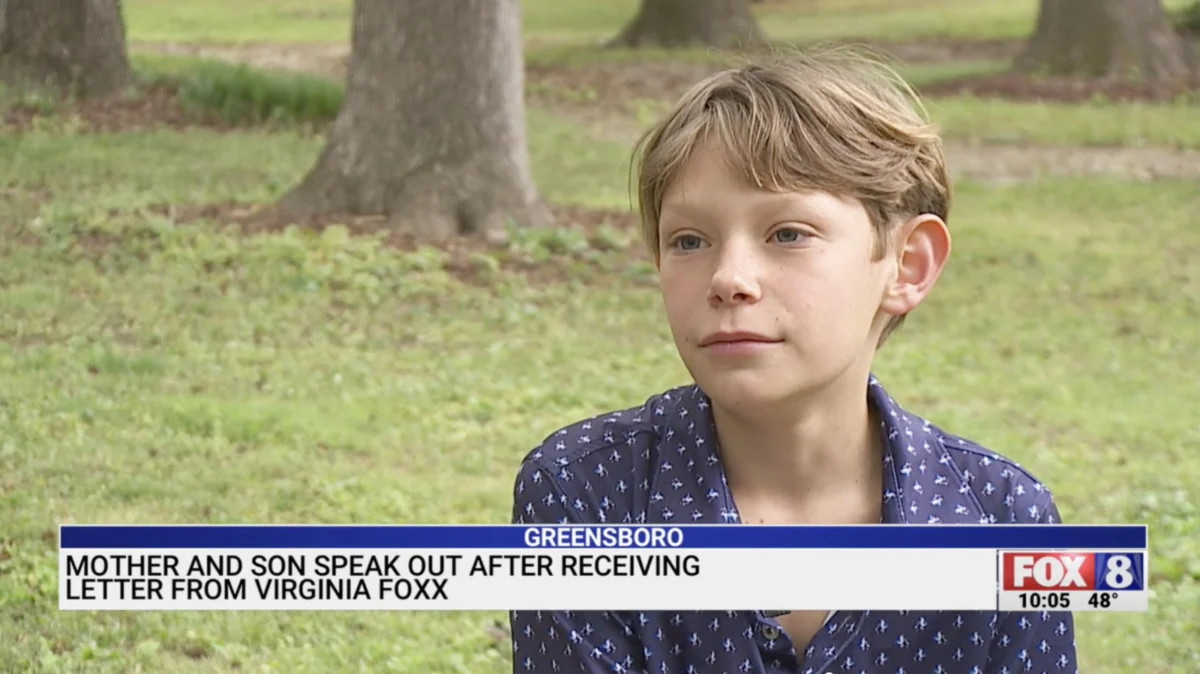
In a striking display of political friction reaching down to the elementary school level, U.S. Representative Virginia Foxx (R-NC) has become the center of a national controversy after responding to a 10-year-old constituent’s class assignment with a sharp, politically charged rebuke. The incident, which has drawn condemnation from educators, parents, and political observers alike, centers on a fourth-grade student’s inquiry into electric vehicle (EV) policy and the subsequent dismissal of his views as "indoctrination."
The Genesis of the Assignment
The conflict began in a Greensboro, North Carolina, classroom. As part of a standard civics and persuasive writing curriculum, students were tasked with identifying a public official or influential figure and drafting a formal letter advocating for a policy change or expressing a viewpoint on a contemporary issue.
Christian Mango, a fourth-grade student, chose to engage with the legislative process by writing to his representative, Virginia Foxx. In his letter, Mango outlined his support for electric vehicles, citing environmental benefits and long-term cost savings for consumers. Demonstrating an awareness of current economic policy, the 10-year-old suggested that the federal government should implement a $5,000 tax rebate to make EVs more accessible to the average family.
For a child of his age, the argument was straightforward: electric cars are better for the environment, offer lower operational costs by eliminating gas expenses, and represent a forward-looking technological shift.
Chronology of the Correspondence
The interaction, which should have been a routine exercise in civic participation, took a dark turn upon the arrival of a reply from Representative Foxx’s office.
- The Submission: Mango mailed his letter, expecting, at most, a standard form letter thanking him for his civic engagement.
- The Response: Instead of a polite acknowledgement of a young citizen’s interest in government, the office of the 82-year-old Congresswoman provided a detailed, multi-page response that fundamentally challenged the child’s premise.
- The Allegation: The letter accused the student of being a victim of "propaganda." Rather than addressing the child’s points on their own merits, the response directed the fourth-grader to read a curated list of six articles—including opinion pieces from the Wall Street Journal editorial board and various segments from Fox News—designed to present a negative view of climate change policies.
- The Escalation: The tone of the response shifted from policy debate to an attack on the child’s academic environment, explicitly questioning the motivations of his teacher and the local school system.
Breaking Down the Rhetoric: “Indoctrination” vs. Education
The most contentious portion of the letter involved Foxx’s direct critique of the pedagogical environment in North Carolina. The letter instructed the child: "Ask your teacher to explain propaganda to you. I will never be able to know. My guess is that your teacher will not be able to give you a good educational experience by helping you. Because they are too interested in indoctrinating you. How sad."
By framing a 10-year-old’s interest in environmental policy as a result of "indoctrination," the Congresswoman effectively weaponized a school assignment to target the professional integrity of educators. This move has been characterized by many as a significant breach of the traditional decorum expected between elected officials and the children they represent.
Furthermore, the letter attempted to lecture the child on the complexities of federal taxation and wealth redistribution. Foxx wrote, "Therefore, your request that ‘the federal government should give a $5,000 tax rebate for all new electric car purchases’ means that the federal government must take that money out of the pockets of hardworking people who may not have the means to buy an electric vehicle in the first place."
While the concept of tax policy is indeed complex, the delivery—aimed at a child attempting to participate in his first writing assignment—has been widely criticized as condescending and inappropriately aggressive.
The Human Impact: A Child’s Perspective
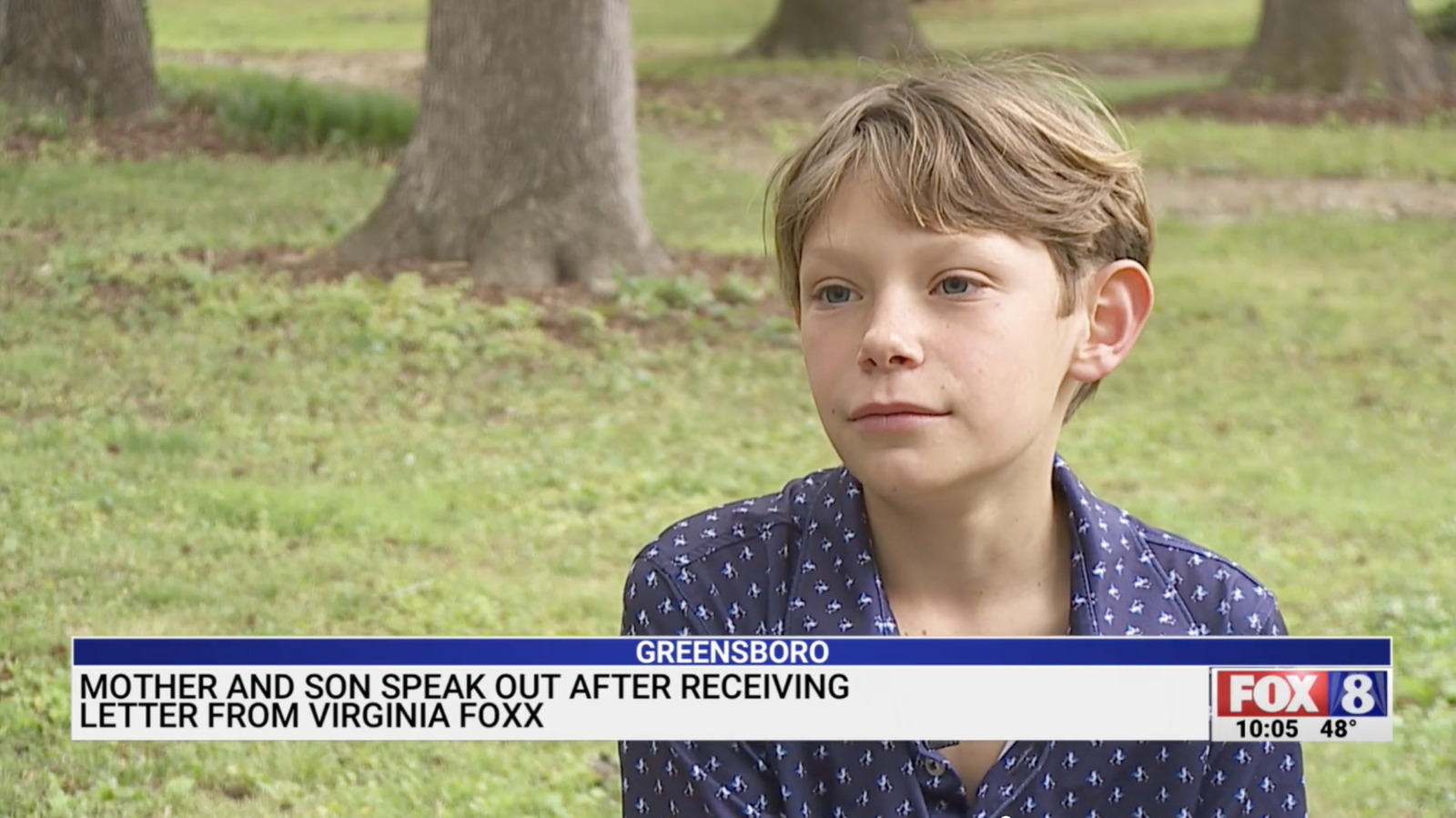
The aftermath of receiving the letter was immediate and distressing for the Mango family. Christian, initially proud of his effort to reach out to a high-ranking official, was left confused and saddened by the response.
According to his mother, Emily Mango, the family had to step in to explain the nuances of the Congresswoman’s accusations. Upon realizing that his teacher had been singled out for criticism, Christian expressed frustration, noting, "I think that was wrong… because the school didn’t do anything."
The emotional toll on a child who was simply following a teacher’s instructions highlights the power imbalance present in this interaction. For a 10-year-old, receiving a "scathing" critique from a federal representative carries a weight that can discourage future civic engagement—the exact opposite of what the civics assignment intended to foster.
Public Outcry and Parental Response
Emily Mango has since taken to social media and local news outlets to voice her outrage. Labeling the letter "horrific" and "reprehensible," she has demanded an apology from the Congresswoman.
"When Representative Foxx attacked him and attacked his teachers and said that his teachers are indoctrinating him with propaganda, how do you even explain that to a 10-year-old in 4th grade?" Emily Mango asked in an interview with Fox 8. "We told our son that is not an okay response. Nobody should talk to a child like that and nobody should talk to a teacher like that. She crossed the line."
The story has gained traction throughout the state, with local outlets like WRAL reporting on the growing pressure for the Congresswoman to address her conduct. The incident has reignited debates over the role of politicians in local education and the boundaries of political discourse.
Implications for Civic Engagement
This event raises profound questions regarding the expectations for elected officials. While politicians are certainly entitled to their policy positions, the standard of conduct when interacting with constituents—particularly minors—is usually held to a higher bar.
The Erosion of Political Decorum
The tone used by Representative Foxx’s office reflects a broader trend in American politics where disagreement is often met with accusations of bad faith or ideological brainwashing. By applying this framework to a fourth-grade student, the office demonstrated a refusal to engage in constructive dialogue, opting instead for a performative political stance.
The Chilling Effect on Education
The attack on the educator is perhaps the most significant implication of this incident. Teachers are tasked with teaching students how to think, not what to think. By suggesting that the mere introduction of environmental topics constitutes "indoctrination," the letter echoes growing nationwide efforts to limit or define the scope of classroom discussions, which educators warn can lead to self-censorship and a decline in critical thinking skills.
A Test of Accountability
As calls for an apology persist, the situation serves as a litmus test for accountability. Will Representative Foxx acknowledge the impact of her words on her young constituent, or will she double down on the rhetoric of indoctrination?
For the parents of Christian Mango and the community of Greensboro, the issue is not about the merits of electric vehicles or the economic theory behind tax rebates. It is about the fundamental right of a child to participate in the democratic process without being subjected to partisan hostility.
Conclusion: Lessons Learned
The irony of the situation is not lost on observers. A student, assigned to learn about the importance of writing to representatives, has instead learned a harsh lesson about the current state of political toxicity.
As the story continues to circulate, it serves as a stark reminder that children are not blank slates to be used as tools in a culture war. When a member of Congress chooses to use their platform to disparage a 10-year-old’s attempt at civic duty, it damages the fragile trust between the public and their representatives. Regardless of one’s stance on environmental policy or federal subsidies, the consensus remains that a child’s curiosity should be met with mentorship, not malice. Whether this incident prompts a change in how the Congresswoman’s office handles future correspondence remains to be seen, but the damage to the relationship with the Mango family—and the message sent to the local community—is already clear.
