

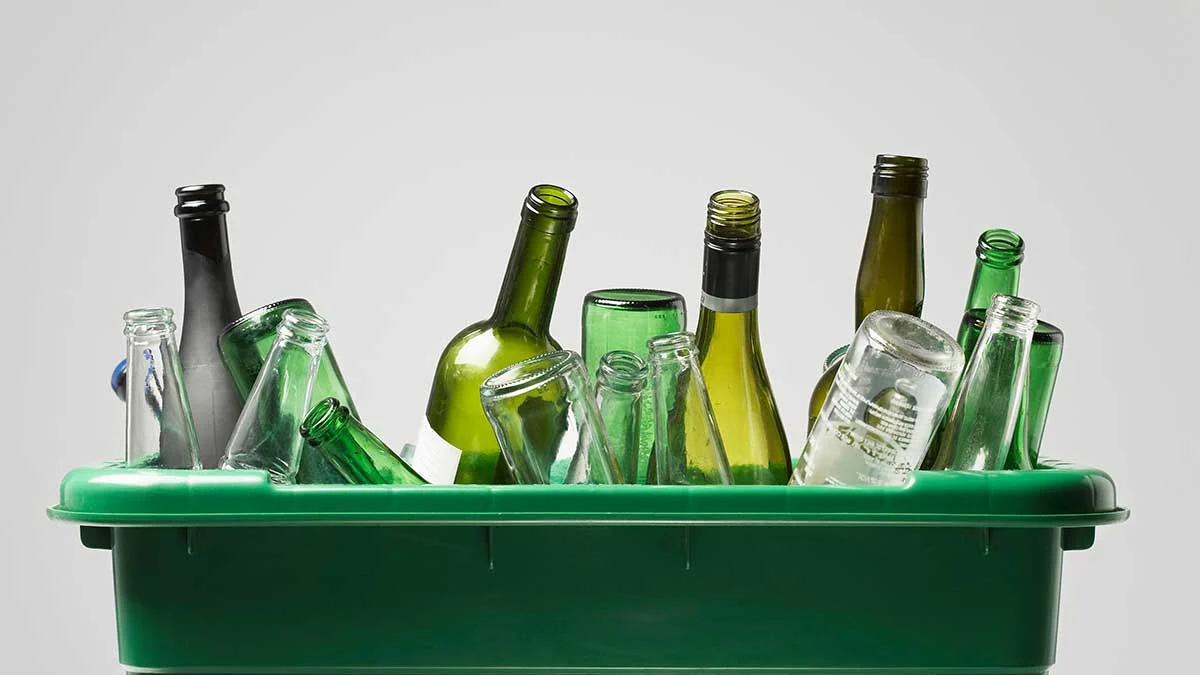
Every year, the average American household discards approximately 150 pounds of glass containers. It is a material synonymous with sustainability—inert, infinitely recyclable, and chemically pure. Yet, beneath this veneer of eco-friendliness lies a jarring reality: more than two-thirds of that glass never finds its way back into a new bottle. Instead, it is crushed, buried, or discarded, representing a massive failure of industrial circularity.
While the public perception is that glass recycling is a staple of environmental stewardship, the economic reality tells a different story. In the United States, glass has become the "black sheep" of the recycling bin—the only common packaging material that frequently costs facilities more to process than it is worth on the secondary market. As the U.S. struggles to reach a recycling rate of roughly 31 percent—a figure that has remained stagnant for a decade—the European Union has surged ahead, successfully capturing over 80 percent of its glass.
This widening chasm is not a result of a lack of consumer willpower; rather, it is the byproduct of a systemic infrastructure crisis, antiquated municipal policies, and the unforgiving physics of a heavy, breakable, and high-maintenance material.
The Chronology of a Broken System
To understand why glass has become an economic liability, one must look at the last thirty years of American waste management policy.
The Rise of "Single-Stream"
In the 1990s and early 2000s, American municipalities rushed to adopt "single-stream" recycling. The goal was to increase participation by allowing residents to toss paper, plastic, metal, and glass into one bin. While this did increase the volume of material collected, it was disastrous for glass.
In a single-stream system, glass is inevitably smashed by the heavy mechanical arms of collection trucks and the rigorous sorting machinery at processing facilities. Once broken, glass shards act like abrasive sand, contaminating paper and cardboard fibers and damaging the expensive sorting equipment at Materials Recovery Facilities (MRFs).
The Abandonment of Drop-offs
Simultaneously, as municipal budgets faced tightening constraints, cities across the U.S. began closing dedicated glass drop-off sites. These programs, which required citizens to bring glass to a specific location, were the gold standard for purity. By shifting to curbside single-stream, cities prioritized convenience over material quality, effectively destroying the "clean stream" of glass necessary for manufacturing new bottles.
The Math that Broke Glass Recycling
The industrial value of glass is tied to "cullet"—crushed, sorted, and cleaned glass that serves as the raw material for new containers. Cullet is a miraculous resource: because it melts at a lower temperature than raw sand, soda ash, and limestone, every 10 percent increase in cullet usage reduces furnace energy consumption by up to 3 percent and lowers carbon emissions by roughly 5 percent.
The Negative-Value Trap
Despite these benefits, manufacturers require cullet that is color-sorted and free of ceramic or metal contaminants. The glass emerging from single-stream facilities is almost never clean enough to meet these specifications.
A landmark 2017 analysis by the Closed Loop Foundation quantified the damage: single-stream glass costs U.S. recycling facilities an estimated $150 million annually. Facilities lose an average of $35 for every ton of glass they process. At a Washington, D.C. transfer station, the reality is even more tangible, with the facility spending tens of thousands of dollars annually simply to replace screen baskets shredded by jagged glass shards.
Because the cost of cleaning this glass is prohibitive, most of it is downgraded to "beneficial reuse"—a polite industry term for using crushed glass as landfill cover or road base. In these roles, the material’s infinite recyclability is permanently lost.
Supporting Data: The Economic and Climate Toll
The failure to recycle glass is not just an economic burden; it is a significant contributor to the nation’s carbon footprint.
- Emissions Efficiency: Manufacturing glass from scratch is energy-intensive. A single ton of new container glass produces between 0.5 and 1.6 tons of CO2. By contrast, a furnace running on 100 percent cullet can reduce emissions by 58 percent.
- The Landfill Penalty: In 2018 alone, 6 million tons of glass were landfilled in the U.S. This represents a missed opportunity to avoid approximately 4 million tons of CO2 emissions and the extraction of 7 million tons of virgin raw materials.
- The Cost of "Free" Recycling: Consumers are paying for this failure twice. The first cost is hidden in the price of the product (the bottle itself). The second cost is paid via municipal taxes to cover the average $62-per-ton landfill "tipping fee" and the additional expenses associated with recycling contamination. In cities like New York, the cost to manage residential recycling can balloon to nearly $700 per ton, a figure that is rarely transparent to the taxpayer.
Official Responses and Policy Shifts
The tide may be turning, albeit slowly. The Glass Packaging Institute and the Boston Consulting Group have recently outlined a roadmap to reach a 50 percent recycling rate by 2030. Their strategy focuses on three pillars: expanding deposit return schemes (DRS), investing in dedicated glass processing, and moving away from single-stream collection for glass.
The Success of Bottle Bills
The primary exception to the American failure is the "Bottle Bill" state. The 10 states with container deposit laws—such as Oregon, which achieved an 87 percent redemption rate in 2024—consistently recycle over 70 percent of their beverage containers. These programs create a financial incentive for the consumer to return the bottle, ensuring the material remains clean, intact, and ready for immediate reuse.
The Emergence of EPR
Perhaps the most significant development in recent years is the rise of Extended Producer Responsibility (EPR) legislation. Seven states—California, Colorado, Maine, Maryland, Minnesota, Oregon, and Washington—have enacted laws that shift the financial burden of recycling from the taxpayer to the producers.
When companies are legally and financially responsible for the end-of-life of their packaging, they are incentivized to move away from the chaotic, contaminated, and costly single-stream model. By forcing manufacturers to pay the true cost of their waste, EPR acts as a market correction that makes dedicated glass collection systems look far more attractive than the current status quo.
Implications: A Call to Action
The path toward a circular economy for glass is clear, but it requires a fundamental shift in how we view waste management.
For the average citizen, the frustration is palpable. Many Americans diligently rinse their jars and carefully place them in the bin, believing they are doing their part for the planet. However, the system is currently designed to fail them. Until infrastructure catches up to the potential of the material, the "green" choice is often a mirage.
What Consumers Can Do
- Advocate for Deposit Bills: Support legislation that expands container deposit programs in your state. These are the single most effective tool for ensuring high-quality recycling.
- Support Local Drop-offs: If your municipality offers a dedicated glass drop-off program, use it. Bypassing the single-stream bin is the most effective way to ensure your glass actually becomes a new bottle.
- Pressure Producers: Support companies that use high percentages of recycled content and advocate for packaging that is easier to sort and process.
- Know Your Local Rules: Check your city’s specific recycling guidelines. In many areas, it is actually more beneficial to place glass in the trash if the local facility is known to discard it anyway, as it avoids contaminating the paper and plastic streams that have a higher chance of being successfully recycled.
The U.S. stands at a crossroads. We can continue to treat glass as a disposable, low-value commodity, or we can recognize it for what it truly is: a precious, infinite material that requires a specialized, well-funded infrastructure to thrive. The technology and the models exist; the question is whether the political and industrial will exists to implement them before the next billion tons of glass are buried in the ground.
