

For more than a century, Vincent van Gogh has occupied a singular space in the collective consciousness. Beyond his status as a foundational pillar of Post-Impressionism, he has become a titan of the global art market. His canvases, characterized by visceral, impasto brushwork and an unparalleled command of color, have evolved from the works of a misunderstood genius into some of the most liquid and sought-after assets in the world of high-end art.
As we examine the historical trajectory of his market performance, it becomes clear that Van Gogh is not merely an artist; he is a barometer for the global art economy. From the seismic shift of the 1990 Portrait of Dr. Gachet sale to the modern era of eight-figure auctions, the story of his market success is as compelling as the life of the man who painted them.

The Genesis of the Record-Breaker: The 1990 Turning Point
To understand the current valuation of a Van Gogh, one must look back to May 15, 1990. On that evening at Christie’s New York, the art world witnessed a watershed moment. The Portrait of Dr. Gachet (1890)—a haunting, melancholic depiction of the physician who cared for the artist in his final weeks—achieved a staggering $82.5 million.
This sale did more than set a world record; it shattered the psychological barrier for what a single painting could be worth. At the time, the price was unfathomable to the general public, signaling the dawn of the "trophy art" era. It transformed Van Gogh from a revered historical figure into a blue-chip financial powerhouse. The provenance, the emotional weight of the subject, and the scarcity of such masterworks created a perfect storm of demand that has never truly subsided.

Chronology of Market Ascendance
Van Gogh’s market journey is defined by the scarcity of his work in private hands. Because the vast majority of his significant paintings reside in institutional collections—such as the Van Gogh Museum in Amsterdam and the Musée d’Orsay in Paris—the few pieces that do reach the auction block are treated as once-in-a-generation opportunities.
The Arles Period (1888–1889)
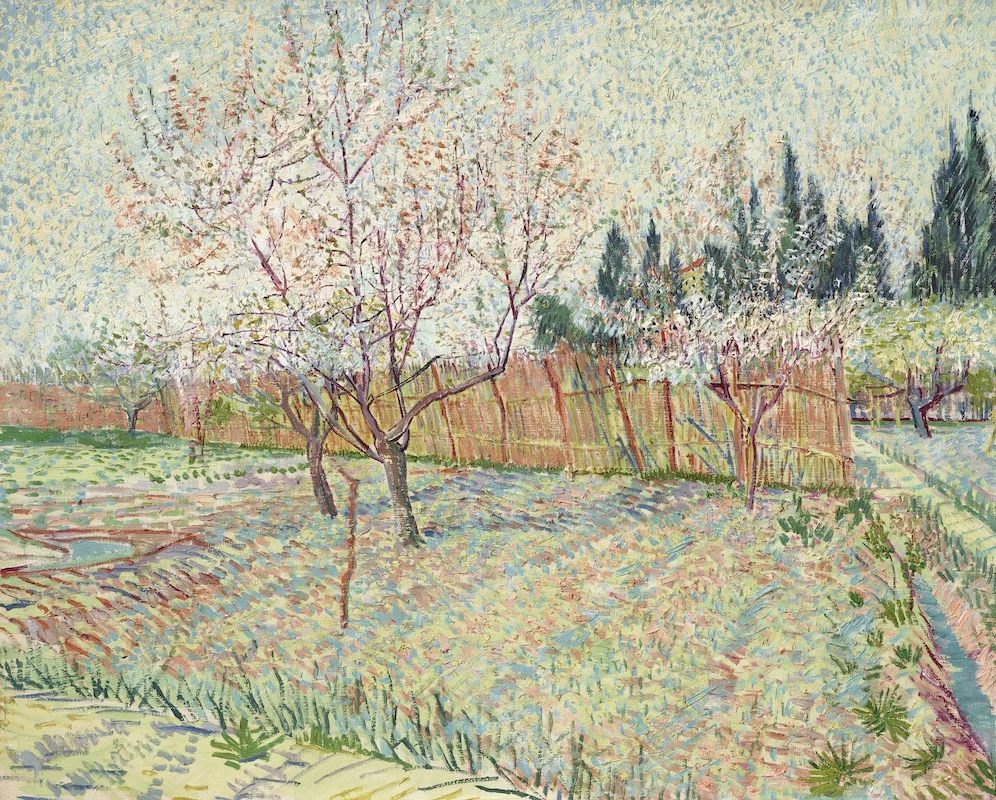
The works produced during Van Gogh’s time in Arles are often viewed as the zenith of his creative output. It was here that he developed his distinctive style of saturated color and rhythmic brushwork. Paintings such as Orchard with Cypresses (1888) encapsulate this period. These works possess a luminosity that collectors find irresistible, often serving as the anchor for the most prestigious private collections in the world.

The Saint-Rémy and Auvers-sur-Oise Years (1889–1890)
As the artist’s mental health fluctuated, his style shifted toward more turbulent, expressive forms. The swirling skies and blazing cypresses of his Saint-Rémy period represent a transition from observational painting to psychological autobiography. The market reflects this intensity; the more "Van Gogh-esque" a piece—the more it exhibits his signature swirls and vibrant contrast—the higher the premium.
Supporting Data: The Anatomy of an Eight-Figure Sale
While the $82.5 million figure from 1990 remains a historical benchmark, it is important to contextualize this against modern inflation and market evolution. In today’s dollars, that sum would be well over $200 million.

Current market data indicates that:
- Scarcity Drives Value: With fewer than 10 high-quality oil paintings entering the auction market in a given 24-month period, the "fear of missing out" (FOMO) among ultra-high-net-worth individuals (UHNWIs) is the primary driver of price escalation.
- Geographic Expansion: While the American and European markets were the primary drivers in the late 20th century, the last decade has seen a massive influx of Asian capital. Collectors from Singapore, Hong Kong, and mainland China have aggressively pursued major Impressionist and Post-Impressionist works to diversify their portfolios.
- Provenience Premiums: Paintings that have been held in prominent estates or have a well-documented history of exhibition in major museums carry a significant "provenance premium." A Van Gogh with a documented history is viewed not just as a painting, but as a historical artifact.
Official Perspectives: The Institutional View
The relationship between the private market and public institutions is complex. Museum curators often view the aggressive private bidding for Van Goghs with mixed emotions. While the high prices confirm the artist’s ongoing cultural relevance, they also make it increasingly difficult for public institutions to acquire new works for their permanent collections.

"Van Gogh belongs to the world," noted a spokesperson for a leading European fine arts foundation. "When a work moves from a private collection to an auction block, there is always a hope that it will find its way into an institution where it can be studied and enjoyed by the public. However, we recognize that the current market dynamics are driven by global wealth distribution, and the competition is fierce."
Implications for the Global Art Market
The persistent demand for Van Gogh’s work has profound implications for the broader art market.

1. Art as an Asset Class
Van Gogh’s work serves as the ultimate "safe haven" asset. During periods of economic volatility, collectors flee to tangible assets with a long-proven history of appreciation. His works are often compared to gold or blue-chip stocks, providing a hedge against inflation. This has led to the "financialization" of his art, where the works are increasingly held by investment funds rather than private enthusiasts.
2. The Shrinking Supply
As more works are donated to museums or purchased by foundations that intend to hold them in perpetuity, the pool of available Van Goghs is shrinking. This scarcity ensures that when a piece does appear at auction, the price is almost guaranteed to be record-breaking. This creates a cycle where owners are incentivized to hold onto their works, further restricting supply.

3. Cultural Impact vs. Commercial Value
There is an inherent tension in the market for Van Gogh. His life was defined by poverty and a lack of recognition; his death was a tragedy of isolation. The fact that his works now command prices that could have funded his lifestyle for a thousand lifetimes is a point of recurring irony. However, the market’s obsession with his work ensures that his images remain omnipresent in contemporary culture, from coffee table books to digital reproductions, further cementing his status as the most recognizable artist in history.
Looking Toward the Future: The Next Horizon
As we look toward future auction cycles, the question remains: how much higher can the ceiling go? With the recent resurgence of interest in 19th-century masters, it is likely that a major, museum-quality Van Gogh could break the $150 million barrier in the coming years, should one emerge from a private vault.

The allure of Vincent van Gogh is not merely about the aesthetics of his brushstrokes; it is about the human story he tells. In a world increasingly defined by digital ephemera, the physical, tactile, and deeply emotional nature of a Van Gogh canvas offers a grounding, human connection that no other asset can replicate.
Whether in the hands of a private collector in New York or hanging on the walls of a public museum in Amsterdam, Van Gogh’s work continues to hold the market in a state of perpetual anticipation. He remains, as he was in life, a force of nature—only now, the world is finally paying the price for the genius it once ignored.
