

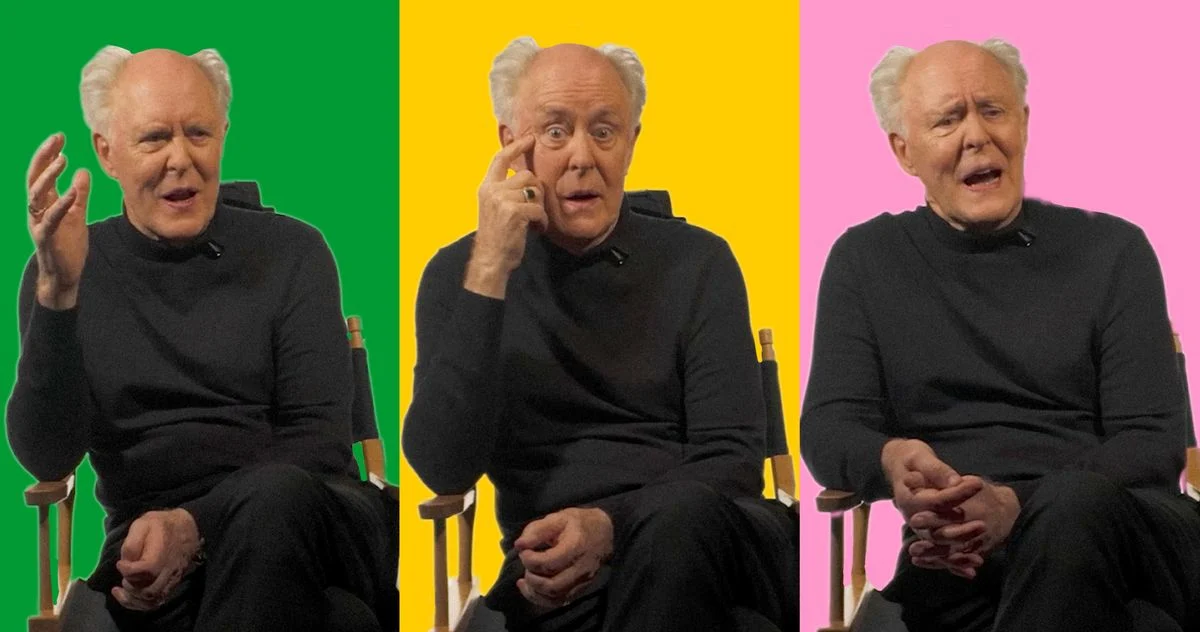
For decades, John Lithgow has been a fixture of the American cultural landscape. From his Emmy-winning turn in 3rd Rock from the Sun to his chilling performance in Dexter and his current star turn in the Broadway production of Giant, Lithgow is a man of many faces. But beneath the accolades and the stage makeup, there is a man who navigates the subway, hails yellow cabs, and has a deeply rooted, oscillating relationship with the five boroughs.
In a recent installment of NYQ—a series dedicated to gauging just how “New York” our most notable residents really are—Lithgow peeled back the curtain on his life in the city. Far from the insulated existence one might expect of a stage legend, Lithgow’s New York is one of lived-in, granular experience.
The Chronology of a New York Life
Lithgow’s relationship with the city is not a linear path but a rhythmic, decades-long dance. “I’ve been moving in and out of New York City ever since 1982,” he notes, though his initial arrival dates back even further, to 1969.
This long-term residency has allowed him to witness the metamorphosis of the metropolis. He recalls a version of the city that is largely gone—an era when he navigated the urban sprawl by bicycle, a far cry from the ride-sharing and subway-heavy lifestyle he maintains today. When asked what he misses most, he points to Luchow’s, the iconic German restaurant that once stood near Madison Square Garden—a casualty of the city’s relentless, forward-marching redevelopment.
The Mechanics of Urban Survival
Lithgow’s "New Yorkness" is defined by his pragmatism. When asked if he owns a car, he offers a blunt, quintessential New Yorker response: “No. I’m no fool.”
His navigation of the city’s infrastructure is equally seasoned. If a train line goes down? He walks. If he’s in a rush? He sprints at blinking red lights, joking that he’s "trying to bring back his youth." Even his relationship with the subway system—the great equalizer of the city—is marked by a mix of patience and professional resignation. He prefers transferring trains to walking because “there’s always something to read.”
Perhaps the most telling anecdote about his commitment to the city’s rhythm occurred during a torrential rainstorm. Stuck on a platform during a massive transit failure, he eventually gave up on the train, surfaced to the street level, and trekked to the theater in a downpour. He arrived five minutes late for his entrance, his hair still dripping wet—a rare, unscripted moment of vulnerability for a seasoned professional.
Professional Etiquette and the "Famous Person" Tax
Lithgow’s status as a household name does not grant him immunity from the trials of city living, though he occasionally attempts to leverage it. When asked about the last time he used his celebrity for an advantage, he admits to utilizing it for restaurant reservations. However, he is quick to clarify the reality: “It doesn’t always work. I have to pretend I’m my own assistant.”
His perspective on public spaces is refreshing. When it comes to the Metropolitan Museum of Art, he avoids the ticket counter shuffle, noting simply, “I have friends at the Met.” Yet, he maintains a humble stance on his own visibility, citing Shaquille O’Neal as the only celebrity sighting that truly impresses him in the wild.
His professional life and personal life occasionally collide in disastrous ways, specifically regarding cell phone etiquette. He recounts a harrowing experience during a live performance where his phone went off during a crucial, silent pause in front of the director. He describes it as “truly one of the worst moments of my life.” Conversely, he maintains a relaxed attitude toward his own audience members falling asleep, echoing his father’s philosophy: “A wonderful occasion for a nap.”
Implications: The Psychology of the "City of Discovery"
What does it mean to be a New Yorker? For Lithgow, the answer remains elusive. Despite his decades of residence, he claims he still hasn’t "gotten used to it." He views New York as a "city of discovery," suggesting that the essence of being a New Yorker is not a status one achieves, but a perpetual state of waiting for the next revelation.
His views on the "little things"—like whether rats are cute ("In some circumstances") or his take on the 917 area code—reveal a man who finds identity in the trivialities. He keeps his 917 number specifically because "they know I’m from New York." He refers to Manhattan simply as "The City," a linguistic marker that signals he has internalized the geography of the island so deeply that it requires no further qualification.
Supporting Data: The Lithgow Index
To better understand the scale of Lithgow’s integration into the New York fabric, we can look at his responses as a rubric for urban survival:
- Subway Philosophy: Kindness above all. When bumped, he views it as a "compliment."
- The Cab Conundrum: He is an active participant in his own transit. As a former cab driver himself, he doesn’t hesitate to correct a driver’s route.
- The Tourist Test: When family visits with short notice, he offloads them to the Natural History Museum, a tried-and-true maneuver for any local looking to keep their schedule clear.
- The Coffee Factor: When asked about the most he has paid for a cup of coffee, his response—“I ignore the price”—is perhaps the ultimate sign of a New Yorker who has accepted that the cost of living is simply the price of admission.
Official Stance on the Future of the City
Lithgow’s interview serves as a reminder that even those at the pinnacle of their craft are tethered to the same basic realities as the rest of us: the frustration of a stalled train, the scramble for a dinner reservation, and the bittersweet nostalgia for a city that no longer exists.
His preference for "the city" over any other location, his rejection of private car ownership, and his willingness to walk through driving rain to make a curtain call paint a portrait of a man who is not just living in New York, but participating in it. In a world where celebrities often distance themselves from the public, Lithgow remains firmly on the ground—often walking, occasionally sprinting, and always, in his own words, waiting for the next discovery.
Whether he is appearing on the stage at Giant or simply grabbing a coffee near Café Luxembourg, Lithgow represents a specific type of New Yorker: one who recognizes the grit, embraces the chaos, and treats the city not as a backdrop, but as a living, breathing colleague. As he continues to grace the stage and the streets, it is clear that for John Lithgow, the city is not just a place of work, but a lifelong, ongoing performance.
