

“Top-five-ranked U.S. homebuilding companies don’t happen overnight. Except when they do.”
This observation, once a rhetorical flourish, has become the defining reality of the American housing market in 2024 and 2025. In a period of unprecedented consolidation, the landscape of residential construction is being redrawn by international capital. The headlines have been dominated by massive, high-dollar transactions: Sekisui House’s $4.9 billion acquisition of MDC Holdings and Sumitomo Forestry’s $4.5 billion takeover of Tri Pointe Homes.
However, beneath the flurry of multi-billion-dollar deals, a more nuanced and strategically significant story has been unfolding for over a decade. It is the story of DRB Group, an organization that has served as the operational proving ground and the structural backbone for the 330-year-old Japanese giant, Sumitomo Forestry, in its quest to dominate the U.S. residential market.
The Foundation: A Decade of Compounding Without Breaking the Machine
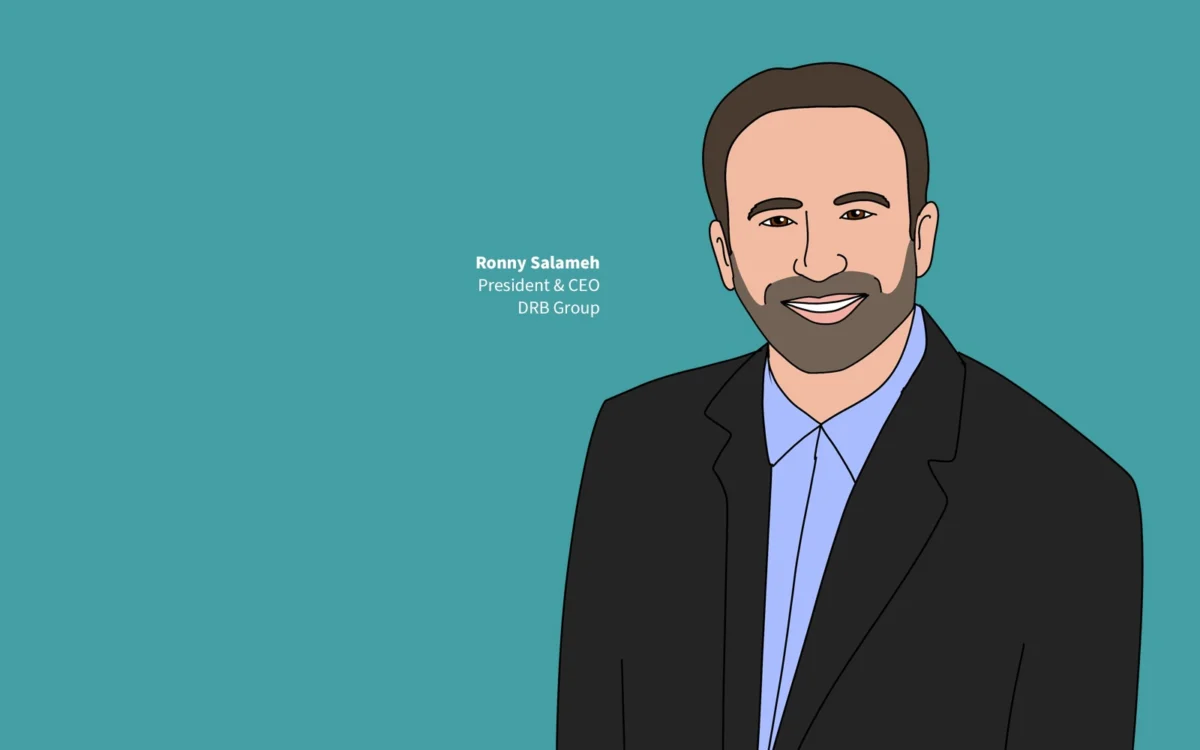
When Ronny Salameh, CEO of DRB Group, looks back at the last ten years, he is less interested in the "vanity metrics" of the industry and more focused on the philosophy of sustainable growth. Under his leadership, the firm has doubled in size twice, evolving from a regional player building 300 homes annually into a $3 billion, top-20 national homebuilder.
Yet, the primary challenge was never merely the act of growing; it was the "fundamental paradox" of scaling a business without diluting its identity. "The real question wasn’t ‘Can we grow?’" Salameh reflects. "It was ‘Can we grow and still feel like DRB Group?’"
This question fueled a deliberate, humility-driven expansion strategy. Rather than engaging in impulsive acquisitions, DRB Group focused on calculated organic growth in markets like Raleigh (2011) and Washington Metro (2013), followed by a string of strategic, culture-compatible acquisitions, including Fielding Homes, Knight Homes, Biscayne Homes, and the transformative Brightland Homes consolidation in 2025.
The secret to this success has been a unique operating model that balances "fire-in-the-belly" local autonomy with the rigid accountability of an enterprise-level value chain.
Chronology: A Trajectory of Integration
The evolution of the Sumitomo Forestry-DRB relationship can be traced through several critical milestones:
- 2011–2013: Establishing the Beachhead: DRB initiates organic expansion into key high-growth corridors in the Southeast and Mid-Atlantic, proving the efficacy of its regional operating model.
- The Partnership Era: Sumitomo Forestry begins its U.S. strategy as a holding company, taking stakes in various builders. During this time, DRB begins its transformation from a regional builder to an enterprise-grade platform.
- The Acquisition Cadence: Through a steady stream of acquisitions—Fielding, Knight, and Biscayne—DRB proves it can absorb new entities without sacrificing the local expertise that made them successful in the first place.
- 2025: The Brightland Consolidation: The merger with Brightland Homes signals that DRB is no longer just a regional division, but the primary flagship of Sumitomo Forestry’s U.S. operations.
- Present Day: Following the acquisition of Tri Pointe Homes, the industry acknowledges a new threshold for scale, with DRB acting as the operational blueprint for the broader, nationally integrated platform.
The Operating Model: Local Muscle, Enterprise Spine
The brilliance of the DRB model lies in its "double helix" approach to governance. Division leaders retain genuine authority—they remain the masters of land acquisition, product design, local pricing, and construction execution. Simultaneously, the corporate office provides an enterprise spine consisting of rigorous financial controls, data-driven reporting, and disciplined capital allocation.
"Integration must strengthen—not suffocate—local performance," Salameh asserts. This philosophy has kept the company agile in a sector often plagued by the inertia of bureaucracy.
Atsushi Iwasaki, Managing Executive Officer at Sumitomo Forestry, highlights why this model was so attractive to the Japanese conglomerate. "The strength of the organization stood out most," Iwasaki says. "A powerful support system by tenured corporate leaders allows divisions to focus on selling and building quality homes, while corporate finance oversight ensures strong governance."
Supporting Data: Why the Model Works
The success of the DRB/Sumitomo integration is evidenced by more than just top-line revenue growth. It is reflected in the retention of human capital and operational efficiency. In an industry where M&A activity frequently results in a "brain drain" of talent, DRB’s integrations have been marked by high levels of employee retention.
Furthermore, the transition from a "holding company" model to an "operating enterprise" model has allowed Sumitomo to leverage its capital more effectively. By allowing earnings to remain in the business and utilizing shareholder loans for expansion, the company has created a "smooth upward arc" of growth, insulating the firm from the cyclical volatility that typically rocks the homebuilding sector.
Official Perspectives: The View from Tokyo and Beyond
The shift in Sumitomo Forestry’s role—from a passive capital partner to an active, integrated American homebuilding enterprise—is a testament to the trust placed in the DRB platform.
Sumitomo Forestry’s long-term vision, Mission TREEING 2030, emphasizes sustainability, longevity, and stewardship. Salameh aligns perfectly with this, viewing leadership not as a series of quarterly milestones, but as the act of building something that will outlive the current executive team.
"When you understand that what you’re building will outlive you—communities, careers, partnerships—you start thinking differently," says Salameh. "Stewardship means protecting the brand, the people, and the culture for the next chapter."
This long-term perspective is a hallmark of a company backed by 330 years of history. It creates a stark contrast to the short-term, margin-chasing behavior often seen in public builders pressured by Wall Street’s quarterly cycles.
Implications: The New Threshold of Scale
The acquisition of Tri Pointe Homes by Sumitomo Forestry serves as a signal to the entire industry: the threshold for "minimum viable scale" has shifted.
Tony Avila, Chairman of Builder Advisor Group, identifies three forces currently reshaping the industry:
- International Capital: The U.S. housing market remains a premier destination for long-term global investment.
- Diversification: Geographic and product-line diversity are now mandatory to navigate economic disruptions.
- The Rise of the Platform: The era of the fragmented, single-market builder is giving way to the era of the integrated, multi-state platform.
The implication for the industry is clear: those who cannot combine the agility of a local builder with the financial, supply chain, and technological advantages of a national platform will struggle to remain competitive. DRB Group has effectively become the "gold standard" for this hybrid model.
The Next Decade: From Expansion to Refinement
If the past ten years were defined by the aggressive pursuit of scale and the consolidation of capabilities, the next decade will be defined by the harder work of refinement.
Salameh is clear about the objective: "Growth remains important, but excellence at scale is the focus." This includes deeper vertical integration, the implementation of more sophisticated revenue models—such as build-for-rent and fee-build development—and the optimization of land strategies to handle market fluctuations.
Vertical integration is no longer just a buzzword; it is a defensive and offensive tool. By controlling components of the supply chain—from timber and building materials to land development—Sumitomo Forestry is creating a "global value chain" that is significantly more resilient than a traditional builder that relies on a fragmented ecosystem of third-party suppliers.
Conclusion: Building a Legacy
The story of DRB Group is a masterclass in patient capital. By choosing to build a company that prioritizes long-term durability over the "sugar-high" of short-term acceleration, Salameh and the Sumitomo leadership team have positioned themselves to lead the next generation of American housing.
As the industry faces mounting pressures regarding land scarcity, labor shortages, and shifting consumer demands, the ability to build through cycles rather than chasing them becomes the ultimate competitive advantage. DRB Group has proven that a company can be both a large-scale enterprise and an entrepreneurial organization—provided that the core culture is treated as a load-bearing asset.
The first ten years have established the platform. The next ten years will test the legacy. In an industry defined by cycles, the firms that build for the next century, rather than the next quarter, are the ones that will truly define the future of the American home.
