

At a time when the global technology sector is grappling with a widening skills gap and persistent exclusionary practices, Montclair State University is undertaking a bold, institutional overhaul. Under the leadership of Director Liaquat Hossain, the School of Computing is positioning itself as a national laboratory for change—one that prioritizes student retention, demographic diversity, and community-engaged pedagogy over the traditional, often rigid, academic structures of the past.
By consolidating disparate computing disciplines under one administrative roof, the School of Computing is not merely rearranging its organizational chart; it is attempting to solve the "leaky pipeline" problem that has historically plagued STEM education, particularly for women, first-generation students, and underrepresented minorities.
The Architecture of Transformation: Unifying the Disciplines
The foundational shift at Montclair State began with the strategic consolidation of various computing programs that were previously siloed across different schools. Today, the School of Computing serves as a centralized hub for computer science, technology, software engineering, cybersecurity, data science, and applied mathematics.
Director Liaquat Hossain describes the initiative as potentially "the most innovative in the country or the world." The logic behind the consolidation is simple yet profound: by bringing these interconnected fields together, the school can create a cohesive ecosystem where curriculum, research, and support services are aligned toward a singular mission—the transformative development of students and faculty.
"There are a lot of retention problems in STEM disciplines, and particularly if we think about women, minorities, and first-generation students," Hossain noted in an interview with NJTechWeekly.com. "These challenges persist globally, but we are aggressively addressing them."
Chronology of Change: From Silos to Systems
The transition has been a deliberate, multi-year process. Historically, students often found themselves navigating disjointed requirements across different academic departments. By centralizing the school, the administration has been able to perform a comprehensive audit of its educational impact.
- The Foundation: The school established its current structure by migrating key programs into a single unit, allowing for interdisciplinary collaboration.
- The Diagnostic Phase: Faculty and administration identified high-attrition courses—specifically foundational programming, calculus, and discrete mathematics—where the "DFW" (Drop, Fail, or Withdrawal) rates were alarmingly high.
- The Implementation Phase (The Last 12 Months): The school introduced mandatory one-hour recitation sessions for struggling students. These sessions are designed to reinforce lecture material with the guidance of instructor specialists, providing a safety net for students who might otherwise fall through the cracks.
- The Strategic Vision (Looking Ahead): For the coming academic year, the school is set to completely overhaul its curriculum, aiming to create more organic connections between mathematics, statistics, and programming.
Supporting Data: Addressing the STEM Retention Crisis
The school’s focus is rooted in the reality of the modern student experience. Many students entering the program come from non-elite academic backgrounds, requiring the institution to shift from a "gatekeeper" model of education to a "gateway" model.
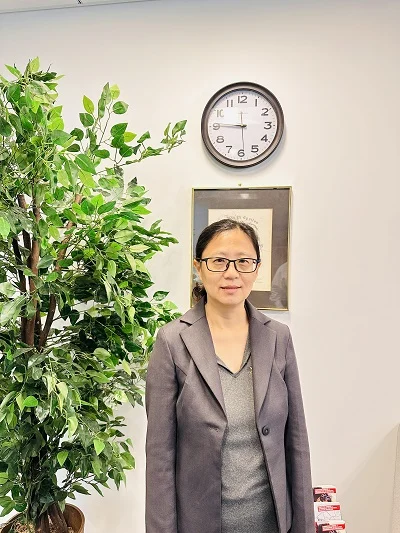
Professor Michelle Zhu, a key architect of the new pedagogical strategies, emphasizes that the school’s goal is to ensure no student is left behind. "Computing is a hard major," Zhu says, "and there are some mathematical, statistics, and programming requirements that are necessary for students to succeed. We are focusing on freshmen and sophomore students who are struggling with these fundamentals."
The data on DFW rates—a metric often used to measure the success of introductory STEM courses—has become a North Star for the school’s administration. By tracking these numbers, the faculty is identifying precisely where the academic friction occurs and applying evidence-based pedagogical interventions, drawing on successful models from peer institutions across the nation.
Official Responses: Building a Culture of Inclusion
The leadership at Montclair is quick to point out that institutional excellence is tied to the quality of the faculty and the inclusivity of the environment. With a faculty body that is 95% Ph.D.-qualified and drawn from top-tier institutions, the school is simultaneously launching new programs in artificial intelligence and cybersecurity.

However, Hossain emphasizes that "academic excellence" is hollow without a "culture of inclusion." To that end, he is establishing an advisory council tasked with guiding the school’s long-term vision. Furthermore, the school intends to leverage its location and mission to serve the broader New Jersey community.
"We want to host town halls to talk about critical issues with regard to technology, social media, and harm, and mental health," Hossain said. "We believe technology has a lot of good things, but we also need to put some guardrails and questions on that."
Addressing the Gender Gap: A Targeted Approach
Perhaps the most ambitious aspect of Montclair’s transformation is its commitment to gender parity. The school has set a public target of reaching 40% female student enrollment in the near future—an aggressive goal for a field that remains historically male-dominated.
The approach is multifaceted:
- Student Organizations: The school supports two undergraduate clubs focused on cybersecurity and technology/innovation for women, as well as a new initiative for female graduate students.
- Faculty Support: Recognizing the unique challenges faced by female academics, the administration is actively adjusting course loads and providing career support to help female faculty balance research with family responsibilities.
- Community Outreach: The school is engaging with local high schools to offer "computing for social problem-solving" courses, aiming to demystify the field for younger girls and show them the tangible, positive impact technology can have on their communities.
Implications: A New Model for the Modern Workforce
The implications of Montclair State’s strategy extend far beyond the campus borders. By training students through a "systems-prototyping, solution-based approach," the school is preparing graduates who are not just coders, but community architects.
Starting next year, capstone projects will focus on real-world systems development. Students will be tasked with building digital resources for under-resourced schools and designing technological solutions for local community issues. This approach serves a dual purpose: it makes the abstract concepts of computer science feel immediate and relevant to students, and it fulfills the university’s mission to serve the public good.
As the tech industry continues to evolve, the demand for a workforce that is both technically proficient and socially conscious is higher than ever. Montclair State University’s radical transformation suggests that the future of computing education lies in the integration of human-centric values with rigorous technical standards.
By prioritizing retention, supporting faculty through the complexities of life-work balance, and intentionally dismantling the barriers that keep women and minorities from succeeding in STEM, Montclair is not just changing its curriculum—it is changing the face of the next generation of technologists.
Whether this model can be replicated elsewhere remains to be seen, but for now, the School of Computing at Montclair State is setting a standard that other institutions would do well to emulate. In the words of Director Hossain, the goal is not just to teach computing; it is to create a community where technology serves everyone, regardless of their background or entry point. Through this, the school is positioning itself as a beacon for the future of higher education in the digital age.
