

In a landmark announcement that underscores the growing intersection of artificial intelligence and inclusive design, Apple has unveiled a sweeping suite of accessibility updates destined for its entire hardware ecosystem. Spanning the iPhone, iPad, Mac, Apple TV, and the high-tech Apple Vision Pro, these features leverage the sophisticated capabilities of Apple Intelligence to provide users with visual, hearing, mobility, and learning disabilities more autonomy than ever before.
While the tech industry has spent the last two years racing to integrate generative AI into productivity suites and chatbots, Apple is taking a distinct, human-centric approach. By embedding these models directly into the foundational layers of its operating systems, the company is transforming how users interact with the digital world—moving from rigid, command-based interfaces toward fluid, natural-language, and intent-driven experiences.
The Core Transformation: AI as an Accessibility Engine
The fundamental shift in this announcement is the move away from "static" accessibility tools toward "context-aware" ones. By utilizing the on-device processing power inherent in Apple Intelligence, the company is enabling its devices to "see," "understand," and "interpret" the world in real-time, providing actionable insights for users who previously faced significant barriers to entry.
Visual Empowerment: The New "Image Explorer"
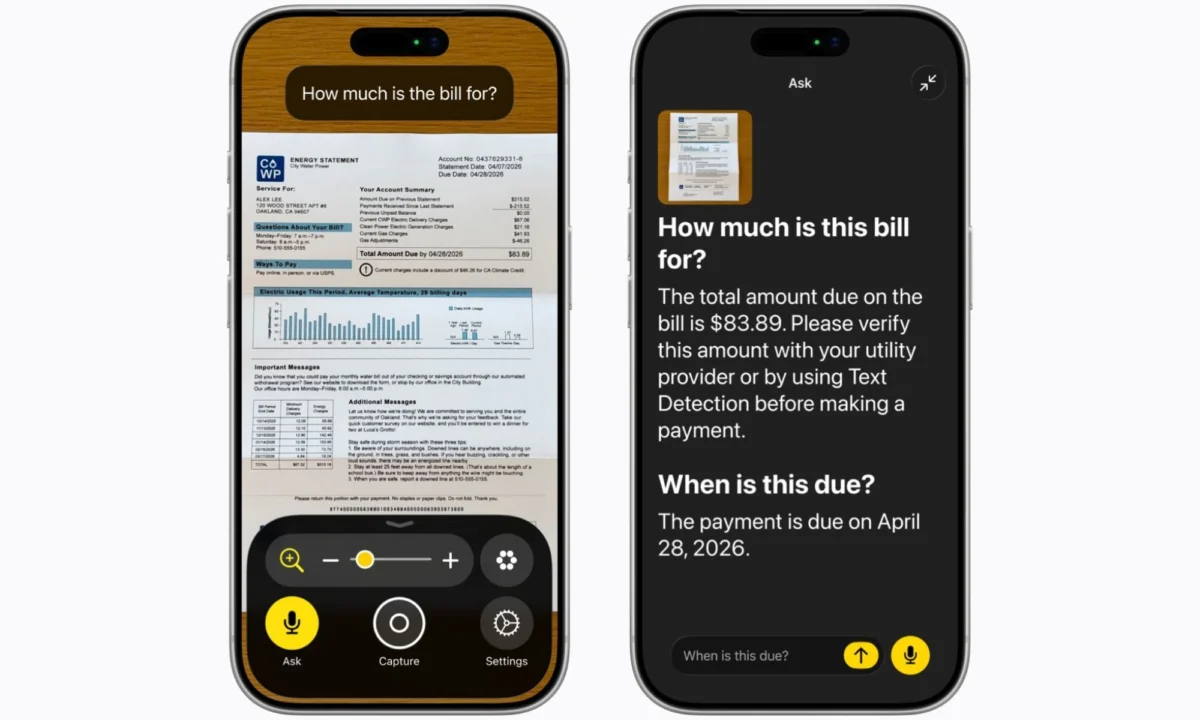
For the blind and low-vision community, navigating digital and physical spaces has historically relied on screen readers that often struggle with complex visual data. Apple is addressing this with the new "Image Explorer" for VoiceOver and Magnifier.
Using Apple Intelligence, this tool does not merely identify that an image exists; it analyzes the content, structure, and intent of the visual data. Whether it is a dense financial document, a handwritten note, or a complex scientific infographic, users can now gain a comprehensive, high-level summary of the content. Perhaps most impressively, the feature allows for follow-up questioning. If a user points their iPhone camera at a document, they can engage in a dialogue with the device, asking specific queries like, "What is the total amount due on this bill?" or "Does this graph indicate an upward trend?"
Voice Control and Intuitive Navigation
Apple is also refining Voice Control, moving away from the cumbersome requirement that users memorize exact button labels. Through the integration of natural-language understanding, the device can now identify screen elements based on their appearance and purpose. A user can simply state, "Tap the purple folder," or "Open the restaurant guide," and the system parses the visual intent. This minimizes the cognitive load for users with mobility impairments, turning the interface into a conversation rather than a series of strict command strings.

Chronology of Innovation: A Commitment to Inclusion
Apple’s journey into accessibility is not a recent development, but rather a long-term strategic pillar.
- Pre-2020: Apple pioneered standard features like VoiceOver, Switch Control, and AssistiveTouch, establishing itself as an industry leader in accessible hardware.
- 2022-2024: The focus shifted toward "Hardware-Software Integration," with the introduction of features like Door Detection, People Detection, and Live Captions, which leveraged the LiDAR sensors and Neural Engine on flagship iPhones.
- May 2026 (Current Announcement): The launch of "Intelligence-Driven Accessibility" marks the third epoch. By integrating LLMs (Large Language Models) directly into these tools, Apple is moving from detection to comprehension.
- Late 2026: The official rollout of these features is scheduled for upcoming software updates across the ecosystem, with a deep-dive demonstration expected at the upcoming Worldwide Developers Conference (WWDC).
Supporting Data and Technical Implementation
The efficacy of these new features is predicated on Apple’s commitment to "on-device" processing. Unlike cloud-based AI models, which require massive data transfers and introduce latency, Apple’s accessibility suite processes information locally. This is critical for several reasons:
- Privacy: Sensitive data—such as personal photos, medical records, or private messages—remains on the device, ensuring that users are not compromising their privacy to gain accessibility support.
- Reliability: By keeping the AI local, the features remain functional even in environments with poor or non-existent internet connectivity, a necessity for users who rely on these tools for daily navigation.
- Latency: Accessibility is a time-sensitive requirement. The reduced latency afforded by on-device processing means that feedback is near-instantaneous, which is vital for users navigating the physical world.
Furthermore, the expansion of the Accessibility Reader to include support for complex materials—such as academic papers with multi-column layouts, tables, and nested images—addresses a long-standing gap in digital learning tools. The addition of automated translation and AI-generated summaries provides a necessary bridge for students and professionals with dyslexia, allowing them to digest information in a format that suits their specific cognitive needs.
Official Responses and Vision Pro Integration
Perhaps the most ambitious aspect of this update is the integration with the Apple Vision Pro. The company has announced that users with compatible alternative wheelchair drive systems will soon be able to control their power wheelchairs using the headset’s advanced eye-tracking system.
In a press statement, Apple executives emphasized that this was a collaborative effort with developers of assistive technology, specifically naming the Tolt and LUCI systems. This partnership approach highlights a broader trend: Apple is positioning its devices not just as standalone products, but as hubs within a wider assistive technology ecosystem.
Additional Vision Pro updates include:

- Advanced Face Gestures: Allowing users with limited physical range of motion to trigger actions through subtle facial movements.
- Motion Sickness Mitigation: A critical update for passengers in moving vehicles, using visual cues to help the inner ear sync with what the user is seeing through the headset.
Implications for the Future of Tech
The implications of these updates are profound, extending far beyond the disability community.
The "Curb-Cut" Effect in AI
In urban planning, the "curb-cut effect" describes how infrastructure designed for people in wheelchairs—the ramp on a sidewalk—ends up benefiting everyone, including parents with strollers, travelers with luggage, and delivery workers. Similarly, Apple’s accessibility features are likely to find their way into the general user experience. Features like "Image Explorer" or natural-language screen navigation could eventually become standard for all users, simplifying the way we interact with increasingly complex digital interfaces.
Setting a New Industry Standard
By baking these features into the OS level, Apple is forcing the rest of the industry to reconsider the baseline for "accessible design." Competitors will now face pressure to prove that their AI implementations are equally inclusive. It effectively makes accessibility a competitive differentiator, encouraging developers to prioritize inclusive design from the inception of their applications rather than as an afterthought.
Ethics and Privacy
As the world grapples with the ethical implications of AI, Apple’s "privacy-first" stance on these accessibility features serves as a benchmark. By proving that high-utility, complex AI tasks can be performed without offloading user data to the cloud, Apple is providing a blueprint for a more secure, accessible future.
Conclusion
The latest updates from Apple represent a significant leap forward in the quest for digital equality. By leveraging the nuanced, context-aware power of Apple Intelligence, the company is doing more than just adding features; it is fundamentally lowering the barrier to entry for millions of users.
As we look toward the upcoming software releases and the insights to be shared at WWDC, it is clear that the future of technology is not just about being faster or more powerful—it is about being more intuitive, more inclusive, and fundamentally more human. Whether it is a student reading a complex scientific paper, a visually impaired user navigating a new city, or a power-chair user controlling their world with a gaze, these updates provide the tools necessary to bridge the gap between potential and participation.
