

This story is published through the Indigenous News Alliance.
In Aotearoa New Zealand, the changing climate is no longer a distant, theoretical threat. It is a present-day reality manifesting in record-breaking storms, catastrophic flooding, and an increasingly volatile environment. Yet, for Māori, the impacts of these ecological shifts are not merely geophysical; they are deeply historical. According to the 2026 National Climate Change Risk Assessment, the legacy of colonization—characterized by land dispossession, systemic exclusion from policy-making, and chronic underinvestment—has acted as a "risk multiplier," leaving Indigenous communities disproportionately vulnerable to the climate crisis.
The 2026 National Climate Change Risk Assessment: A Call for Sovereignty
The 2026 National Climate Change Risk Assessment, a sweeping, four-part government analysis, represents a landmark acknowledgment of the intersection between environmental degradation and colonial history. A vital component of this assessment is a dedicated companion report focusing specifically on the Māori experience.
The report argues that the climate crisis will inevitably deepen existing inequities unless there is a radical shift in governance. To mitigate these impacts, the assessment concludes that Māori-led adaptation is not just a preference but a necessity. It calls for policy grounded in mātauranga Māori (Māori knowledge systems), the enforcement of Indigenous data sovereignty, and the elevation of Māori authority in all climate-related decision-making processes.
"For more than 150 years, Māori have been pushed to the margins, literally, by an aggressive colonization process," says Paora Tapsell, director of the Kōika Institute of Climate Resilience at Lincoln University. By detailing how current climate policy often fails to account for the specific needs of iwi (tribes) and hapū (sub-tribes), the report underscores a critical failure in the state’s duty to protect its Indigenous citizens.
A Global Pattern of Dispossession
The findings in Aotearoa do not exist in a vacuum. They are part of an emerging global consensus that colonial history is a primary driver of modern climate vulnerability.
In 2023, the United States’ Fifth National Climate Assessment reached a similar, damning conclusion: land theft and systemic displacement have directly exacerbated the impact of climate change on Native American and Alaska Native populations. Similarly, Australia’s 2022 State of the Environment report—the first to feature an Indigenous lead author—found that First Nations people are significantly more likely to be impacted by extreme weather events like bushfires.
Across these nations, a recurring theme has emerged: despite the clear evidence provided by Indigenous leaders and scholars, national governments remain slow to provide the resources and autonomy required for effective, community-led climate action. Indigenous peoples globally remain on the frontlines of the crisis, yet they receive a negligible fraction of the global climate finance necessary to build long-term resilience.
The Anatomy of a Climate Disaster: A Chronology of Compounding Harms
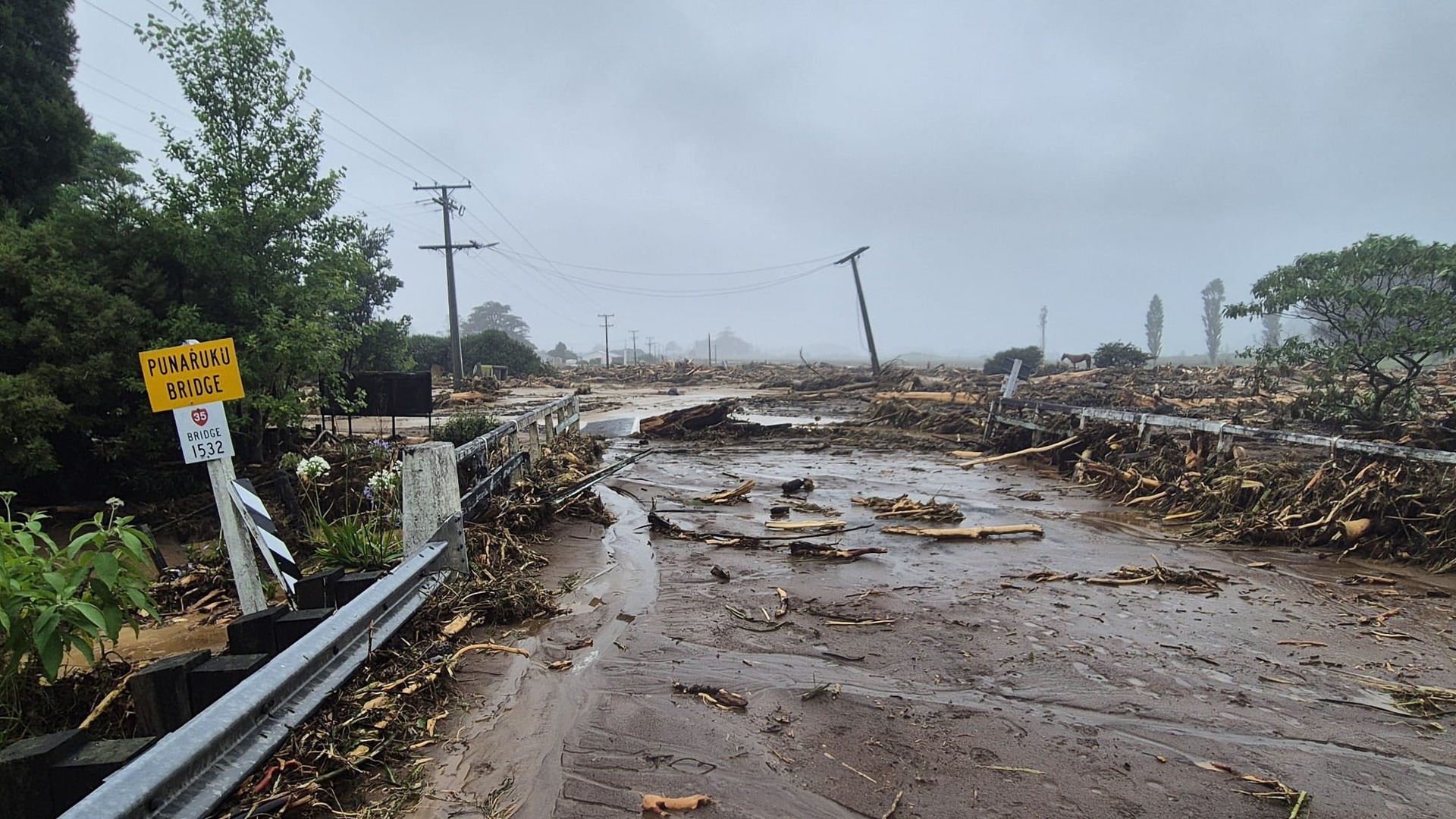
The recent severe weather seasons in Aotearoa serve as a grim case study in how disaster risks compound. With multiple states of emergency declared across both the North and South Islands, the country has seen a rapid succession of floods and storms.
Shaun Awatere (Ngāti Porou), the lead author of the companion report on Māori communities, explains that these events are rarely singular. "Climate events do not arrive one at a time," he notes. "A storm floods a road, damages a marae [tribal meeting place], erodes whenua [land], disrupts access to mahinga kai [food gathering places], and overwhelms health and welfare systems that were already stretched, all at once. Each of those harms compounds the next."
This cascading effect is particularly devastating for kāinga (Māori settlements). Despite historical underfunding, these communities have repeatedly stepped up as first responders, organizing emergency relief and infrastructure repairs when state systems fail to reach remote areas. The report highlights this as a testament to the resilience of Māori social structures, even as those structures are strained to their breaking point.
Seven Domains of Risk: Beyond Infrastructure
The National Climate Change Risk Assessment categorizes the threat into seven interconnected domains, spanning environmental, cultural, and economic spheres.
1. Biodiversity and Cultural Loss
The loss of protected endemic species is frequently framed as a conservation issue, but for Māori, it is a cultural and existential crisis. The decline of specific flora and fauna disrupts the maramataka (Māori lunar calendar), which governs the timing of planting, harvesting, and spiritual ceremonies. Under high-emissions scenarios, the report warns that some endemic species could face near-irreversible decline by 2090, threatening the intergenerational transmission of traditional knowledge.
2. Economic Vulnerability
Māori-owned enterprises, particularly in forestry, aquaculture, and horticulture, are the bedrock of many regional economies. These industries are now facing a "double squeeze": the physical threat of climate hazards and the economic threat of systemic underinvestment. Without structural reform that provides these businesses with the capital to adapt, their viability—and the economic security of the communities they support—is at high risk.
3. Cultural Fragmentation
Perhaps the most profound risk identified is the potential for cultural erosion. Flooding, erosion, and wildfires threaten the physical sites of cultural identity: marae, burial grounds, and ancestral homes. When communities are forced to relocate due to climate-driven displacement, the risk of "cultural fragmentation" grows. The loss of connection to specific ancestral land is not just a loss of property; it is a severance of the genealogical ties that form the basis of Māori identity and language.
The Governance Gap: Treaty Obligations and Legal Failure
A central point of contention in the report is the government’s failure to honor the Treaty of Waitangi—the founding document of Aotearoa New Zealand. The Treaty guarantees Māori authority over their lands, waters, and taonga (treasures).
However, the report identifies "legal exclusion and governance failure" as a major risk multiplier. By systematically excluding Māori from the design of climate policy, the state has inadvertently built systems that are maladaptive. When decisions are made in Wellington without the input of those who have held stewardship over the land for centuries, the resulting policies often ignore the nuances of local geography and cultural protocol.
"The central question," says Awatere, "is whether adaptation plans will reflect this evidence, or whether Māori communities will continue to carry a disproportionate risk of harm."
Moving Toward a Resilient Future
The 2026 Assessment provides a roadmap, but its success depends on the political will of the government to relinquish top-down control.
The path forward, according to the report, must involve:
- Indigenous Data Sovereignty: Ensuring that Māori control the collection, ownership, and application of data concerning their lands and peoples.
- Integrating Mātauranga Māori: Moving beyond a Western scientific framework to include traditional knowledge in environmental management.
- Structural Reform: Redirecting climate funding to bypass bureaucratic bottlenecks and directly support iwi-led initiatives.
As the climate continues to change, the situation in Aotearoa serves as a poignant reminder that climate justice is inseparable from the struggle for self-determination. By centering Māori authority and acknowledging the deep, structural wounds of colonization, the nation has the potential to move from a posture of reactive crisis management to one of proactive, sustainable, and equitable resilience.
The report is not merely a document of warning; it is an invitation to redefine the relationship between the state and its Indigenous partners. The question remains: is the government ready to listen?
