

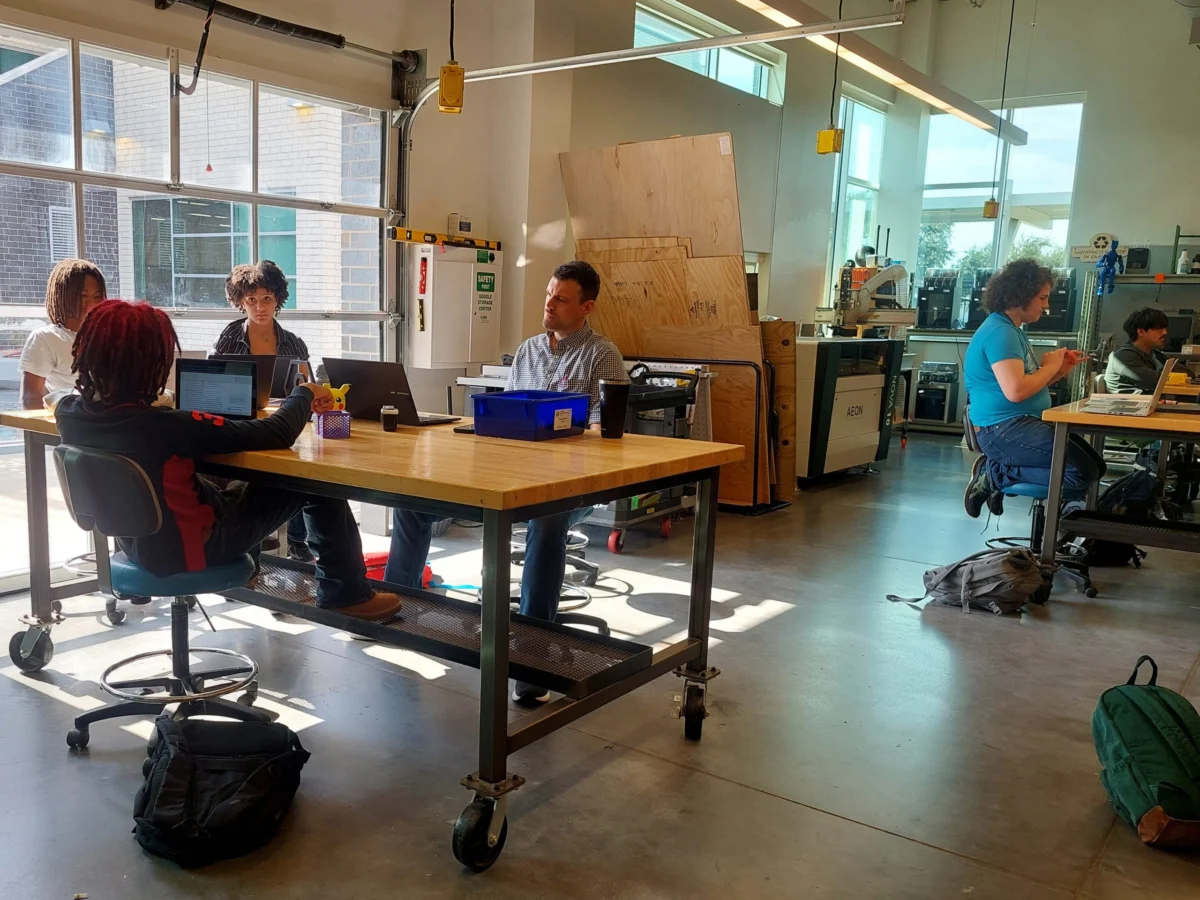
MIDLAND, Texas — In a high-tech lab at Midland College, 17-year-old Dylan Ruiz stares at a towering, six-foot-tall skeleton of valves and pumps. The machinery, a sophisticated simulator designed to replicate the volatile pressures of an oil well, is the classroom of the future for students like Ruiz. As a senior at Legacy High School, he is one of roughly 100 students currently enrolled in the Petroleum Energy Program, a dual-credit initiative that offers a direct pipeline from the high school classroom to the oil fields of the Permian Basin.
For these students, the industry is not merely a historical relic of Texas’ past; it is a blueprint for their economic future. Supported by local industry giants and fueled by a political climate that promises to prioritize fossil fuel extraction, these educational programs are positioning the next generation to step directly into the high-paying, high-stakes world of energy production.
The Main Facts: Education Meets Industry
The Petroleum Energy Program at Midland College is part of a broader, decade-long effort by the oil and gas industry to secure its workforce. Facing a looming "silver tsunami" of retirements among veteran workers, companies have poured millions of dollars into K-12 education across Texas. The objective is twofold: to address a technical labor shortage and to foster a generation of workers who view the industry as a stable, lucrative career path.
For students, the incentives are compelling. In 2024, the average annual wage for oil and gas industry roles in Texas stood at approximately $86,298, according to the Texas Workforce Commission. By earning certifications in pump operations, mechanical drives, and field maintenance while still in high school, students can bypass traditional, expensive collegiate routes, entering the workforce as lease operators or service technicians immediately upon graduation.
A Chronological Shift: From Bust to "Drill, Baby, Drill"
The history of this educational model is intrinsically tied to the state’s legislative and economic cycles:
- 2013: Texas lawmakers passed landmark legislation to expand career and technical education (CTE) in high schools, pushing for industry-recognized certifications. This provided the regulatory framework for schools to partner more closely with the private sector.
- 2015: The Midland Independent School District and Midland College established the Petroleum Academy, the predecessor to today’s program. The goal was to combat the “brain drain,” where talented local youth often left the Permian Basin to seek careers elsewhere.
- 2020-2021: The program reached its peak enrollment of 211 students, though numbers fluctuated as the economy faced global uncertainty and a pivot toward renewable energy.
- 2023: The Texas State Board of Education voted to remove specific climate science lessons from middle school textbooks, reflecting a broader state-level push to reshape how students perceive the energy transition.
- 2025: New state legislation further reduced testing requirements for students in vocational tracks, clearing a faster path for those pursuing industry-specific certifications.
Today, as the federal government signals a renewed commitment to domestic fossil fuel production, the program has seen a resurgence in interest. Educators note that the “boom and bust” cycle that defined previous decades is being replaced by a more disciplined approach to labor, with companies aiming for long-term consistency to avoid the mass layoffs that once plagued the industry.
Supporting Data: The Economics of the Classroom
The scale of industry investment is staggering. In Midland, a $1.4 billion bond—approved by local taxpayers—is currently funding a new high school scheduled to open in 2028, featuring dedicated spaces for STEM and energy-focused curriculum. Partnerships with companies like Chevron, which recently invested $145,000 to bolster local coursework, ensure that students are training on the same equipment they will use in the field.
The influence extends beyond equipment. At Midland College, the hallways are adorned with banners from industry titans like Diamondback Energy. Curricula are vetted by industry boards to ensure that what a student learns in the classroom aligns with the immediate technical needs of the field.

However, the trend is not uniform. In Houston, the Energy Institute High School offers a more diversified approach. While it also receives heavy support from fossil fuel entities like BP and Phillips 66, the curriculum includes broader studies in nuclear and renewable energy. It serves as a laboratory for the future of energy, where students like 2024 graduate Alexander Hernandez—who is now studying neurodegenerative diseases at Harvard—utilized the school’s high-quality resources to launch diverse academic careers.
Official Responses and the "Educational Influence" Debate
The role of the energy industry in public education has not gone without scrutiny. Critics, including the National Center for Science Education (NCSE), argue that these partnerships are a long-term strategy for industry survival.
"The oil and gas industry definitely wants voters and policymakers in the next generation to be sympathetic to the concerns of the fossil fuel industry," said Glenn Branch, deputy director of the NCSE. Branch notes that industry intervention in public schools dates back to the 1940s, and that current trends are a modern iteration of that strategy.
In contrast, industry advocates, such as Kathy Shannon, former executive director of the Permian Basin Petroleum Museum, maintain that these programs are a public service. "We have to have the dreamers, but we have to have the workers," Shannon argued. She believes that by exposing children to the mechanics of the industry early on, schools are providing a vital pathway to prosperity for families who might otherwise struggle in a volatile economy.

Educators like Erick Gutierrez, a department chair at Midland College, acknowledge that students often ask difficult questions about environmental impact. He notes that the curriculum has evolved to include discussions on carbon footprint reduction, framing the industry as a participant in the energy transition rather than a combatant against it.
The Human Impact: A Family Bet
For Dylan Ruiz, the geopolitical and environmental debates surrounding the industry are secondary to the concrete reality of his family’s experience. His father, who worked in the oil patch without a college degree, faced the brunt of several economic downturns.
"My dad is always telling me, ‘Go to college, get a good degree, get a good job,’" Ruiz said. For his family, the path through the Petroleum Energy Program represents a form of security—a way to ensure that the next generation is not only employed but also protected from the instability of the past.
As he works through his training scenarios, Ruiz is not just learning to prevent leaks; he is navigating the complex intersection of his community’s economic survival and the shifting global energy landscape. Whether he moves on to a bachelor’s degree in engineering or enters the workforce immediately at a company like Diamondback, he represents the target demographic of a multi-million-dollar bet: that the future of the Permian Basin—and the students who inhabit it—will remain deeply and inextricably linked to the oil under their feet.

Implications for the Future
The model being pioneered in Texas serves as a litmus test for the rest of the nation. As the U.S. navigates a transition that is as much about political ideology as it is about technology, the school-to-work pipeline in oil-rich states will likely remain a battleground.
If the current trend holds, we can expect to see:
- Increased Privatization of Vocational Training: Schools will likely become even more dependent on private energy companies for the funding required to maintain cutting-edge, expensive simulators and labs.
- A Narrowing of the Science Curriculum: As seen in the recent Texas textbook votes, the content of science education will continue to be a site of political contestation, with states potentially diverging sharply on how they teach the realities of climate change and energy production.
- The Rise of "Specialized" High Schools: The success of magnet schools like the Energy Institute suggests that public-private partnerships will become the standard for schools aiming to prepare students for specific, high-tech industrial careers.
For now, in the quiet, dusty expanse of Midland, the work continues. As the pumpjacks continue their rhythmic, bowing dance across the horizon, a new generation of technicians is being built, one valve and one sensor at a time, ensuring that the industry remains firmly rooted in the local classroom.
