

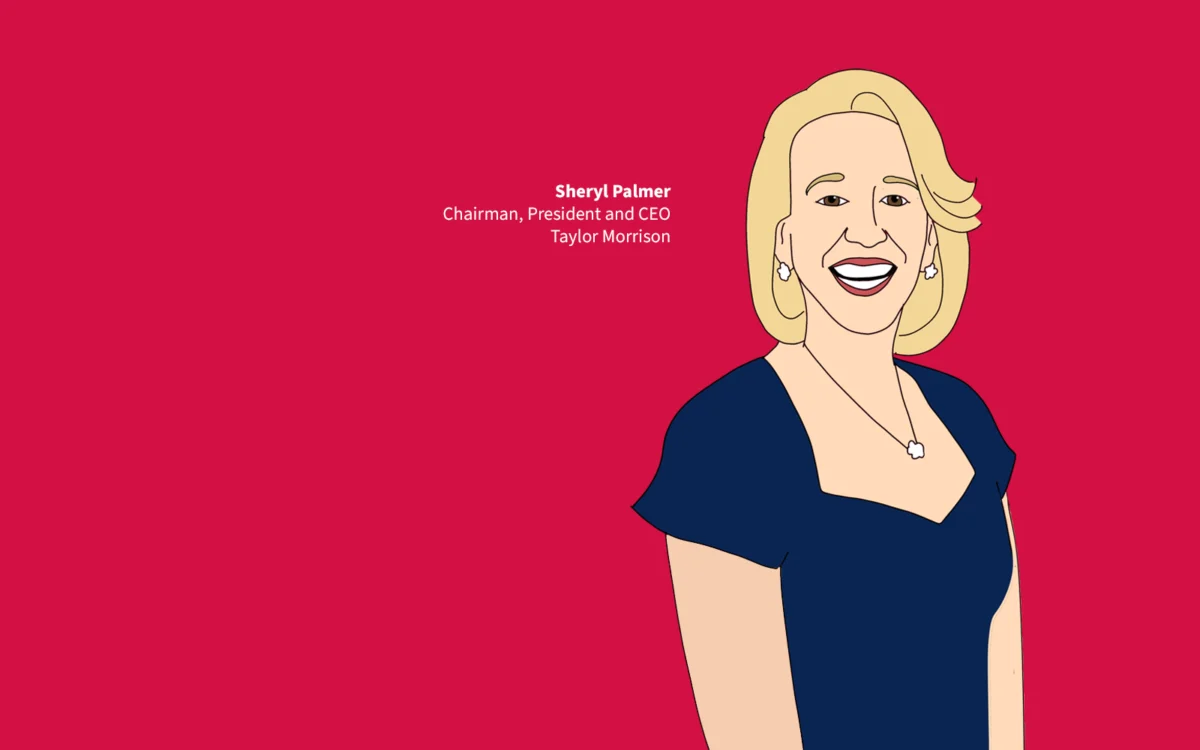
When Sheryl Palmer stepped into the role of Chief Executive Officer at Taylor Morrison in 2007, she did not merely inherit a company; she inherited a crucible. The organization was the product of a shotgun wedding between two titans with clashing DNA: Taylor Woodrow, a master-planned community developer catering to the elite, and Morrison Homes, a high-volume, production-oriented powerhouse for first-time buyers.
To make matters worse, this internal friction was set against the backdrop of the most devastating housing market collapse in modern history. Most analysts at the time expected the company to implode or be cannibalized. Instead, Palmer implemented a philosophy that would later be dubbed "The Palmer Method"—a "both-and" strategy that prioritized decentralized accountability over top-down homogenization. Nearly two decades later, this approach has transformed Taylor Morrison from a struggling entity into a $6.8 billion acquisition target for Warren Buffett’s Berkshire Hathaway.
The Chronology of Resilience: From Survival to Dominance
The story of Taylor Morrison is not a linear tale of growth; it is a story of structural evolution through crisis.
- 2007: The Baptism by Fire: Palmer takes the helm during the early stages of the Great Recession. Rather than forcing a singular, stifling corporate culture upon the merged entities, she empowered local divisions to maintain their P&L accountability and entrepreneurial identity.
- 2013: The Public Debut: Emerging from the ashes of the downturn, Taylor Morrison successfully executed its $722 million initial public offering (IPO) on the New York Stock Exchange, signaling to the market that it was no longer a survivalist company, but a growth engine.
- 2018–2020: The Aggressive Expansion: A period defined by strategic M&A. The acquisition of AV Homes ($490 million) and the landmark $2.4 billion acquisition of William Lyon Homes effectively cemented Taylor Morrison as a national heavyweight.
- 2024: The Berkshire Benchmark: Berkshire Hathaway’s $6.8 billion cash acquisition confirms that Taylor Morrison is no longer just a homebuilder; it is a premium operating platform capable of scaling while maintaining the agility of a boutique firm.
Supporting Data: Scaling Without Losing Soul
The numbers tell a story of consistent, disciplined expansion. When Palmer first took control, Taylor Morrison sat at the 32nd position in the national rankings of homebuilders. Today, it stands firmly at 6th. However, growth in the homebuilding sector is notoriously dangerous; many companies expand their geographic footprint only to see their margins and customer satisfaction scores erode.
Taylor Morrison’s "ROI on team members" stands as its most significant metric. The company has consistently maintained a reputation as one of the most trusted brands in the industry—a rare feat in a sector often plagued by consumer complaints. While competitors focused on land-banking, Palmer focused on "ecosystem-banking"—building trust with land sellers, trade partners, municipal officials, and, most importantly, the end-user.
This performance is backed by a balance sheet that has become the envy of the industry. Through the acquisition of William Lyon and other entities, the company did not just increase its "community count"; it integrated processes that allowed for rapid, high-quality production without sacrificing the brand identity that earned it customer loyalty.
Official Perspectives: Why the Deal Makes Sense
Industry veterans view the Berkshire Hathaway acquisition as a validation of the entire housing sector. Larry Webb, CEO of the now-defunct John Laing Homes and founder of The New Home Company, offers a pointed assessment:
"One thing is very clear: one of the most well-respected investors in the U.S. is making a very large and positive statement that the homebuilding industry is undervalued and a terrific long-term investment. At a time when our industry is deeply challenged, I am very encouraged by this."
The sentiment is echoed by Tony Avila, founder of the Builder Advisor Group, who notes that Taylor Morrison’s true value lies in its "integration capability." According to Avila, the firm is exceptionally adept at absorbing new companies without stripping away the "fire-in-the-belly" culture that made those companies successful in the first place.
This philosophy aligns perfectly with Berkshire Hathaway’s own internal ethos. As former Clayton Homes executive Keith Holdbrooks famously remarked, "Our capital is people. The asset is people." By acquiring Taylor Morrison, Berkshire is effectively purchasing a "people-first" architecture that is nearly impossible to replicate from scratch.
The "Both-And" Philosophy: A New Operating Standard
The brilliance of the "Palmer Method" lies in its refusal to adopt the conventional corporate habit of "winner-take-all" integration. In most homebuilding mergers, the culture of the acquired firm is smothered by the systems of the parent. Taylor Morrison inverted this. By allowing local divisions to retain their autonomy while enforcing strict, consistent financial accountability, Palmer created a federated model of excellence.
This model is increasingly relevant in an era of massive consolidation. As firms grow, they tend to become slow, bureaucratic, and detached from the local consumer. Palmer’s leadership ensured that as Taylor Morrison grew, it stayed close to the ground—maintaining the agility required to navigate changing interest rates, supply chain disruptions, and local regulatory environments.
Implications: The Future of the Housing Ecosystem
The acquisition of Taylor Morrison by Berkshire Hathaway signals a potential paradigm shift in the American housing market. If the primary asset being purchased is not just land or revenue, but an "organizational capability," then we are entering a new era of corporate homebuilding.
1. The Death of the "Absorption" Model
Historically, acquisitions in this sector were about liquidation—buying land and then shutting down the acquired firm’s management. Berkshire’s interest in Taylor Morrison suggests that the future belongs to firms that can act as "holding companies of excellence," where the acquired leadership and culture are preserved to drive performance.
2. A New Valuation Benchmark
With Berkshire setting a price point that values the company’s long-term capability rather than just its short-term land assets, other publicly traded homebuilders may see their valuations re-rated. The market is beginning to price in the "intangible" value of a resilient, customer-centric organizational structure.
3. Vertical Integration as the Ultimate Moat
The series of analyses regarding this acquisition points toward a future where the winner is the entity that creates a "vertically integrated ecosystem." This includes capital, land, development, manufacturing, insurance, and mortgage finance. Taylor Morrison provides the perfect chassis for such an ecosystem.
Conclusion: The "Why" Behind the Builder
Ultimately, Sheryl Palmer’s success stems from a simple, unrepentant declaration: "We had to transform from obsessing about our own internal process to a focus on our love for our customer, a love for what we do as a team."
While such sentiments are often relegated to the realm of corporate "fluff," in the case of Taylor Morrison, they have been the literal foundation of the company’s financial success. As Berkshire Hathaway prepares to integrate this titan into its portfolio, the lesson for the broader industry is clear: in a business defined by concrete, wood, and steel, the most resilient asset remains the human element.
The $6.8 billion price tag is not just for the keys to the houses Taylor Morrison builds; it is for the keys to the culture that builds them. Whether this deal marks the beginning of a broader transformation of the housing market or remains a singular, brilliant anomaly, one thing is certain: the industry will be watching closely as the next chapter of this "both-and" success story unfolds under the Berkshire umbrella.
