

The world is currently in the midst of a historic acceleration in urban mobility infrastructure. As urbanization reaches unprecedented levels across the Global South and mature cities in the West scramble to modernize aging networks, the pace of transit expansion has hit a fever pitch. In 2025 alone, more than 1,000 kilometers of new urban rail lines—spanning metros, light rail, and tramway systems—were brought into service. Looking ahead to 2026, the momentum shows no signs of slowing, with an equally robust slate of projects slated for completion.
This annual report provides a comprehensive examination of the transit landscape, synthesizing data from The Transport Politic to offer a global view of where rail, bus rapid transit (BRT), and aerial tram systems are reshaping how millions of people move.

The Global Pulse: Trends in Transit Expansion
The defining narrative of the last decade remains the staggering dominance of Chinese urban rail development. In 2025, China accounted for 930 kilometers of the 1,300 kilometers of new metro and light rail lines opened worldwide—a staggering 72 percent share. This expansion was not localized to a few mega-cities; it was distributed across 23 distinct urban regions.
Perhaps most illustrative of the scale is the Pearl River Delta. In 2025, this sprawling economic powerhouse, encompassing cities like Dongguan, Foshan, Guangzhou, and Shenzhen, added 179 kilometers of new lines. To put that into perspective, that single year of construction in the Pearl River Delta yielded more track than the entire Chicago "L" system.

The Shift in Global Influence
The sheer volume of Chinese investment has fundamentally altered the global hierarchy of transit infrastructure. Today, China boasts approximately 12,500 kilometers of operating metro lines. To understand the scale of this achievement: this total is five times that of the entire European Union and nine times that of the United States.
However, the geographic center of gravity is shifting. While China maintains its lead, India is emerging as the next major titan of transit. Driven by massive projects in Chennai, Delhi, and Mumbai, India is currently on a trajectory to surpass the United States in total metro system length by the end of 2026. This reflects a broader trend where nations with rapidly expanding urban middle classes are prioritizing high-capacity rail as the primary solution to traffic congestion and environmental sustainability.

2025: A Year in Review
The year 2025 was marked by significant milestones across five continents. While China led in total kilometers, other regions saw critical "gap-filling" projects that significantly improved local connectivity.
- Europe: Expansion in the EU remained steady, though focused more on incremental growth rather than the massive greenfield projects seen in Asia. Key highlights included system extensions in cities like Paris and Milan, where the focus has been on integrating peripheral suburbs into the urban core.
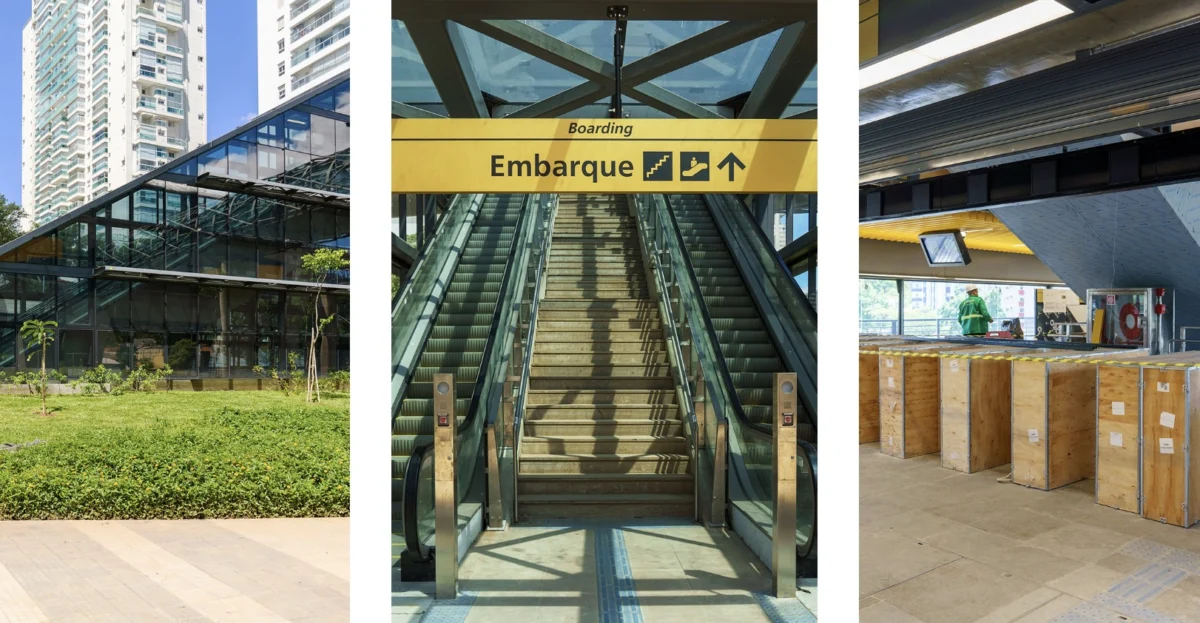
- The Americas: Activity in North America remained modest compared to international counterparts. While cities like Los Angeles and Seattle continued to push forward with major light rail and metro extensions, the pace remains tethered to complex regulatory environments and funding cycles. In Latin America, São Paulo continued to demonstrate how massive population density necessitates a constant, aggressive expansion of its metro, with Linha 17 serving as a highlight for the year.
- The Middle East and Africa: Transit, long a secondary concern in many rapidly growing cities in these regions, is now a pillar of national development. Significant progress was recorded in Turkey (Istanbul and Ankara) and Egypt, where urban rail is being used to alleviate historic levels of congestion.
2026: A Look Ahead
As we progress through 2026, the pipeline for transit infrastructure remains deep. Projections indicate that Chinese cities will add another 1,100 kilometers of new lines this year, primarily focusing on metro expansion to further densify existing urban corridors.

Beyond the major players, 2026 is a year for "standout" light rail and tramway projects. Unlike the massive underground metro projects that dominate the headlines, these systems represent a move toward human-scale, street-level transit:
- Bologna, Italy: The city is currently finalizing a complete new tram network, a project that is expected to redefine the city’s historic center by reducing automobile reliance.
- France: A surge in tramway activity continues, with Brest, Lyon, and Marseille all adding new lines. These projects are characterized by their focus on urban renewal and the pedestrianization of city centers.
- Padova, Italy: The city is extending its unique tire-running tram system, providing a case study in how existing technologies can be refined to meet modern passenger demands.
Supporting Data and Technical Context
The data presented here is drawn from Transit Explorer, a specialized platform that tracks the global pulse of infrastructure. When evaluating the world’s largest metro systems, the debate often turns to methodology: Do we count regional rail through-running as metro? Should mega-regions like the Pearl River Delta be categorized as a single entity?

If we adopt an inclusive definition—counting through-running regional rail and integrated metropolitan systems—the top 20 list is dominated by China (13 systems), followed by Japan (2 systems), and single entries for India, Russia, South Korea, the UK, and the US.
A Stark Contrast to 1990
The modern reality is nearly unrecognizable compared to the landscape of 35 years ago. In 1990, not a single Chinese city appeared in the top 20 list of longest metro networks. Instead, the list was defined by European and American dominance, with ten European and four American cities holding the top spots. The shift represents the most significant reallocation of public infrastructure capital in human history.

Implications for the Future
The implications of this global building boom are profound.
Urban Sustainability and Density
For the cities in the Global South, these projects are not merely "transit"—they are the bones upon which future sustainable urban growth will be built. By linking massive residential zones to commercial hubs, these cities are effectively leapfrogging the automobile-dependent development patterns that plagued 20th-century Western cities.

The Western Stagnation Dilemma
The data raises a critical question for Western planners: Why has expansion slowed so significantly in the United States and Japan? While the US was a world leader in the mid-20th century, the current environment of high construction costs, NIMBYism, and fragmented governance has created a bottleneck. The contrast between the rapid delivery of lines in Delhi or Shenzhen and the decades-long project timelines in cities like Los Angeles or New York suggests that technical capacity is not the issue—political and institutional frameworks are.
Economic Development
Transit investment is increasingly viewed as a prerequisite for economic competitiveness. The cities currently building the most aggressive networks—such as Chengdu, Bangalore, and Istanbul—are betting that the efficiency of movement will attract global capital. As these systems come online, they will likely see a spike in "Transit-Oriented Development" (TOD), where land value and commercial activity cluster around stations, further compounding the economic benefits of the rail investment.

Conclusion: A New Era of Mobility
The era of massive urban rail expansion is far from over. If 2025 was a year of establishing records, 2026 is poised to be a year of consolidation and integration. For the global transit community, the challenge is no longer just "building more," but ensuring that these billions of dollars in infrastructure are effectively integrated into the fabric of daily life.
As we look toward the remainder of 2026 and beyond, the trends are clear: the world is moving, and it is increasingly doing so on rails. Whether it is a new light rail line in a historic Italian city or a multi-line metro expansion in a Chinese megacity, the priority is shifting toward high-capacity, electrified transit. For city planners, policymakers, and citizens alike, the message is that the future of the urban experience is inherently linked to the quality, accessibility, and reach of the public transit network.

For those interested in exploring the specifics of these projects, the full, interactive database is available via the Transit Explorer project. Data is also available for purchase in Shapefile, GeoJSON, and CSV formats for professional researchers and urban planning organizations.
