

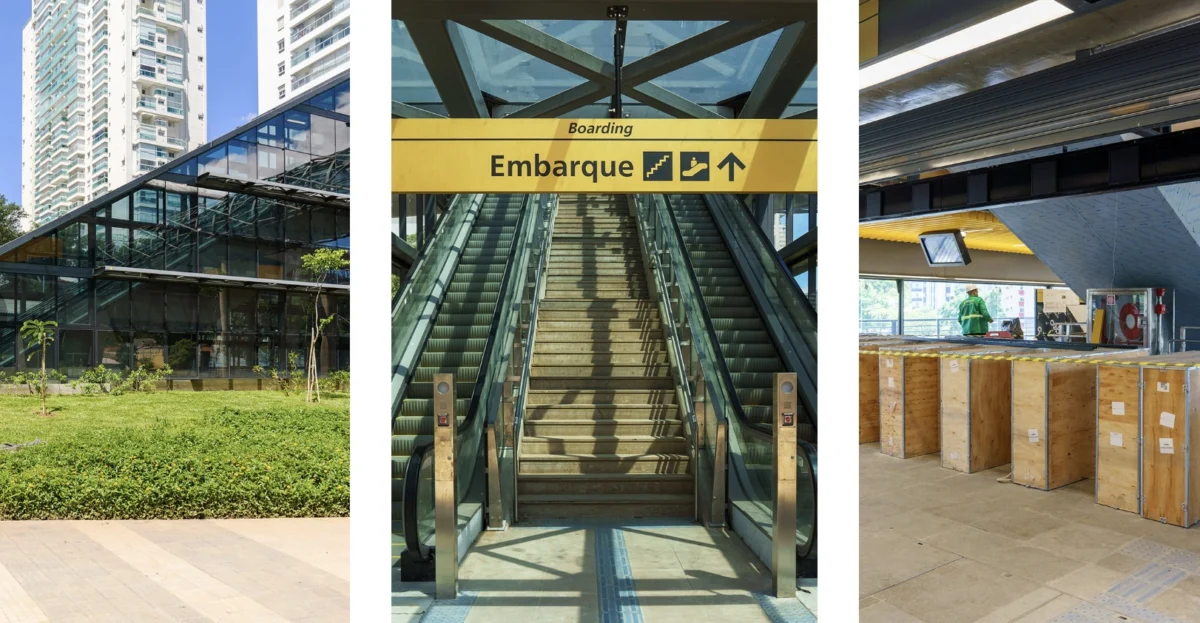
The rapid expansion of the world’s urban transit systems shows no signs of slowing down. As metropolitan areas worldwide grapple with the dual pressures of explosive urbanization and the urgent need to decarbonize transport, massive capital investments are reshaping how millions of people move daily. In 2025, global transit authorities delivered more than 1,300 kilometers of new urban rail—including metros, light rail, and tramways—to the public. The momentum for 2026 remains equally robust, with a similar volume of new infrastructure currently slated to come online.
This annual review, provided by The Transport Politic, synthesizes the data on global transit growth, examining where these systems are flourishing and what these trends imply for the future of urban mobility.

The State of Global Transit: Key Facts
The 2025 landscape was defined by an unprecedented scale of construction. Of the 1,300 kilometers of new urban rail completed worldwide last year, a staggering 930 kilometers were delivered in China alone. This accounts for 72 percent of global additions. To put this into perspective, the Pearl River Delta region—encompassing hubs like Guangzhou, Shenzhen, Foshan, and Dongguan—added 179 kilometers of new track in 2025. This single regional expansion exceeds the total length of the entire Chicago “L” system.
Moving into 2026, the trajectory remains heavily influenced by the Asian market. Chinese cities are on track to bring another 1,100 kilometers of line into operation. Simultaneously, India has emerged as a significant powerhouse, with cities like Delhi, Mumbai, and Chennai aggressively expanding their networks. Beyond these two giants, Egypt, Turkey, and various European nations are making strategic, if more modest, additions to their urban rail infrastructure.

A 2025–2026 Chronology of Expansion
The following summary categorizes the major developments across the globe. While the scope is vast, these projects represent a shift toward high-capacity, fixed-rail transit solutions.
2025: A Year of Completion
The past year saw a broad range of projects finalized, reflecting diverse local needs. In the Americas, projects in cities like Montreal, Ottawa, and Sao Paulo highlighted the focus on connecting expanding suburbs to city cores. In Europe, the focus remained on urban density, with tramway expansions in cities such as Strasbourg, Nantes, and Florence. India continued its rapid build-out, with significant progress in Bengaluru, Delhi, and Mumbai, while the Middle East saw key milestones in Riyadh and Jerusalem.

2026: Anticipated Milestones
The upcoming year will be characterized by the maturation of these networks. In Europe, cities like Bologna are introducing entirely new tram networks, while Marseille, Lyon, and Brest are adding critical lines to their existing systems. These projects emphasize “last-mile” connectivity and urban renewal. In China, the focus remains on massive, long-distance metro expansion, with new corridors in Beijing, Chengdu, and Chongqing expected to further solidify the country’s dominance in the global metro sector.
Supporting Data: The Shift in Global Rankings
The global hierarchy of transit infrastructure has undergone a seismic shift over the past 35 years. In 1990, the world’s top 20 longest metro networks were dominated by Western cities—10 in Europe and four in the United States—with not a single Chinese city appearing on the list.

Today, the landscape is unrecognizable. Of the 20 largest metro systems globally, 13 are located in China. The remaining spots are held by powerhouses such as Tokyo, Seoul, Delhi, Moscow, London, and New York. By the end of 2026, it is projected that India will surpass the United States in total operational metro kilometers, signaling a transition in which emerging economies are outpacing Western nations in infrastructure development.
The European Union continues to expand its networks, albeit at a measured pace. In contrast, Japan and the United States, which served as the global benchmarks for rail technology in the 20th century, have seen stagnant expansion rates, reflecting the difficulties of building in mature, densely developed environments compared to the greenfield opportunities in Asia.

Official Perspectives and Planning Implications
For municipal planners, the decision to invest in rail is rarely just about transport; it is about economic integration. In cities like Sao Paulo and Istanbul, new metro lines are being leveraged as catalysts for transit-oriented development (TOD). By linking commercial hubs with residential outskirts, these cities are attempting to reduce the crippling congestion that defines their current economic output.
Official reports from regional transit authorities in the Pearl River Delta suggest that their aggressive building program is a response to the "megalopolis" phenomenon. By creating a unified rail map for a region containing over 60 million people, they are effectively turning multiple cities into a single labor market.

Conversely, in the United States and parts of Western Europe, the narrative is shifting toward maintenance and incremental expansion. The focus on “opening” new lines is often balanced by the necessity of upgrading aging assets. However, as noted in recent data, even with slow growth, the U.S. is facing a critical juncture: without significant investment in new construction, the gap between the efficiency of American urban mobility and that of emerging global cities will continue to widen.
Implications for the Future of Urban Mobility
The data presented here suggests three major implications for the next decade of transit policy:

- The Dominance of the Metro: The metro remains the gold standard for urban mobility. While Bus Rapid Transit (BRT) and aerial tramways are popular in mid-sized cities, the world’s largest, fastest-growing regions continue to prioritize heavy or medium-capacity rail for its ability to move tens of thousands of passengers per hour.
- The "Asian Century" of Transit: The sheer scale of construction in China and India is not merely an engineering feat; it is a fundamental shift in the geography of the global economy. As these networks mature, they will support higher densities and more complex economic activities, further cementing the status of these regions as global hubs.
- The Stagnation of the West: Western cities are increasingly falling behind in terms of network reach. This is not necessarily due to a lack of ambition, but rather the compounding costs of regulation, legacy infrastructure, and political hurdles. The challenge for these cities in the coming years will be to find ways to reduce the cost per kilometer of construction to remain competitive.
Conclusion
As we look ahead, the global transit map is being redrawn in real-time. Whether it is the massive, state-led projects in China, the rapid urbanization efforts in India, or the fine-tuned network improvements across European capitals, the underlying goal remains the same: to build a more connected, efficient, and sustainable urban future.
For those interested in tracking these developments in greater detail, the Transit Explorer database provides a granular look at the current and planned state of global rail. As 2026 unfolds, it will be the progress—or lack thereof—in these specific projects that will determine whether our cities become more accessible or continue to succumb to the pressures of sprawl and congestion.

The era of massive transit expansion is far from over; in many parts of the world, it is only just beginning.
