

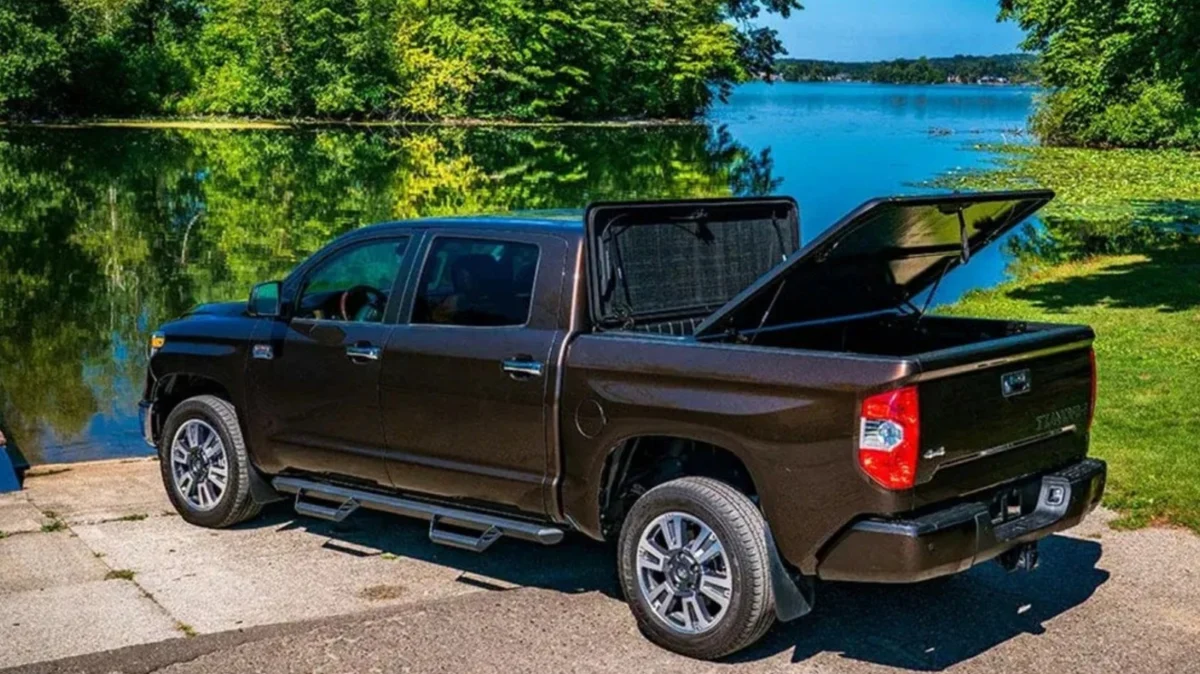
In the world of modern pickup truck ownership, the philosophy of "less is more" rarely finds a home. Drivers of full-size and mid-size rigs are characterized by a desire for maximum capability, whether that involves off-road prowess, towing capacity, or, increasingly, sophisticated cargo management. The eternal dilemma for the dedicated truck owner is the conflict between two essential accessories: the bed-mounted tool box and the tonneau cover.
For years, many believed these two features were mutually exclusive. Yet, as the aftermarket industry has matured, the "cake and eat it too" approach has become the industry standard. This report explores the technical landscape of dual-storage configurations, the practical implications for the modern driver, and the trade-offs inherent in modifying your truck bed.
Main Facts: The Evolution of Bed Management
At its core, the pickup truck bed is a platform for versatility. However, it is fundamentally insecure and exposed to the elements. A tonneau cover provides security, weather protection, and aerodynamic benefits that can marginally improve fuel efficiency. Conversely, a tool box provides organized, rapid-access storage for hardware, equipment, and emergency gear.
The primary conflict arises from geometry. Standard "cross-bed" tool boxes are designed to rest on the side rails of the truck bed, obstructing the path of traditional tonneau covers. However, recent engineering advancements have rendered this obstruction obsolete. Manufacturers now offer solutions that categorize storage into three distinct philosophies:
- Vertical/Rail Integration: Systems that allow the cover to terminate at the face of the tool box.
- Under-Cover Storage: Systems that prioritize the cover’s integrity by placing storage beneath the plane of the bed rails.
- Integrated Hybrid Systems: All-in-one units where the tonneau cover and tool box are engineered as a single, cohesive ecosystem.
Chronology: From Aftermarket Frustration to Engineered Solutions
The history of truck bed accessories has been a slow march toward modularity.
- 1980s – 1990s: The "Wild West" era of truck mods. Owners were forced to choose between heavy-duty aluminum diamond-plate boxes that sat atop the rails or simple soft covers. Combining them required custom fabrication, often involving welding or crude DIY modifications that compromised weatherproofing.
- 2000s: The emergence of "Tonno-Box" compatible covers. Companies like Extang began recognizing the demand for interoperability, introducing specialized seals and L-channels that allowed covers to meet the front wall of a tool box with a high degree of sealing precision.
- 2010s: The rise of the "Smart Storage" movement. Brands like Decked introduced sliding drawer systems, which changed the paradigm. By moving the storage to the floor and effectively "raising" the bed, manufacturers allowed the tonneau cover to function as if the bed were stock, providing a flat, secure surface.
- 2020s – Present: The era of sophisticated integration. We are seeing proprietary systems from companies like Stowe Cargo Systems, where the tool box is literally part of the tonneau frame, blurring the lines between "add-on" and "factory-integrated" equipment.
Supporting Data: Why Owners Demand Both
The push for dual-storage solutions is driven by two primary metrics: Cargo Security and Fuel Economy.
According to industry trends, fuel efficiency remains a top concern for truck owners, especially as gas prices fluctuate. A tonneau cover reduces the "parachute effect" created by an open tailgate and an empty bed, where air swirls and creates drag. Studies suggest that a well-fitted tonneau cover can improve fuel economy by 5% to 10% on highway hauls.
Simultaneously, the value of the tools stored in the average contractor’s or hobbyist’s truck often exceeds several thousand dollars. An open bed is a magnet for theft. By combining a secure, lockable tool box with a locking hard-folding or rolling tonneau cover, owners create a "vault-like" environment.
Common Solutions and Their Mechanical Profiles
| Solution Type | Mechanism | Best For |
|---|---|---|
| Toolbox-Specific Roll-ups | Rails mount to the bed sides and terminate at the tool box face. | Contractors requiring quick, full-bed access. |
| Under-Rail Drawers | Heavy-duty sliding drawers installed on the bed floor. | Heavy tools, organized gear, keeping the bed deck clear. |
| Swing-Out Storage | Mounted to the bedside walls, pivots toward the tailgate. | Small to medium items; utilizes "dead space." |
| Integrated Hybrids | A single unit containing both a cover and a fixed storage box. | Those seeking a seamless, factory-finish look. |
Official Responses and Engineering Considerations
When asked about the difficulty of integrating these systems, lead engineers from major aftermarket firms emphasize that "fitment is a variable equation."
"The challenge is that every truck bed is shaped differently," says a representative from a leading tonneau manufacturer. "The bed rails on a RAM 1500 have different contours than those on a Ford F-150. When you introduce a tool box into that equation, you aren’t just fitting a cover; you are creating a custom seal point. The ‘L-Channel’ design was our answer to this—it creates a mechanical barrier that forces water to flow away from the interior of the tool box, rather than into it."
However, the industry is candid about the "soggy cake" factor. While modern seals are excellent, they are not hermetically sealed. Engineers advise that if you live in a high-precipitation climate, a "hybrid" system where the tool box is physically shielded by the tonneau cover’s own drainage system is always superior to a system where the box sits exposed to the elements.
Implications: The Trade-offs of Utility
While having both a tool box and a tonneau cover sounds ideal, it comes with significant real-world implications that prospective buyers must weigh.
1. The Geometry of Loss
The most immediate implication is the loss of total volume. A traditional rail-mounted tool box occupies the "dead space" behind the cab. While this is rarely used for large cargo, it is often used for long items like lumber or pipe. A full-bed sliding drawer system, while highly organized, raises the floor of the bed, effectively reducing the vertical clearance for tall items. If you frequently haul motorcycles, refrigerators, or tall landscaping equipment, a drawer system may prove more frustrating than helpful.
2. Accessibility Latency
In the trades, time is money. If your tools are stored in a box that is tucked under a tonneau cover, you are effectively doubling the number of steps required to retrieve them. You must unlock and open the cover, then unlock and open the box. For a contractor who needs to access a drill or a wrench fifty times a day, this "latency" can lead to significant workflow friction.
3. Structural Integrity and Weight
A fully loaded tool box can weigh several hundred pounds. When this is mounted to the rails of a truck bed, it places a concentrated load on the sheet metal of the bedside. Owners must ensure that their mounting hardware distributes this weight properly to avoid fatigue cracking over time, particularly for those who do extensive off-road driving.
4. The "Soggy Cake" Phenomenon
As noted previously, the transition point between the tonneau and the tool box is the "Achilles’ heel" of the system. Even with high-end weather stripping, the movement of the truck bed over rough terrain causes the metal to flex. Over thousands of miles, these seals can shift. Regular maintenance—checking the weather stripping, lubricating locks, and ensuring drainage tubes (if equipped) are clear of debris—is mandatory.
Conclusion: Is the Dual Setup Right for You?
The decision to install both a tonneau cover and a tool box is a testament to the modern truck owner’s desire for the ultimate mobile workspace. It is a modification that prioritizes organization and security over raw, unrefined space.
If your workflow involves protecting expensive electronics, precision tools, or gear that must remain dry, the investment in a high-quality integrated system is well worth the cost. However, if your truck is primarily used for heavy, bulky, or irregular cargo, the loss of vertical clearance and the added complexity of the setup may outweigh the benefits.
Ultimately, the market has proven that you can have your cake and eat it, too—you just have to be prepared for the fact that, occasionally, the cake might get a little bit damp. By choosing the right system—whether it’s a sliding drawer for storage, an under-cover swing-out bin for small tools, or a full-integrated hybrid unit—the modern truck owner can turn their bed into a masterclass of efficiency and security. Choose wisely, measure twice, and always account for the reality of your specific hauling needs.
