

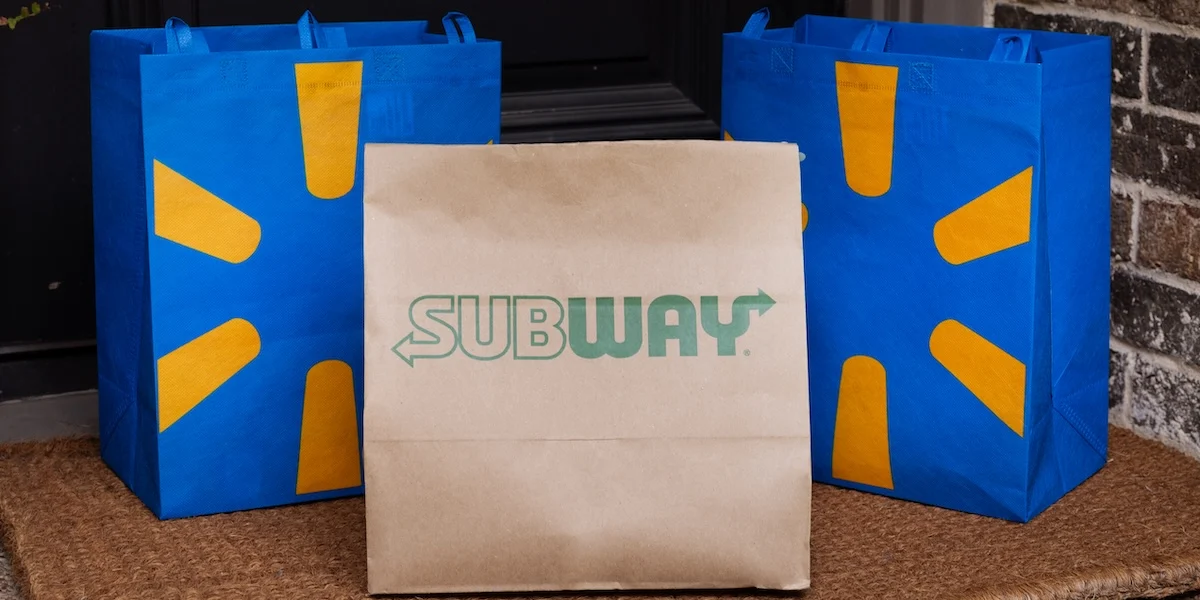
In a move that promises to reshape the landscape of the $150 billion food delivery industry, retail titan Walmart has officially signaled its intent to compete directly with platforms like DoorDash and Uber Eats. By integrating restaurant-prepared meals into its robust "Express Delivery" ecosystem, the world’s largest retailer is looking to consolidate the way consumers shop for groceries and dine.
Starting this month, Walmart customers will be able to order Subway sandwiches directly through the Walmart app and website, receiving them alongside their standard grocery deliveries. This initiative, while modest in its initial scope, represents a massive technological and logistical bet that Walmart can turn its thousands of brick-and-mortar locations into local hubs for on-demand dining.
The Core Facts: How the Integration Works
The new service allows customers to treat a Subway sandwich order exactly like a loaf of bread or a gallon of milk. When users browse the Walmart app, they will see options to customize their Subway meal—selecting bread, protein, vegetables, and condiments—and add them to a virtual cart that can also contain household staples.
Upon checkout, the customer pays a flat Walmart Express Delivery fee, regardless of whether they have ordered a sandwich, a pack of batteries, or a bag of frozen produce. The system is designed to streamline the experience, ensuring that customers do not need to toggle between different apps to fulfill their immediate household needs.
Currently, the service is available in select stores across Connecticut, Florida, Georgia, Ohio, Pennsylvania, and Texas. However, the company has confirmed an aggressive rollout schedule, aiming to have the capability available at all 1,400 Subway locations currently operating within Walmart stores by the end of this summer.
A Chronology of the Shift
The path to this announcement was not an overnight decision but rather a multi-year effort to modernize Walmart’s digital infrastructure.
- The Pilot Phase: For the past month, Walmart has been quietly testing the integration near Subway’s corporate headquarters in Connecticut and across the Dallas, Texas, metropolitan area. These tests allowed the company to refine its AI-driven logistics, ensuring that fresh food preparation could be synchronized with the arrival of delivery drivers.
- The Sam’s Club Precursor: In 2023, Walmart-owned Sam’s Club began testing a similar model, allowing customers to order pizzas from in-store cafes alongside their wholesale grocery hauls. This served as a "proof of concept," demonstrating that customers were willing to bundle prepared food with bulk shopping.
- The Facilities Pivot: Earlier in April, Walmart announced it would begin offering B2B services—such as HVAC repair, electrical, and plumbing—to other retailers. This signaled a broader corporate strategy: leveraging Walmart’s massive scale to become a "plumbing" provider for the retail and hospitality industries at large.
- The Official Launch: On Thursday, the company moved from the pilot phase to a nationwide rollout plan, signaling to shareholders and competitors that the restaurant delivery experiment is now a core pillar of their e-commerce strategy.
Supporting Data: Efficiency at Scale
Walmart’s primary advantage over dedicated food delivery apps is its existing logistical footprint. While DoorDash and Uber Eats must manage complex three-way logistics—the restaurant, the driver, and the customer—Walmart already owns the supply chain and the retail environment.
- Speed and Reach: Walmart’s Express Delivery service currently promises delivery in one hour or less. Impressively, internal data reveals that 26% of these orders are fulfilled in 30 minutes or less.
- Proximity: Greg Cathey, senior vice president of digital fulfillment transformation at Walmart, pointed to a critical statistic: nearly every major quick-service restaurant (QSR) brand in America is located within five miles of a Walmart store. This density provides a theoretical logistical advantage that pure-play delivery apps lack.
- AI Integration: The system relies on sophisticated artificial intelligence to manage "order orchestration." This includes calculating precise prep times for food items, optimizing the "picking" process for shelf-stable goods, and coordinating the arrival of delivery drivers so that a hot sandwich and a bag of frozen peas arrive at the same time without compromising food quality.
Official Responses and Corporate Vision
The partnership is viewed as a symbiotic evolution by both brands. Damien Harmon, president of Subway North America, lauded the move, stating, "The integration of Subway delivery into the Walmart app and Walmart.com is a natural evolution of our 20-year relationship built on a shared commitment to value, freshness, and everyday convenience."
Tracy Poulliot, executive vice president of e-commerce and marketing for Walmart U.S., emphasized that the goal is to simplify the customer’s daily life. "The future of retail is about bringing more of customers’ everyday needs into a single, seamless experience," Poulliot told reporters. She noted that the company is "listening to the customers" to decide which other restaurant brands might be integrated into the app in the future.
Greg Cathey echoed this sentiment, suggesting that while the immediate focus is on in-store tenants, the long-term vision is far more expansive. "Almost all quick-service restaurant brands are located within five miles of Walmart; we think it’s a natural revolution over time to think through thoughtfully how we expand this service," Cathey stated.
Implications for the Industry
The implications of this move are profound, both for the delivery giants and the broader retail sector.
1. The Threat to Delivery Aggregators
Platforms like DoorDash and Uber Eats have spent years building their networks and negotiating high commission rates with restaurants. By bringing the delivery service "in-house," Walmart potentially bypasses the middleman. If Walmart begins offering delivery for restaurants that are not located inside its stores, it could create a massive, lower-cost alternative to the dominant delivery apps, putting significant pressure on their profitability.
2. The Evolution of the "Super-App"
Walmart is clearly pivoting toward a "Super-App" model—a digital portal where users can handle grocery shopping, pharmacy refills, home maintenance, and now, restaurant ordering. By keeping the customer within the Walmart ecosystem for longer, the company increases its "share of wallet" and gathers more comprehensive data on consumer habits.
3. The Future of Commercial Real Estate
If Walmart successfully establishes itself as a delivery hub, it could change the value proposition of in-store retail space. Instead of being mere storefronts, Walmart locations may increasingly function as "dark stores" or fulfillment centers for local restaurant partners, further blurring the line between retail, logistics, and food service.
4. Consumer Convenience vs. Quality
For the consumer, the primary benefit is convenience. The ability to order a complete meal along with household goods is a significant time-saver. However, the company faces the challenge of maintaining food quality. Ensuring that a sandwich prepared in-store remains fresh during a delivery cycle that might also include non-food items will be the true test of their AI-orchestrated logistics.
Conclusion: A New Era of Competition
Walmart’s move to enter the restaurant delivery space is not merely a partnership with Subway; it is a strategic assertion of its dominance in the physical and digital retail landscape. By leveraging its vast store footprint, its massive fleet of delivery drivers, and its sophisticated AI-driven logistics, Walmart is signaling that the era of the "siloed" delivery app may be coming to an end.
As the retail giant continues to expand this service to other tenants—and potentially to external restaurants in the future—the competitive dynamics of the $150 billion delivery sector are poised for a significant disruption. For the American consumer, the promise is simple: a more unified, seamless, and convenient way to manage the daily needs of modern life. For competitors like DoorDash and Uber Eats, the message from Bentonville is clear: the lunch they’ve been serving is now on the menu for someone else.
