

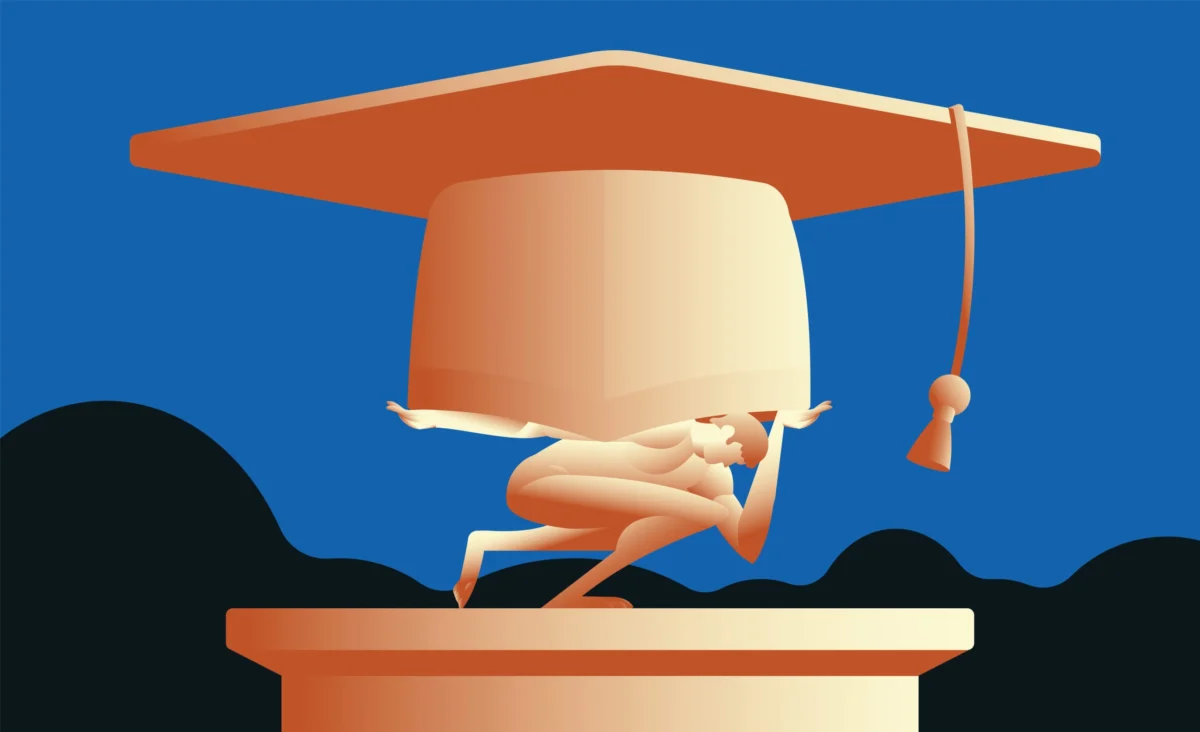
For generations, the American Dream was inextricably linked to a college diploma. It was the great equalizer—a path to social mobility, professional stability, and economic prosperity. Yet, in the current landscape, that dream is being suffocated by the crushing weight of tuition costs and student debt. As the cost of attendance at elite institutions threatens to hit the $100,000-per-year threshold, the public’s faith in higher education is eroding.
If colleges and universities wish to remain relevant and trusted pillars of society, they must pivot from a model of exclusivity to one of radical affordability. This is not merely a matter of social justice; it is an economic imperative. By 2031, the U.S. labor market will demand that 72 percent of all jobs be filled by individuals with some form of postsecondary training. If higher education fails to lower the barriers to entry, the nation faces a looming skills crisis that will leave millions of talented citizens on the sidelines.
The Core Crisis: A System Out of Reach
The statistics regarding the decline of public trust in academia are sobering. Over the past two decades, tuition and fees at private, national universities have surged by 112 percent. This hyper-inflation has outpaced wage growth, leaving families to treat a college education as an insurmountable financial burden rather than an investment in their future.
John B. King Jr., former U.S. Secretary of Education and current chancellor of the State University of New York (SUNY), argues that the skepticism surrounding the value of a degree is a rational response to a broken system. When students are forced to borrow tens of thousands of dollars to fund a degree that does not guarantee immediate career advancement, the "return on investment" becomes a source of anxiety rather than promise.
The pressure is most acutely felt by current students. Recent data indicates that 31 percent of undergraduates have seriously considered dropping out due to financial stress, with more than half struggling to cover basic monthly living expenses. For the 85 percent of adults who either dropped out or never enrolled, cost remains the single greatest deterrent.
A Chronology of Declining Confidence
To understand how we reached this inflection point, we must examine the trajectory of the last two decades:
- The Early 2000s: The "degree-first" mentality dominated, with little scrutiny applied to the rapid inflation of tuition costs.
- 2008–2012: The Great Recession accelerated the student debt crisis, as families lost savings and unemployment rates for recent graduates spiked.
- 2015: Recognizing the opacity of the market, the Obama administration launched the College Scorecard. This was a pivotal moment in federal policy, aimed at providing families with transparent data on graduation rates, average costs, and post-graduation earnings to combat predatory for-profit institutions.
- 2020–2023: The global pandemic further strained the system, as students questioned the value of paying premium tuition for remote instruction, leading to a significant dip in enrollment numbers.
- 2025–Present: Institutions are now facing a "demographic cliff"—a decline in the number of high school graduates—forcing universities to finally confront the necessity of affordability to stave off institutional closures.
The Data Behind the Degree
Despite the valid concerns regarding price, the economic argument for higher education remains statistically robust. According to the U.S. Committee on Education and Labor, the lifetime earnings gap remains wide: bachelor’s degree holders can earn up to $1 million more over their lifetimes than those with only a high school diploma. Associate degree holders, meanwhile, see a lifetime earning boost of approximately $400,000.
However, these figures are cold comfort to a student juggling a job, rent, and tuition payments. The disconnect between long-term potential and short-term survival is the primary driver of the current crisis. When institutions market the "future" while ignoring the "now," they lose the trust of the very people they intend to serve.
Models of Change: The SUNY and State Initiatives
Change is not impossible. In New York, the SUNY system has adopted a aggressive stance on tuition stability. By implementing a statewide tuition freeze, the system has provided families with the predictability they need to plan their finances. At just $7,070 per year, tuition at these campuses remains within reach for many, proving that cost-containment is a matter of administrative policy rather than an inevitability of inflation.
But cost-containment is only one half of the equation. As Governor Kathy Hochul has emphasized, the "total cost of attendance" includes food, housing, transportation, and childcare. SUNY has invested heavily in these "wraparound supports," recognizing that a student who is hungry or lacks childcare cannot focus on their studies.

The SUNY Reconnect program serves as a model for the future of adult education. By offering free community college to adults aged 25 to 55 in high-demand fields, the program is effectively dismantling the barrier between mid-career workers and the credentials they need to pivot into better-paying roles. The results are undeniable: SUNY has seen a 6.5 percent enrollment growth over the last three years, bucking the national trend of decline.
Similar initiatives are taking root across the country. Michigan’s "Reconnect" program and Tennessee’s "Reconnect" initiative are proof that states are increasingly viewing affordable higher education as a vital component of economic development.
The Implications for the American Economy
The shift toward affordable, accessible education has profound implications for the national landscape:
1. Workforce Competitiveness
If the U.S. is to maintain its competitive edge against global rivals, it cannot afford to let its human capital go to waste. The projected 72 percent job-requirement threshold for postsecondary training by 2031 is not a suggestion; it is a reality of an increasingly automated and high-tech economy.
2. The Institutional Survival Mandate
For many colleges, the path to survival is no longer found in increasing prestige or building luxury amenities. It is found in accessibility. Institutions that fail to lower costs or offer flexible, part-time, or accelerated degree paths will find themselves losing market share to those that do.
3. Rebuilding the Social Contract
Public trust in higher education is not restored through marketing campaigns or rhetoric. It is restored through transparency. This means simplifying financial aid offers—which currently vary wildly in format and clarity—and being honest with prospective students about the debt-to-income outcomes they can expect from specific programs.
Moving Toward a Sustained Commitment
Isolated, state-level programs, while inspiring, are not enough to solve a systemic crisis. The federal government, state legislatures, and university boards of trustees must align their strategies.
To truly rebuild public trust, the higher education sector must move toward a model defined by:
- Predictable Pricing: Ending the era of unpredictable annual tuition hikes.
- Holistic Financial Aid: Expanding need-based aid that covers the "hidden costs" of college, such as housing and food insecurity.
- Transparency and Accountability: Standardizing the information provided to families so that they can make informed, data-driven decisions about their investments.
- Degree Completion Focus: Ensuring that those who enroll are supported until they graduate, rather than merely focusing on recruitment.
The future of the American workforce depends on our ability to transform higher education from a gated community of privilege into a gateway of opportunity. We have the data, we have the models of success, and we have the urgent economic necessity. The only remaining question is whether our institutions have the courage to put affordability at the center of their mission.
Public trust is not granted; it is earned. And it will only be earned when every student, regardless of their zip code or bank balance, can see that the doors of higher education are truly open.
