

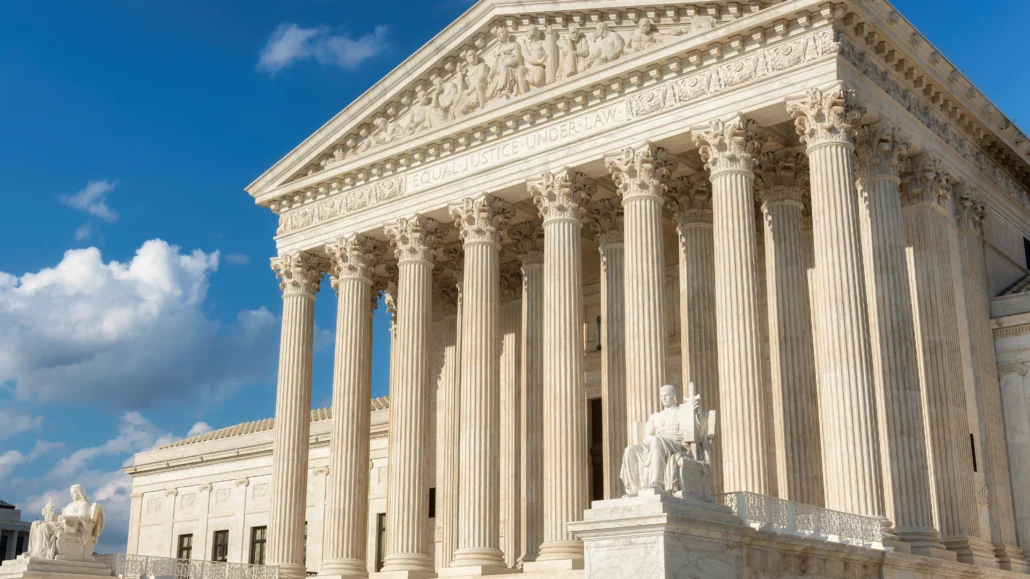
WASHINGTON, D.C. — In a landmark decision that preserves the federal government’s ability to hold telecommunications giants accountable, the U.S. Supreme Court ruled 8-1 today in FCC v. AT&T. The judgment effectively closes the door on a concerted legal effort by wireless carriers to strip the Federal Communications Commission (FCC) of its authority to levy fines for consumer privacy violations, reinforcing the agency’s foundational mandate to protect the American public.
The ruling is being hailed by consumer advocacy groups as a decisive victory for regulatory oversight, ensuring that companies cannot evade multi-million dollar penalties by challenging the very statutes that govern their operations.
The Core of the Dispute: Accountability vs. Legal Maneuvering
The litigation, which captured the attention of privacy advocates and corporate lawyers alike, centered on the FCC’s long-standing power to enforce penalties under its founding statute. AT&T and Verizon, facing significant financial exposure related to alleged consumer privacy breaches, sought to invalidate the agency’s enforcement mechanisms. Rather than litigating the specific merits of the privacy complaints, the carriers pursued a "structural" challenge, arguing that the FCC lacked the statutory authority to issue these fines in the manner it had for years.
The Supreme Court’s overwhelming 8-1 majority rejected this premise, signaling that the Court is unwilling to dismantle established regulatory frameworks that have served to protect consumers across multiple bipartisan administrations. By affirming the FCC’s authority, the Court has effectively mandated that major corporations cannot use "radical legal theories" to escape accountability for the mishandling of sensitive consumer data.
Chronology of the Legal Battle
The road to today’s Supreme Court decision was paved with years of regulatory tension and high-stakes courtroom drama.
The Origin: Privacy Violations and Regulatory Enforcement
The controversy began when the FCC, acting under its duty to protect the integrity of the nation’s communications infrastructure, initiated enforcement actions against major wireless carriers. These actions were prompted by reports that sensitive consumer data—including location information and personal communication metadata—had been handled in ways that violated established privacy protocols.
The Carrier Pushback: The "De-arming" Strategy
Recognizing the massive financial implications of these fines, wireless carriers moved to challenge the agency’s jurisdiction. Their legal strategy was ambitious: they sought to convince the federal courts that the FCC’s interpretation of its founding statute was overreaching. The goal was to render the FCC powerless to assess these specific types of penalties, effectively creating a "regulatory loophole" that would allow carriers to operate with significantly reduced oversight.
The Amicus Intervention
Recognizing the existential threat this lawsuit posed to consumer protection, a broad coalition of public interest organizations, led by the National Consumers League (NCL), mobilized to defend the FCC. In March 2026, the NCL, alongside former FCC Chairs Reed Hundt and Tom Wheeler and several privacy-focused advocacy groups, filed a formal amicus curiae (friend-of-the-court) brief. This document argued that stripping the FCC of its enforcement tools would leave millions of Americans vulnerable to corporate malfeasance.
The Supreme Court Hearing
During oral arguments, the Court signaled skepticism toward the carriers’ attempt to hollow out the agency’s powers. Justices probed the potential consequences of a ruling that would effectively defang one of the nation’s most critical consumer watchdogs, leading to today’s lopsided decision.
Supporting Data: Why Oversight Matters
The stakes of this case were not merely academic; they reflected the modern reality of a digital economy where data is a primary asset.
- Financial Scope: The fines in question amounted to tens of millions of dollars. For the carriers, this was a financial burden they sought to shed; for the public, these fines represented a critical deterrent against negligent data management.
- The Regulatory Gap: Had the Court ruled in favor of the carriers, it would have created a massive regulatory gap, leaving the FCC’s enforcement arm paralyzed. Experts have long argued that in the absence of federal oversight, the burden of data protection would fall entirely on individual state legislatures, leading to a "patchwork" of regulations that would be difficult to enforce and easy for corporations to navigate around.
- Historical Precedent: The FCC has utilized its founding statute for decades to manage telecommunications markets. A ruling against the agency would have invalidated years of settled administrative practice, potentially opening a floodgate of litigation against other federal agencies.
Official Responses and Stakeholder Perspectives
The ruling has triggered a wave of reactions from stakeholders across the political and technological spectrum.
The National Consumers League (NCL)
John Breyault, NCL Vice President of Public Policy, Telecommunications, and Fraud, was vocal in his praise of the Court’s decision. "As our personal data has become more insecure than ever, it is critical that we have strong regulators who are equipped to protect us from privacy violations," Breyault stated following the announcement. "Congress made clear that the FCC’s job is to make sure that consumers’ sensitive communications data is protected."
Breyault emphasized that the ruling serves as a broader warning to corporate entities: "Companies should not be able to escape accountability after harming consumers by concocting radical legal theories—and luckily today, they were unsuccessful."
The Legal Coalition
The pro bono efforts of the Democracy Forward Foundation were instrumental in securing the defense of the FCC. The coalition of signatories to the NCL’s amicus brief included:
- Benton Institute for Broadband & Society
- Consumer Reports
- Electronic Privacy Information Center (EPIC)
- National Consumer Law Center
- Public Knowledge
- Former FCC Chair Reed Hundt
- Former FCC Chair Tom Wheeler
These organizations argue that the decision preserves the democratic principle that federal agencies must remain accountable to the public interest, rather than being subservient to the industries they are tasked with regulating.
Implications: A New Era for Consumer Privacy
The FCC v. AT&T decision carries profound implications for the future of administrative law and consumer protection in the United States.
1. The Stability of Federal Oversight
The ruling acts as a "firewall" against future attempts to weaken federal regulatory bodies. By upholding the FCC’s interpretation of its statutory authority, the Supreme Court has signaled that "regulatory capture"—the process by which industries gain control over their regulators—will not be facilitated by the judiciary.
2. Deterrence for Big Tech and Telecom
Wireless carriers and other entities handling vast amounts of consumer data now have a clear understanding of the legal landscape: the FCC’s teeth remain sharp. This is expected to force a shift in corporate behavior, as carriers can no longer rely on the prospect of "legalizing their way out" of penalties. Compliance with privacy standards is now, once again, the most cost-effective path for these companies.
3. The Future of Administrative Law
While the decision was a win for consumer advocates, it also serves as a reminder of the ongoing tension between the executive branch’s regulatory power and the judicial branch’s interpretation of statutes. Future cases will likely continue to test the limits of agency power, but for now, the FCC’s role as a protector of consumer data remains robust.
4. A Mandate for Continued Vigilance
As noted by the NCL, the fight for privacy does not end with a single court ruling. The organization, which has been at the forefront of consumer advocacy since 1899, intends to use this momentum to push for further legislative protections. With the Supreme Court having cleared the legal path, the focus now shifts back to the FCC to ensure that the agency continues to exercise its authority with vigor and consistency.
Conclusion
The Supreme Court’s 8-1 ruling in FCC v. AT&T is more than a legal technicality; it is a reaffirmation of the social contract between the American public and the corporations that handle their most private data. By rejecting the carriers’ attempt to disarm their regulator, the Court has affirmed the necessity of strong, independent, and empowered federal agencies.
For the millions of Americans who rely on wireless services, today’s news offers a measure of security. In an era where digital privacy is constantly under threat, the message from the nation’s highest court is clear: the regulatory infrastructure designed to protect citizens is here to stay, and accountability remains a non-negotiable component of doing business in the United States.
About the National Consumers League (NCL)
Founded in 1899, the National Consumers League is America’s pioneer consumer organization. The NCL’s mission is to protect and promote social and economic justice for consumers and workers in the United States and abroad. Through research, advocacy, and legal intervention, the NCL continues to be the leading voice for those who demand a fair, transparent, and safe marketplace. For more information, visit www.nclnet.org.
