

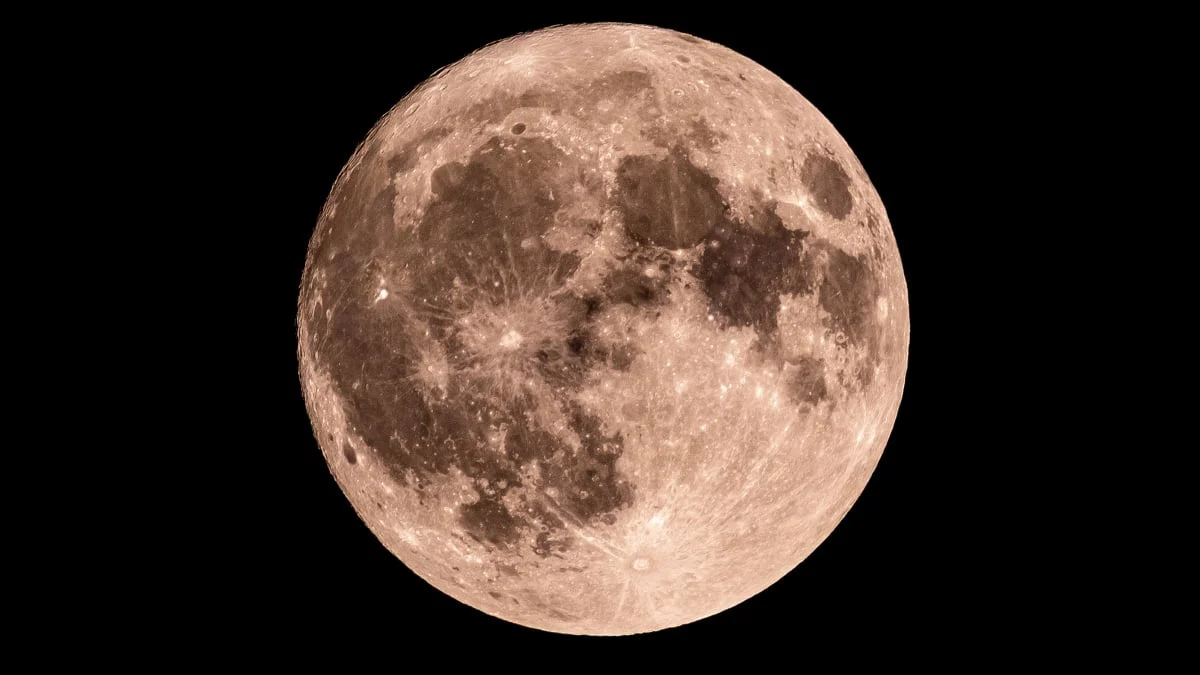
If you find yourself gazing skyward this evening, mesmerized by the celestial glow of our natural satellite, you are far from alone. For millennia, humanity has looked to the Moon as a constant companion—a rhythm-setter for our calendars, a beacon for our tides, and a canvas for our myths. But tonight, as you admire its ethereal presence, you may find yourself wondering exactly what part of the lunar cycle is currently on display and what hidden features are etched into its cratered surface.
Main Facts: The Current Lunar State
As of Sunday, June 7, the Moon is currently in the Waning Gibbous phase. According to the most recent data provided by NASA’s Daily Moon Guide, approximately 62% of the lunar surface is currently illuminated by the sun.
The Waning Gibbous phase represents a transition period. Having recently passed the Full Moon, the lunar disk is beginning its gradual retreat into shadow. For casual observers, this is a prime time for stargazing; the brightness of the Moon is beginning to mellow, reducing the glare that often obscures smaller, fainter stars, yet it remains sufficiently illuminated to offer a stunning view of lunar topography.
Chronology: The Journey Through the Lunar Month
The Moon’s appearance is not a static phenomenon; it is a dynamic, shifting performance governed by its 29.5-day orbital period around Earth. This duration, known as a synodic month, dictates the rhythm of the lunar cycle.
- The Current Status (June 7): We are currently in the Waning Gibbous phase, characterized by a steady decline in light.
- The Path Ahead: As the Moon continues its orbit, it will proceed toward the Third Quarter phase, followed by the Waning Crescent.
- The Upcoming Full Moon: Astronomers and enthusiasts should mark their calendars for June 29, when the next Full Moon will occur. This event marks the point where the Moon is positioned on the opposite side of the Earth from the Sun, allowing its entire face to be bathed in direct sunlight.
Supporting Data: Mapping the Lunar Surface
One of the most fascinating aspects of observing the Moon is the ability to identify specific geological landmarks. Depending on your level of optical assistance, the lunar surface reveals vastly different levels of complexity.
The Naked-Eye View
Even without the aid of specialized equipment, the human eye can discern several prominent features. Tonight, observers should look for:
- Oceanus Procellarum (The Ocean of Storms): The largest of the lunar maria (dark, basaltic plains formed by ancient volcanic eruptions).
- Kepler Crater: A prominent, bright-rayed impact crater located in the Oceanus Procellarum.
- Tycho Crater: Perhaps one of the most recognizable craters on the Moon, located in the southern highlands and famous for its vast system of radiating "rays."
Observations via Binoculars
If you possess a standard pair of binoculars, the landscape deepens significantly. You will be able to resolve:
- Gassendi Crater: A large, complex impact crater located on the northern edge of the Mare Humorum.
- Mare Humorum (Sea of Moisture): A smaller circular lunar mare that offers a distinct contrast against the surrounding rugged highlands.
- Alphonsus Crater: A crater within the central highlands known for its historical interest in Apollo landing site reconnaissance.
The Telescope Advantage
For those equipped with a telescope, the Moon reveals its most intimate secrets:
- Apollo 12 Landing Site: The historic location where humanity first successfully performed a precision landing to retrieve components from the earlier Surveyor 3 probe.
- Schiller Crater: An unusual, elongated crater that stands out for its distinct, non-circular shape.
- Rima Ariadaeus: A massive rille (a narrow trench-like valley) that stretches across the lunar surface for over 200 kilometers, offering a glimpse into the Moon’s tectonic history.
Official Responses and Scientific Context
NASA’s Moon observation guides serve as the gold standard for public outreach regarding lunar activity. According to the space agency, the lunar phases are a direct consequence of geometry. "The Moon completes one full orbit around Earth in about 29.5 days," NASA explains. "Even though the same side of the Moon always faces us, the amount of sunlight we can see changes as it travels along its path."
Defining the Lunar Cycle
The cycle is categorized into eight distinct stages, each serving as a milestone in the Moon’s journey:
- New Moon: The Moon is positioned directly between the Earth and the Sun. Consequently, the side facing us is shrouded in darkness, rendering it effectively invisible.
- Waxing Crescent: A small, delicate sliver of light emerges on the right side of the lunar disk (as viewed from the Northern Hemisphere).
- First Quarter: The Moon appears as a "half-moon," with the right side illuminated.
- Waxing Gibbous: The illumination increases beyond 50%, moving toward the full phase.
- Full Moon: The entire Earth-facing side of the Moon is illuminated, reaching its peak brightness.
- Waning Gibbous: The phase we are currently experiencing; the Moon begins to shed its light on the right side.
- Third Quarter: Often referred to as the Last Quarter, where the left side of the Moon is illuminated, appearing as a half-disk.
- Waning Crescent: The final stage of the cycle, where only a thin sliver of light remains on the left side before the Moon resets to the New Moon phase.
Implications: Why We Observe
The study of lunar phases is not merely a hobby; it is a fundamental pillar of human science. By observing these phases, we gain a deeper understanding of the gravitational dance between the Earth and the Moon.
Tidal Forces and Climate
The phases of the Moon are inextricably linked to the tides on Earth. During the Full Moon and New Moon, the gravitational pull of the Moon and the Sun align, creating "spring tides"—the highest and lowest tides of the month. Monitoring the phases allows coastal communities and marine researchers to anticipate these shifts in water levels.
A Gateway to Space Exploration
Furthermore, the interest in today’s lunar features is bolstered by the current global momentum in space exploration. With missions from private entities and government agencies aiming for the lunar South Pole and beyond, the Moon is once again the focal point of human ambition. Identifying craters like Tycho or landing sites like Apollo 12 serves as a reminder of our past achievements and a catalyst for our future endeavors.
Cultural and Historical Significance
Culturally, the Moon has shaped the human experience since the dawn of time. From the agricultural calendars of ancient civilizations to the modern, high-tech monitoring provided by NASA, the lunar cycle remains a constant. It provides a sense of continuity in a rapidly changing world. When you look at the Moon tonight, you are seeing the same face that inspired the earliest astronomers, provided navigation for ancient mariners, and now serves as the primary target for the next generation of space explorers.
As you step outside tonight to locate the Oceanus Procellarum or the Tycho Crater, remember that you are participating in a tradition as old as humanity itself. The Moon is not just a rock orbiting our planet; it is a testament to the order of the cosmos and a mirror reflecting our own progress as a spacefaring species. Whether you are using the naked eye, binoculars, or a telescope, the Waning Gibbous phase offers a magnificent opportunity to engage with the celestial neighborhood.
Take a moment to step away from the artificial lights of modern life, look up, and appreciate the 62% of the lunar landscape currently visible. It is a view that has inspired countless dreams—and one that will surely continue to do so for generations to come.
