

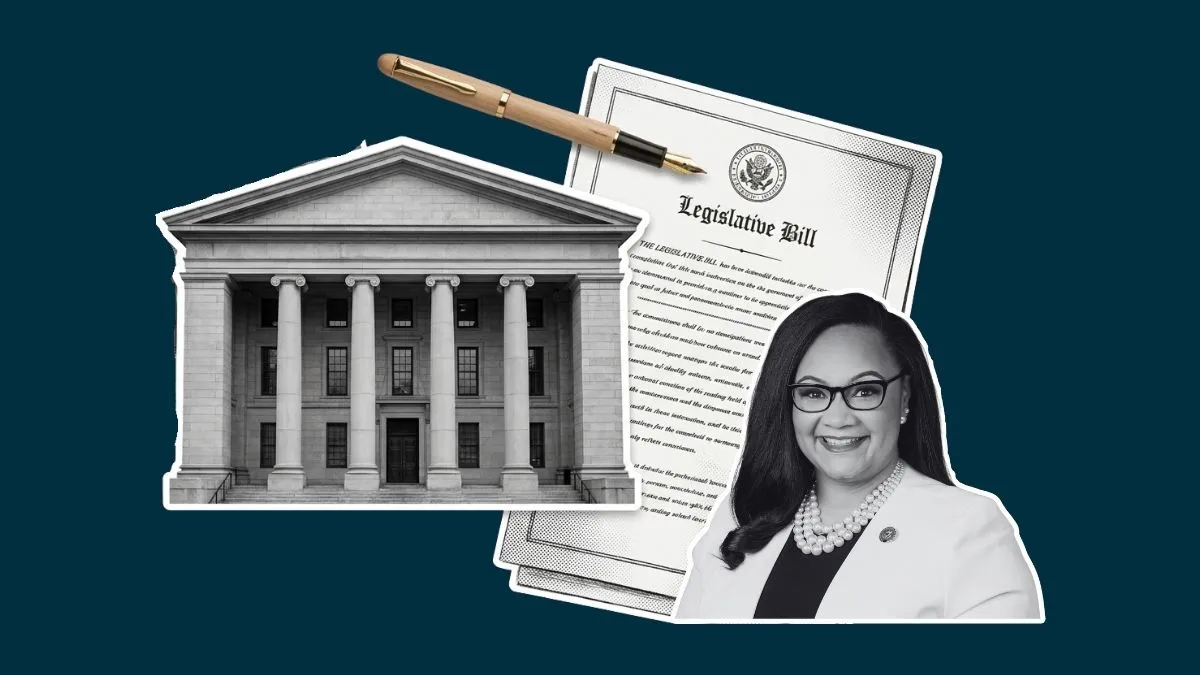
In a strategic move to democratize homeownership and dismantle systemic barriers to entry, Rep. Nikema Williams (D-Ga.) has reintroduced the Expanding Access to Credit through Consumer-Permissioned Data Act. The proposed legislation seeks to overhaul the traditional mortgage underwriting process by compelling lenders to consider alternative financial data for applicants who request it. By shifting the focus from narrow, traditional credit scores to a more holistic view of an individual’s financial responsibility, proponents argue the bill could fundamentally reshape the landscape of American mortgage lending.
The Core Mandate: Rethinking Creditworthiness
At its heart, the Expanding Access to Credit through Consumer-Permissioned Data Act aims to amend the Equal Credit Opportunity Act (ECOA). Under the current regime, mortgage lenders predominantly rely on scores generated by the three major credit reporting agencies—scores that often fail to account for consistent, non-traditional payment behaviors.
The proposed bill mandates that mortgage lenders consider consumer-authorized alternative financial data, including rental payment history, utility bill records, and consistent bank-statement deposits, if an applicant explicitly authorizes its inclusion. Furthermore, the legislation requires that automated underwriting systems—the digital engines that drive the majority of modern mortgage approvals—be updated to incorporate this consumer-permissioned data into their decision-making algorithms.
This legislative effort is not merely a technical adjustment; it is a direct challenge to the "credit invisible" status that currently plagues millions of Americans. By institutionalizing the use of alternative data, the bill seeks to bridge the gap between financial stability and documented creditworthiness.
A Chronology of the "Credit Invisible" Crisis
The narrative of credit exclusion in the United States is deeply rooted in the evolution of modern banking. For decades, the reliance on the FICO model and its derivatives has created a static picture of financial health.
- The Status Quo: Since the mid-20th century, the U.S. mortgage market has gravitated toward centralized credit reporting. While this provided efficiency for lenders, it inadvertently marginalized those who operated primarily in cash, those who were "unbanked," and those who lacked traditional revolving debt—such as credit cards or personal loans.
- Growing Awareness: Throughout the 2010s, organizations like the Consumer Financial Protection Bureau (CFPB) began highlighting the plight of the "credit invisible." Research consistently demonstrated that an inability to secure traditional credit was not necessarily a reflection of financial irresponsibility, but rather a failure of the reporting system to capture positive payment patterns.
- Legislative Momentum: Rep. Williams first introduced versions of this legislation in previous sessions, reflecting an increasing appetite among Democratic lawmakers to leverage federal power to address the racial and socioeconomic wealth gaps exacerbated by housing inequity.
- The Present Day: With the reintroduction of this bill, the conversation has moved from theoretical reform to concrete policy. If passed, the bill sets a strict 18-month timeline for the CFPB to finalize regulations, signaling a fast-tracked intent to modernize the lending industry.
Supporting Data: Who Gets Left Behind?
The urgency behind this legislation is grounded in sobering statistics provided by the bill’s findings. Approximately 32 million Americans currently fall into the category of "credit invisible"—individuals who either have no credit file at the major bureaus or whose files are too "thin" to generate a FICO score.
Demographic Disparities
The data reveals that the burden of this exclusion is not distributed equally. According to CFPB research cited in the bill:
- Socioeconomic Status: The majority of the credit-invisible population resides in lower-income brackets, where access to traditional banking services has historically been limited.
- Generational Factors: Younger Americans, particularly those who have recently entered the workforce, are disproportionately represented in these figures, as they have not yet had the time to build a long-standing traditional credit history.
- The Racial Wealth Gap: Perhaps most significantly, people of color are overrepresented in the credit-invisible category. Given that homeownership is the primary vehicle for generational wealth in America, the failure of the credit system acts as a structural barrier that prevents Black and Hispanic families from accumulating the equity necessary to close the racial wealth gap.
Official Responses and Stakeholder Perspectives
Rep. Nikema Williams has been vocal about the personal resonance of this legislation. Drawing on her own experiences, she has framed the bill as a matter of fundamental economic justice.
"I’ve been unbanked. I know what it’s like to work hard, pay your bills and do everything right, only to have the financial system tell you that you don’t qualify," Williams stated. Her advocacy highlights a crucial disconnect: the financial system currently rewards debt management (like credit cards) while ignoring the disciplined management of daily living expenses (like rent).
The Advocacy Landscape
The bill has received significant backing from key consumer advocacy groups, including the Consumer Federation of America and the National Consumer Law Center. These organizations argue that the current underwriting criteria are antiquated and that the technology to include alternative data already exists; it simply requires a regulatory nudge to make its adoption universal across the mortgage industry.
The Lender’s Perspective
While the banking industry has historically expressed caution regarding the risks of expanding underwriting criteria, the shift toward "consumer-permissioned" data provides a middle ground. Because the consumer must authorize the disclosure of their data, the burden of data verification is shifted, and the risk is framed as an informed, personalized assessment rather than a blanket lowering of credit standards.
Implications for the Future of Lending
If enacted, the Expanding Access to Credit through Consumer-Permissioned Data Act will trigger a series of significant changes in the mortgage sector.
Operational Shifts in Underwriting
Mortgage lenders will need to update their internal compliance protocols and software. The requirement to notify applicants of their right to submit additional information—in the eight most commonly spoken languages among limited-English-proficiency (LEP) populations—represents a significant expansion of consumer rights. This mandate ensures that the opportunity to demonstrate creditworthiness is not limited by linguistic barriers.
The Role of the CFPB
The bill grants the CFPB broad authority to craft the specific regulations that will define which types of alternative data are deemed "reliable" for underwriting purposes. This will likely involve a delicate balancing act: providing enough flexibility to help underserved borrowers while maintaining the safety and soundness of the mortgage-backed securities market.
A Path Toward Wealth Creation
The long-term implication of this bill is the potential for a surge in first-time homeownership among populations that have previously been locked out of the market. By validating the financial responsibility of renters—who often pay thousands of dollars annually on time—the bill effectively turns one of the largest monthly expenses into a resume for mortgage eligibility.
Conclusion: A New Standard for Fairness?
The Expanding Access to Credit through Consumer-Permissioned Data Act represents a pivotal moment in the discourse on housing finance. By seeking to modernize the definition of a "good borrower," Rep. Williams and her co-sponsors—Reps. Sylvia Garcia, Bonnie Watson Coleman, Gwen Moore, and Alma Adams—are attempting to align the mortgage industry with the realities of 21st-century economic life.
As the bill moves through the legislative process, the focus will likely remain on whether it can successfully balance expanded access with the necessary protections to prevent a repeat of past subprime crises. However, the core argument remains compelling: a system that ignores millions of responsible, bill-paying citizens is a system in need of reform. Should this legislation become law, it could serve as the bedrock for a more inclusive housing market, offering millions of families a clearer path to the American dream of homeownership.
