

By Curbed Staff
June 18, 2026
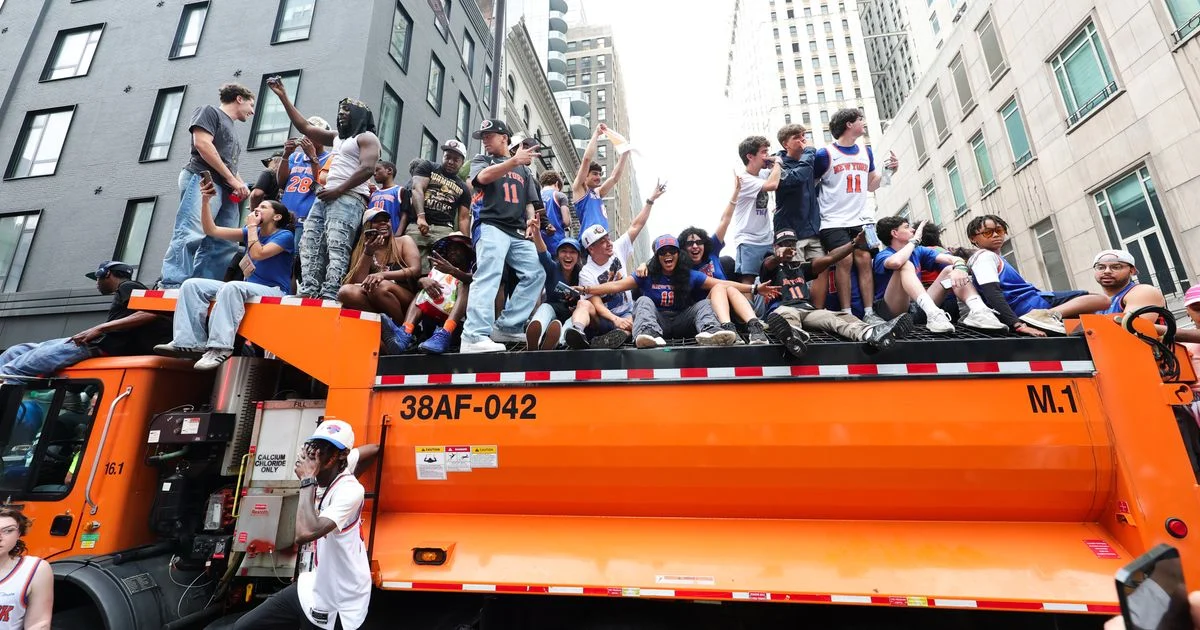
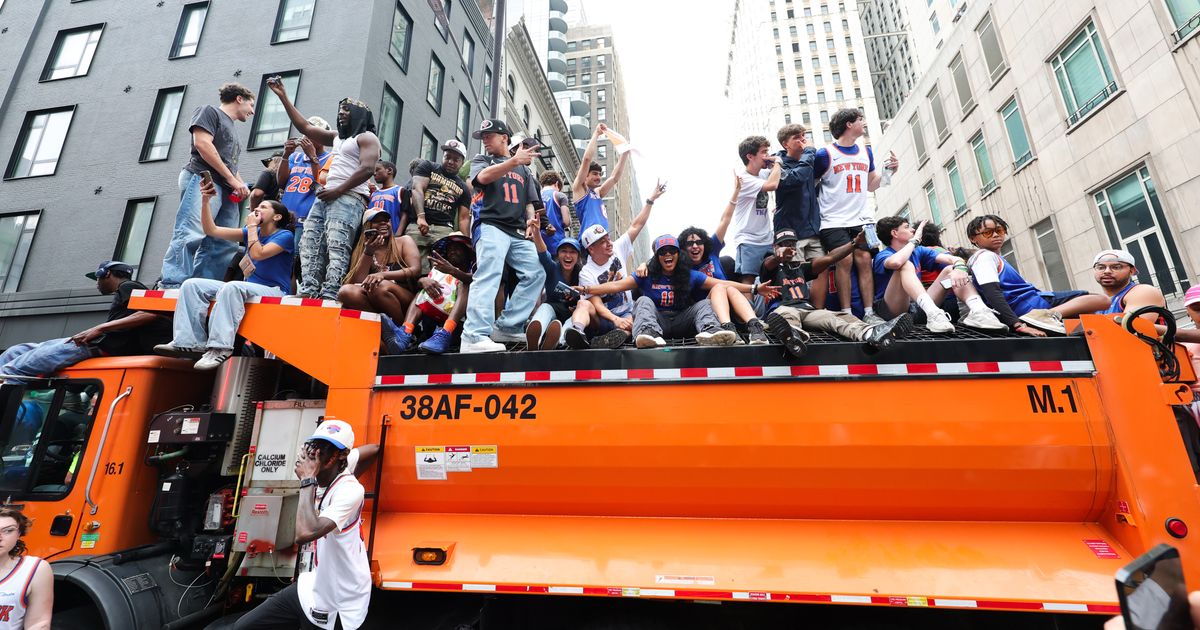
After 53 years of yearning, heartbreak, and "wait-until-next-year" promises, the silence of the championship drought has finally been broken. Today, New York City transformed into a sprawling, sea-of-orange-and-blue theater as the New York Knicks paraded through the Canyon of Heroes. It was more than a victory lap for a professional basketball team; it was a cathartic, city-wide exhale that felt like a seismic shift in the cultural landscape of the five boroughs.
When Mayor Zohran Mamdani officially announced the ticker-tape parade, the city braced itself for an influx of humanity not seen since the turn of the century. By all metrics, this was the largest municipal celebration in the city’s history, a day where the chaotic grid of Lower Manhattan was surrendered entirely to the jubilant, confetti-drenched masses.
The Long Road to Lower Manhattan
The atmosphere in Lower Manhattan this morning was electric, bordering on religious. Long before the first float rounded the corner of the Financial District, fans had staked their claims. For many, the commitment began at 6:00 p.m. the previous evening, as supporters braved the overnight chill to secure a view of the championship caravan.
The logistics of the day were staggering. The Downtown Alliance, tasked with managing the visual spectacle, prepared 2,500 tons of confetti. By mid-morning, the iconic white paper was already dusting the pavement, creating a snow-like drift across the streets of FiDi. In a nod to the city’s unique character, some eagle-eyed observers noted that the confetti was not just pristine stationary, but recycled documents from the local housing courts—a fittingly gritty New York detail for a championship earned through decades of struggle.
Chronology of a Citywide Celebration
The day’s events unfolded in a rhythmic, albeit crowded, fashion:
- 06:00 AM: The first groups of fans, including dedicated families traveling from Queens via the ferry, began congregating near the Battery, turning the morning commute into a pre-game rally.
- 09:00 AM: As the city’s business district officially opened, the R train and various subway lines leading to Whitehall Street saw a surge in volume. Despite the heavy crowds, the transit system held, though the MTA was forced to bypass several key stations—including City Hall and Wall Street—to manage the crushing flow of pedestrians.
- 10:30 AM: The "VIP seating" areas at Cipriani were officially shuttered as capacity limits were reached. Simultaneously, businesses at 45 Broadway, opting for caution, kept their facades boarded up, though the mood remained overwhelmingly celebratory rather than rowdy.
- 12:00 PM: The parade began in earnest. The roar from the crowd was described by witnesses as a physical force, echoing off the canyon walls of the financial buildings.
- 02:00 PM: As the parade concluded, the focus shifted to the after-parties and the realization that the city’s post-parade cleanup would be a monumental task for the DSNY.
The Faces of the Drought
The human element of this victory was perhaps the most poignant aspect of the day. The crowd was a cross-section of New York history. Among the throngs were older fans wearing t-shirts honoring the 1993-94 team—a squad that famously broke the hearts of a generation—and younger supporters who had only ever known the Knicks through the lens of YouTube highlights and inherited legends.
At the parade route, Lishoma Henry, a lifelong Queens resident now living in Bed-Stuy, stood amidst the crowd. "This shirt is for the ’94 team," he said, gesturing to his vintage gear. "I’ve been wearing this as a reminder of what it felt like to almost get there. Today, the heartbreak is finally gone."
Others expressed their devotion through craftsmanship. Raina, a respiratory therapist at Bellevue, spent two days crocheting a custom Knicks-themed outfit for the occasion. Nearby, a school photographer known as "Harambe the Photographer" found a booming business, charging $20 a head to snap portraits of fans against a custom Knicks backdrop he had erected near the route.
Transit and Infrastructure: The "Subway Struggle"
For the city’s transit infrastructure, the parade was a trial by fire. The MTA’s service disruptions were extensive: E train service was suspended between West 4th and the World Trade Center, and A and C trains skipped Chambers Street entirely.
The confusion was palpable at transit hubs like Borough Hall in Brooklyn, where frustrated commuters were left to navigate the unplanned service changes. Yet, the overall sentiment was one of patience. The city had collectively decided that if the cost of a championship was a few hours of subway detours, it was a bargain. The City Hall station, normally a bustling nexus, stood as an outlier—a quiet island in the center of the roar, reserved for official transit staff and the occasional lucky spectator.
The Cultural Ripple Effect
Beyond the sports headlines, the parade signaled a cultural moment for New York. The announcement of an upcoming A24 and HBO documentary, helmed by Ben Stiller, highlights the cinematic nature of the Knicks’ journey. This isn’t just a sports story; it’s a narrative about resilience, the specific identity of the New York fan, and the way the city binds its collective ego to the performance of its teams.
The "mantras" of the season, touted by local superfans like Ahnaf Hossain, have become the city’s unofficial slogans. These chants, echoing through the skyscrapers of the Financial District, served as a reminder that the Knicks, for better or worse, are the heartbeat of the city’s professional sports identity.
Official Responses and Safety Protocols
Mayor Mamdani’s office, working in tandem with the NYPD, had prepared for every contingency. The decision to establish "no-traffic zones" below Canal Street allowed for a more pedestrian-friendly experience, preventing the typical gridlock of Manhattan from turning dangerous. While there were reports of fans climbing streetlights and construction scaffolding, the NYPD reported no significant incidents of violence or property destruction.
"The city is celebrating," one officer remarked near the final stretch of the route. "And for once, they’re doing it with a sense of shared purpose."
Looking Ahead: The Aftermath
As the sun sets on the Canyon of Heroes, the city faces the daunting reality of a massive cleanup. The DSNY has its work cut out for it, with 2,500 tons of confetti likely to remain lodged in the city’s nooks and crannies for weeks.
However, the implications of this victory extend far beyond the immediate cleanup. The Knicks, for the first time in over half a century, have redefined their relationship with the city. The drought is over, the parade has been held, and the "keys to the city" have been handed over.
For the fans who stood in the cold, for the families who commuted from the outer boroughs at dawn, and for the thousands who simply wanted to be part of history, today was the final word in a 53-year-long conversation. The New York Knicks are champions, and for at least one day, New York City was, quite literally, the center of the basketball universe.
The documentary will eventually tell the story of the team’s rise, but the true record of this day exists in the thousands of photos, videos, and memories now circulating through the city’s digital and physical veins. The confetti may be cleared, but the image of a blue-and-orange New York will remain a part of the city’s skyline for years to come.
