

Executive Summary: A Sudden Reversal
In a stunning reversal of policy that has sent ripples of relief through the global scientific community, the federal government is expected to announce today that it will scrap its plan to dismantle the Ocean Observatories Initiative (OOI). The decision, which comes just one month after an abrupt and unexplained directive to shutter the $350 million network, marks a significant victory for a coalition of academic researchers, meteorologists, and fisheries managers who argued that the system is an essential pillar of national infrastructure.
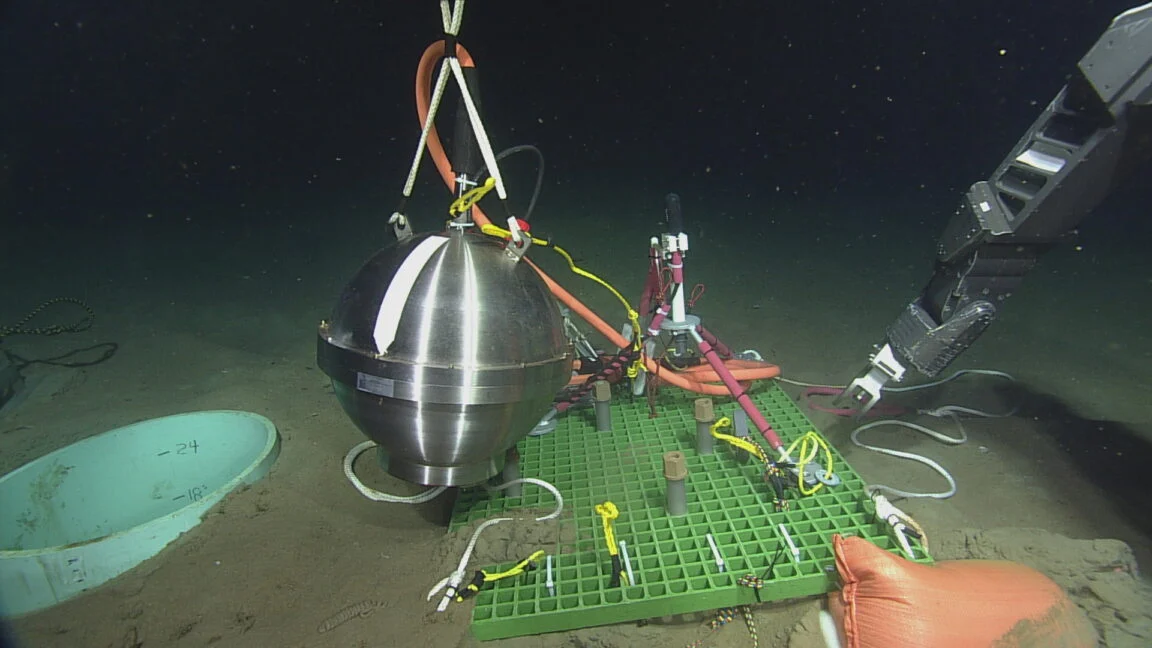
The OOI, a sophisticated web of seafloor cables, moored buoys, and autonomous underwater vehicles, serves as the eyes and ears of the U.S. government beneath the waves. While the abrupt May announcement to "take apart" the network left the scientific community reeling, the rapid mobilization of bipartisan opposition and intense public pressure appears to have forced an administrative retreat. As of press time, while no formal federal statement has been released, high-ranking officials and legislative leaders have confirmed that the decommissioning process has been halted.
Chronology: A Month of Uncertainty
The crisis began in mid-May when the federal government issued a cryptic, unannounced directive to begin the decommissioning of the OOI. The announcement, which provided no justification for the sudden dismantling of a multi-hundred-million-dollar investment, triggered immediate speculation. Observers noted that the timing coincided with renewed political debates regarding climate change research, leading many to suspect that the OOI’s role in tracking ocean warming and acidification had made it a target for budget cuts or ideological purging.
May: The Silence of the Shutdown
For the first three weeks following the initial announcement, the scientific community operated in a state of high-stress limbo. Without a clear directive or an explanation of the budgetary rationale, researchers scrambled to secure funding and data archives, fearing that the sudden cessation of data streams would create a "black hole" in our understanding of the Atlantic and Pacific basins.
June: The Wave of Opposition
By early June, the opposition had moved from academic hallways to the floor of Congress. Scientists and private-sector stakeholders, including shipping companies and weather-modeling firms, mobilized to highlight the practical utility of the OOI. They argued that the network provides more than just climate data; it is a critical component for maritime safety, weather forecasting, and the multi-billion-dollar commercial fishing industry.
Today: The Reversal
The New York Times reported earlier today that the administration is preparing to walk back the decision. Zoe Lofgren, the ranking Democrat on the House Science Committee, issued a statement confirming that the government has recognized the strategic error of its initial directive. While the reversal is seen as a victory for science, the focus has now shifted to the logistical nightmare of restarting a global monitoring network that was already in the early stages of being powered down.
The Anatomy of the OOI: More Than Just Climate Data
To understand why the proposed shutdown caused such a visceral reaction, one must understand the sheer scale of the OOI. It is not a single tool but a massive, integrated infrastructure project comprising hundreds of sensors across the Atlantic and Pacific.
Deep-Sea Arrays and Connectivity
The OOI consists of interconnected arrays that provide near-real-time data to academic researchers, federal planners, and private entities. These systems monitor:
- Ocean Currents: Vital for understanding climate patterns and maritime navigation.
- Salinity and Temperature: Key indicators for weather forecasting and tropical storm prediction.
- Chemical Levels: Monitoring pH levels to track the progress of ocean acidification.
- Tectonic Activity: Providing early warning data for underwater seismic events that could impact coastal safety.
With over 100 distinct data products available on their public portal, the OOI acts as a foundational "operating system" for modern oceanography. The loss of this network would have been the equivalent of blinding the weather service by removing half of its ground-based radar stations.
Official Responses and Political Fallout
The lack of transparency surrounding the initial decision has left a stain on the administration’s relationship with the scientific community. By failing to provide a rationale for the $350 million write-off, the government invited accusations of political overreach.
The Congressional Perspective
Zoe Lofgren’s statement suggests that while the government has agreed to keep the lights on, the "why" remains a point of contention. Democratic leadership in the House has signaled that they intend to investigate the decision-making process that led to the attempted shutdown. "We cannot allow the decommissioning of essential scientific infrastructure to be used as a political bargaining chip," a source close to the committee noted.
Institutional Skepticism
Within the academic community, the reversal is viewed with cautious optimism. There is a palpable concern that the "infrastructure" of the OOI—both technical and human—has been damaged by the month of uncertainty. Specialized technicians, many of whom are contract-based, have been left wondering about their job security. Furthermore, the physical hardware, which requires constant maintenance and calibration, may have experienced "data gaps" during the month-long limbo that could complicate long-term climate modeling efforts.
Implications: The High Cost of Interruption
The most pressing question now is not just about the reversal, but about the "damage" sustained during the intervening month. Ocean science relies on continuity. When a sensor goes offline, the data gap is not merely a temporary annoyance; it is a permanent hole in a dataset that scientists use to track long-term environmental trends.
The Economic Impact
Fisheries management is perhaps the most immediate casualty of the confusion. The OOI provides data on water temperature and current shifts that determine migration patterns for commercial fish stocks. If the industry cannot rely on this data, the cost of uncertainty—manifested in fuel costs for searching fleets and the risk of overfishing—could reach millions of dollars annually.
The Technological Hurdle
Restarting an ocean-monitoring network is not as simple as flipping a switch. Underwater cables, gliders, and mooring systems are subject to extreme pressure and corrosive salt water. The process of "decommissioning" usually involves the systematic disconnection of power and the recovery of expensive sensor packages. Reversing this requires a complex re-deployment strategy, necessitating specialized vessels and technical crews that may have already been diverted to other projects.
Looking Ahead: Protecting Critical Infrastructure
The events of the past month have sparked a broader conversation about how the federal government protects and manages "big science" initiatives. There is now a growing push within the scientific community to insulate the OOI and similar projects from the volatility of executive branch shifts.
Establishing Legislative Safeguards
Advocates are calling for formal legislation that would require a transparent, science-based review process before any major scientific infrastructure project can be defunded or dismantled. By treating the OOI as "critical national infrastructure" rather than a discretionary budget item, proponents hope to ensure that the U.S. maintains its global leadership in ocean observation.
Restoring Trust
The administration faces a steep climb in restoring its credibility with the research community. While the reversal of the shutdown is a necessary first step, researchers are calling for a full audit of the costs incurred during the shutdown process and a commitment to long-term funding stability. Without such guarantees, the OOI remains vulnerable, and the United States risks losing its competitive edge in the critical, fast-evolving field of oceanography.
Conclusion: A Lesson in Scientific Resilience
The saga of the Ocean Observatories Initiative is a testament to the essential role that data plays in the modern era. In an age of rapid climate change and increasing global connectivity, our ability to monitor the oceans is not a luxury—it is a requirement for economic stability, national security, and environmental stewardship.
As the government moves to restart the OOI, the focus must shift from the political infighting that nearly destroyed the network to the technical challenges of bringing it back to full capacity. The ocean remains our planet’s greatest, yet most poorly understood, resource. Through the OOI, we have begun to pull back the veil on the deep. Ensuring that this window remains open is perhaps one of the most important scientific tasks of our time.
The reversal is a victory for reason, but the fragility of our scientific infrastructure has been laid bare. Moving forward, the scientific community will be watching closely to ensure that the OOI is not just saved today, but secured for the future.
