

The National Mall in Washington, D.C., has long been described as "America’s Front Yard." It is a landscape defined by towering marble, granite, and bronze—a curated collection of monuments that ostensibly tells the story of the United States. Yet, for all its majesty, the Mall has historically suffered from a profound demographic silence. While figures like Abraham Lincoln, Thomas Jefferson, and Martin Luther King, Jr. stand in silent vigil over the capital, the contributions of the women who helped forge the nation have remained largely relegated to the margins or omitted entirely.
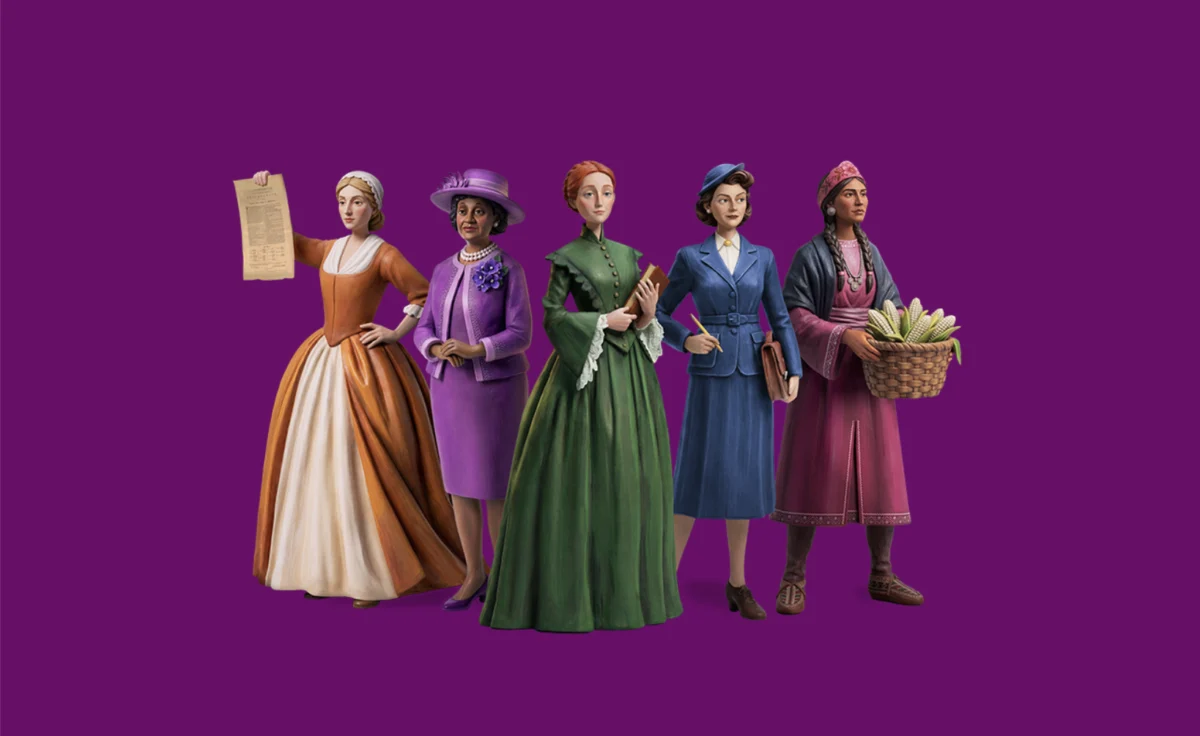
That narrative silence is beginning to break. The Smithsonian American Women’s History Museum, a burgeoning institution currently operating as a "museum-without-walls," has launched an ambitious augmented reality (AR) initiative titled Unhidden Heroines. By leveraging cutting-edge digital technology, the Smithsonian is effectively installing virtual monuments to five influential women directly onto the National Mall, ensuring that the history of American progress is no longer a conversation dominated by men.
The Core Concept: Bringing the "Unhidden" into View
Beginning June 18, the project transforms the visitor experience on the National Mall. Through a smartphone or computer, users can "conjure" the presence of five women whose legacies have been instrumental in shaping the last 250 years of American life. This is not merely a digital overlay; it is a pedagogical intervention designed to challenge the physical landscape of the Mall itself.
The five women featured in the project represent a diverse cross-section of American influence:
- Polly Cooper: An Oneida woman whose critical support as a cook for the Continental Army during the Revolutionary War provided essential sustenance to starving soldiers.
- Mary Katharine Goddard: A trailblazing publisher who famously printed the first official, signed copy of the Declaration of Independence.
- Julia Ward Howe: A poet and activist best known for "The Battle Hymn of the Republic," who also played a pivotal role in the women’s suffrage movement.
- Elizebeth Smith Friedman: A legendary cryptanalyst whose work in breaking enemy codes during both World War I and World War II proved vital to national security.
- Dorothy Height: A titan of the Civil Rights Movement, whose leadership in organizations like the National Council of Negro Women was foundational to the fight for equality.
Each figure is paired with an existing, traditionally male-dominated monument. For instance, Dorothy Height’s virtual likeness is situated near the Martin Luther King, Jr. Memorial, while Mary Katharine Goddard’s presence is anchored at the Thomas Jefferson Memorial. This spatial pairing is deliberate, intended to create a dialogue between the "known" heroes of American history and the "unhidden" figures who often worked in their shadows or alongside them to achieve the same national goals.
Chronology of a Museum: A Long Road to Representation
The quest for a national museum dedicated to women’s history is a story of persistent, multi-generational advocacy. While the Unhidden Heroines project represents a modern, digital-first approach to curation, the momentum behind the institution itself has been building for over two decades.
- 1990s–2010s: Advocates, historians, and lawmakers began the arduous task of lobbying Congress for a dedicated space on the National Mall. The argument was simple but powerful: American history cannot be fully understood if the contributions of half the population are missing from the public square.
- December 2020: Following years of grassroots organizing and political maneuvering, Congress officially authorized the creation of the Smithsonian American Women’s History Museum. The legislation marked a historic victory for advocates who argued that a physical building was essential to the nation’s cultural identity.
- 2021–2023: The Smithsonian began the complex process of site selection and institutional planning. During this period, the museum adopted a "museum-without-walls" strategy, focusing on digital outreach, educational programming, and temporary exhibitions while the physical project remained in the planning stages.
- June 2024: The launch of Unhidden Heroines marks the first major integration of immersive technology into the Smithsonian’s efforts to claim space on the National Mall, serving as a bridge between the museum’s future physical presence and its current digital mission.
Supporting Data: The Logistics of a Digital Monument
The Unhidden Heroines experience is accessible to anyone with a smartphone, though the Smithsonian has optimized the experience for those physically present on the Mall. By scanning QR codes strategically placed near the paired monuments, visitors trigger an AR experience that layers an illustration of the historical figure over the physical environment.
The Smithsonian has also accounted for accessibility by providing a non-interactive, browser-based version for those unable to visit Washington, D.C. This "museum-without-walls" philosophy is central to the project’s success, as it seeks to democratize access to history rather than restricting it to those who can afford the time and expense of travel.
According to preliminary projections, the project is intended to run through December 31—the culmination of America’s 250th anniversary year. This timing is strategic; it positions the Unhidden Heroines as part of a national reflection on what constitutes "American history" as the country prepares for its semiquincentennial celebrations.
The Cost of Memory: Financial and Structural Challenges
When the museum was first authorized in 2020, the economic projections were staggering. Estimates suggested that a full-scale, bricks-and-mortar facility on the National Mall would require approximately $375 million and a minimum of 10 years of development.
However, in the years since that authorization, the economic landscape has shifted significantly. Inflation, rising construction costs, and the complex logistical requirements of building on federally protected land have caused those initial estimates to drift upward. Furthermore, the selection of a permanent site remains a subject of intense scrutiny and negotiation. While the museum’s website confirms that a building is indeed on the horizon, it notes that the public should expect a wait of "at least 10 years" before the doors open.
This creates a unique tension: a massive, permanent institution is being built, but in the interim, the Smithsonian is using digital tools to assert its presence. The Unhidden Heroines project serves as a low-cost, high-impact method of maintaining public interest and institutional relevance while the multi-hundred-million-dollar facility remains in the early stages of development.
Official Responses and Curatorial Intent
The curatorial team behind the project has emphasized that this is not merely a "digital gimmick." Dr. Elizabeth Clark, a historian involved with the project, noted in a recent briefing that the pairing of historical figures is designed to highlight the "interconnectedness of history."
"When we look at Mary Katharine Goddard in the context of Thomas Jefferson, we aren’t just showing a woman who printed a document," Clark explained. "We are showing the infrastructure of the American Revolution. We are showing that the Declaration of Independence was not just a product of Jefferson’s quill; it required a printer, a publisher, and a woman who was willing to put her reputation—and her life—on the line to disseminate those words to the public."
The Smithsonian leadership views this project as a test case for how the museum can function in a digital-first era. By augmenting reality, they are bypassing the decades-long process of gaining approval for physical, permanent statues, which are often subject to lengthy reviews by the Commission of Fine Arts and the National Capital Planning Commission.
Implications: The Future of Commemoration
The Unhidden Heroines initiative signals a fundamental shift in how the United States approaches public history. For much of the 20th century, the "monument" was a fixed, static object. It was a monolith meant to convey a singular, unchanging truth.
By contrast, the AR approach allows for a "dynamic" history. Digital monuments can be updated, expanded, and replaced with relative ease. They allow the Smithsonian to tell more nuanced, intersectional stories that might be difficult to capture in a bronze statue. If a visitor wants to learn more about the specific code-breaking techniques of Elizebeth Smith Friedman, the app can provide a level of detail that a plaque on a pedestal simply cannot offer.
However, the project also raises questions about the future of physical space. Critics of the "museum-without-walls" model argue that digital experiences are no substitute for the gravitas of a physical building. They contend that by relying on AR, the Smithsonian might inadvertently signal to the government that a physical building is less urgent than it actually is.
Supporters, conversely, argue that the technology is the perfect tool for a modern democracy. It allows for a "crowdsourced" or "layered" history, where the National Mall can represent not just one version of the past, but many.
Conclusion: A Living Landscape
As the United States approaches its 250th anniversary, the Unhidden Heroines project serves as a reminder that history is not just what is etched in stone; it is what we choose to remember and how we choose to view it. By using augmented reality to "unhide" these figures, the Smithsonian is reclaiming the National Mall as a space for everyone.
The project does more than just fill a void; it transforms the act of sightseeing into an act of inquiry. When a visitor walks the Mall today, they are invited to look past the cold marble of the traditional monuments and see the complex, often hidden web of individuals who built the nation.
Whether this digital intervention will accelerate the construction of the physical museum remains to be seen. But for now, the Unhidden Heroines have finally arrived on the National Mall. And for the thousands of visitors who will walk these paths over the coming months, the story of America will look a little more like the people who actually lived it.
