

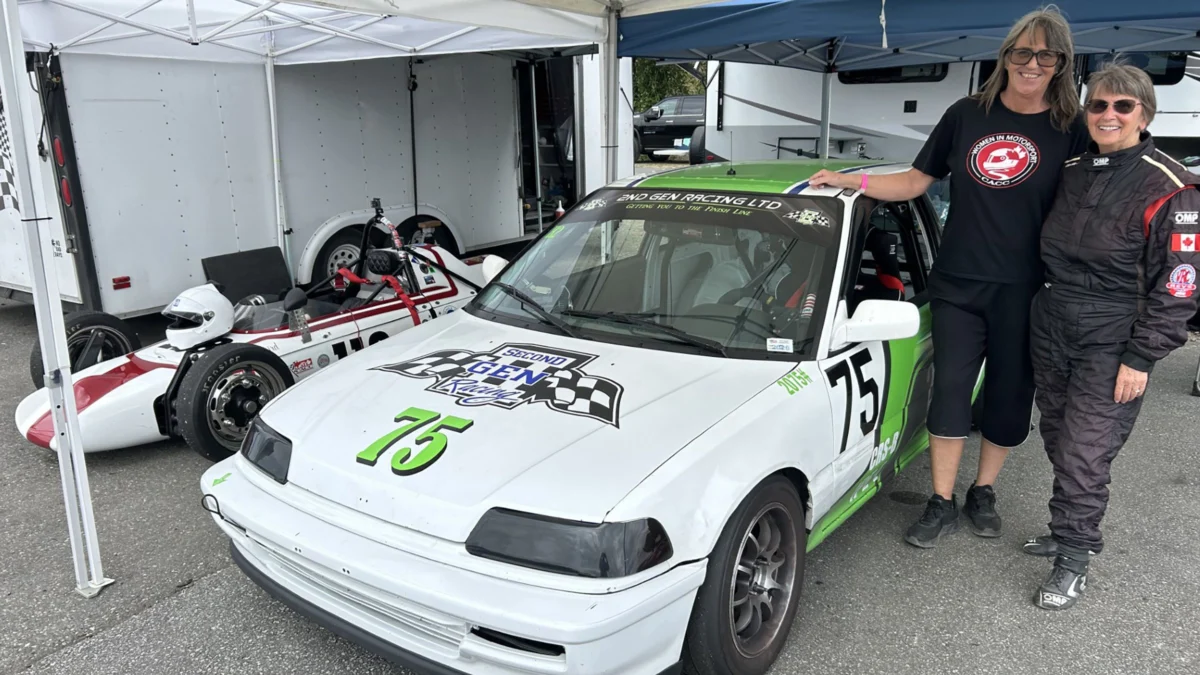
At Mission Raceway Park in British Columbia, the roar of engines and the sharp scent of burning rubber are the backdrop to a unique racing narrative. Among the field of drivers, many of whom are half her age, one competitor stands out—not just for her skill, but for her defiance of conventional expectations. Gayle Baird, known to the local racing community as "Hot Rod Granny," is proving that the passion for velocity has no expiration date.
For Baird, the track is not a place to collect hardware or secure bragging rights. It is a laboratory of self-improvement, a high-stakes environment where she measures her success in milliseconds and personal growth. As she maneuvers her race-prepped Honda through technical corners and high-speed straights, Baird is rewriting the script on aging, adrenaline, and the relentless drive to push beyond one’s limits.
The Philosophy of the Track: Beyond the Podium
"Trophies? I have rooms full of them," Baird says with a casual wave of her hand, suggesting that the era of chasing accolades is long behind her. "I don’t do this to win trophies. I just love to compete and drive fast to push myself more every time out."
Baird’s approach to motorsport is deeply introspective. She isn’t focused on the bumper of the car in front of her; she is focused on the data she generates herself. For her, racing is a dialogue between the driver and the machine, a constant attempt to refine a racing line or shave a fraction of a second off a lap time.
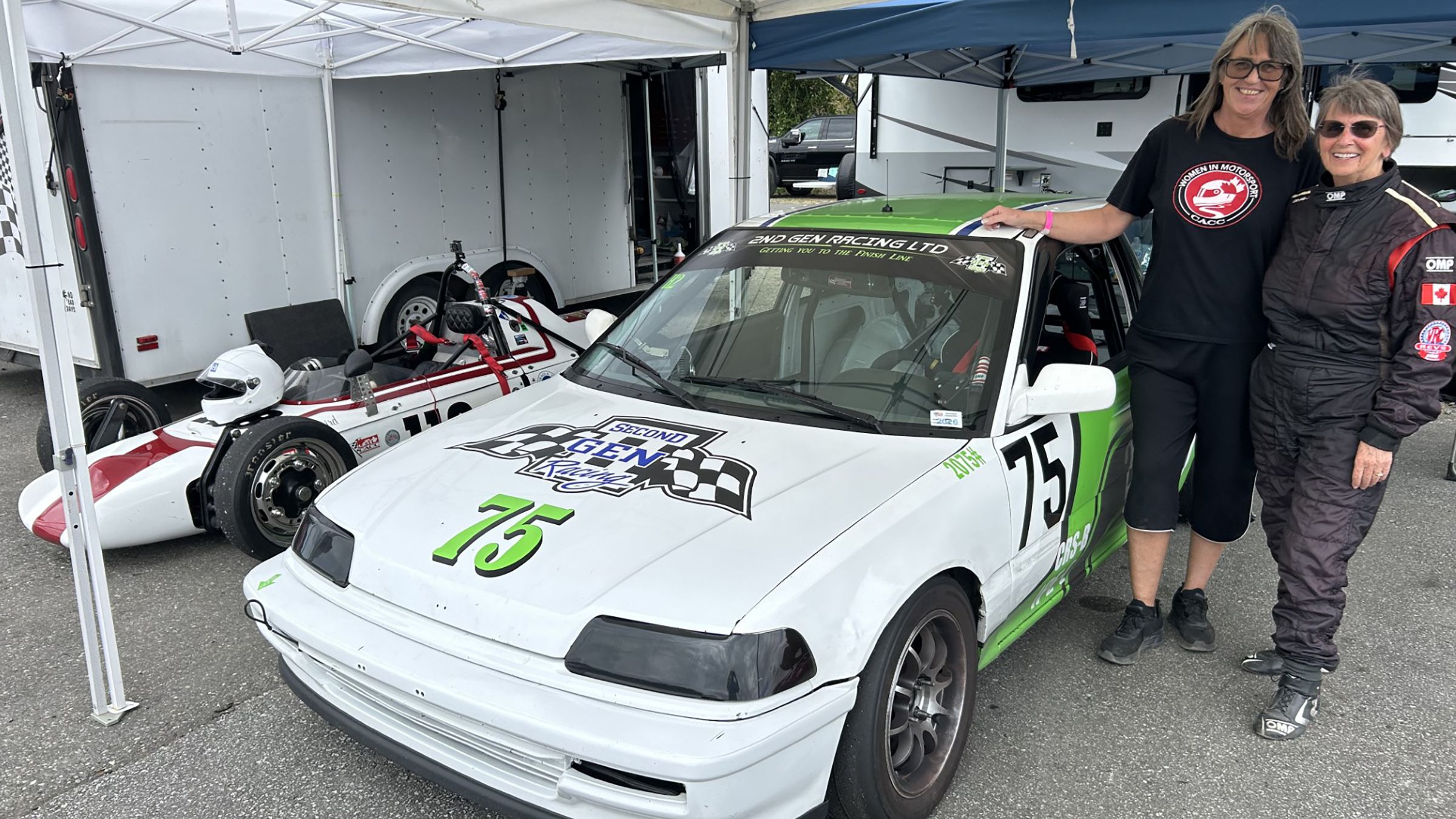
"I race against myself, trying to improve my times," she explains. "That’s what matters to me. If I happen to pass a few people, that’s nice, but it isn’t the primary goal."
This philosophy positions Baird as a mentor rather than a rival. By stripping away the ego-driven obsession with "beating" others, she has cultivated a unique status in the Pacific Northwest racing circuit—the "Grandma Standard." It is a title she wears with pride, recognizing that her presence on the grid serves as both a benchmark for novices and a testament to the endurance of the human spirit.
A Chronology of Resilience: From the Garage to the Grid
The path to becoming a fixture at the Knox Mountain Hill Climb and various vintage races hasn’t been a smooth ride. Baird’s career is defined by a series of high-intensity moments, some of which resulted in significant damage to both her equipment and her bank account.
The Trial by Fire
Racing at speeds reaching 160 kilometers per hour is a discipline that leaves little room for error. Baird’s career has seen her collide with the track’s concrete walls on four separate occasions. These are not minor "fender benders"; they are high-impact events that would cause many to hang up their driving gloves for good.
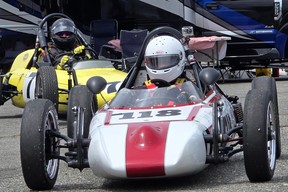
In one instance, the collision was severe enough to require $3,000 in frame-straightening work. Yet, the following weekend, Baird was back at the track. Her ability to bounce back—both physically and mentally—is legendary among her peers. When a car is damaged beyond the point of cost-effective repair, she simply secures another race-prepped Honda and continues her mission.
The "Never Back Off" Mentality
Her daughter-in-law, Debbie, provides an outside perspective on Baird’s tenacity. "She just never backs off," Debbie notes. This lack of fear, or perhaps the complete mastery of it, is what defines Baird’s longevity. She treats the inevitable costs and mechanical setbacks not as failures, but as the price of admission for a life lived at high velocity.
Supporting Data: The Anatomy of a Racing Veteran
To understand the scale of Baird’s commitment, one must look at the technical and logistical demands of her racing life.
- The Equipment: Baird utilizes a series of race-prepped Honda vehicles. These cars are stripped of all non-essential weight and modified for track safety and performance. The financial commitment to maintaining these vehicles, especially given the frequency of track incidents, is significant.
- The Circuit: Baird is a veteran of the Knox Mountain Hill Climb, a prestigious event that demands extreme concentration and precision. Her participation in vintage racing circuits throughout the Pacific Northwest further cements her reputation as a versatile driver capable of handling different track geometries and conditions.
- The Mentorship Model: Baird has formalized her role in the racing community by focusing on one-on-one sessions with novice drivers. According to regulations in many racing series, newcomers must complete a series of three races to advance. Baird intentionally pairs herself with these drivers to provide a "chase" dynamic.
"When you are a new driver, you don’t want to be just doing laps," she says. "You get your best times when you are chasing somebody. You need the pressure on. I show them how to sneak past them and other things. You want to encourage people to come out and have young people to race with. Having a big grid is what it’s all about."
The "Grandma Standard" and the Next Generation
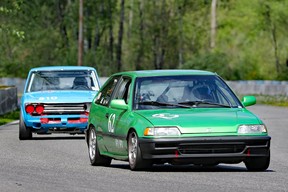
The implications of Baird’s career go beyond her own personal satisfaction. She is actively contributing to the sustainability of the sport. By acting as a moving benchmark, she provides novices with a tangible goal: "If I can beat the grandmother, I have officially arrived as a driver."
This playful rivalry creates a welcoming environment for younger drivers who might otherwise feel intimidated by the complexities of the sport. Baird understands that for racing to survive, it needs a continuous infusion of new talent. By fostering a sense of community and friendly competition, she ensures that the grid remains full and the sport remains vibrant.
Official Stance and Personal Reflections
When asked about the potential for retirement, Baird is dismissive. There is no grand plan for a final race or a sunset departure.
"Not until I have to," she says. "I still love competing and trying to improve my lap times in every race. I feel good, and I’ll keep doing it for as long as I can."

This clarity of purpose is the hallmark of an athlete who has found her "flow state." For Baird, the steering wheel is not an extension of her age, but an extension of her identity. She represents a growing demographic of older athletes who are challenging the narrative that aging is a process of subtraction. Instead, for Baird, it is a process of refinement.
Implications: Challenging the Aging Narrative
The story of Gayle Baird is more than just a human-interest piece about a fast-driving grandmother; it is a case study in psychological resilience and the importance of lifelong engagement.
Breaking Societal Stereotypes
Society often encourages seniors to seek safety and comfort. Baird’s existence on the racetrack actively subverts these expectations. By choosing a sport that is inherently dangerous and physically demanding, she forces a reconsideration of what "appropriate" behavior looks like for someone of her generation.
The Economics of Passion
Baird’s willingness to invest thousands of dollars into frame repairs and vehicle replacements highlights the depth of her commitment. It suggests that for many, the pursuit of a passion project is worth any financial sacrifice. The "Hot Rod Granny" phenomenon provides a blueprint for how individuals can maintain cognitive and physical health through intense, goal-oriented hobbies.

The Future of Vintage Racing
As the world of automotive technology shifts toward electrification and autonomy, the vintage racing community provides a vital link to the mechanical history of the sport. Baird’s dedication to keeping these machines on the track is, in its own way, an act of historical preservation. She isn’t just racing cars; she is keeping the culture of hands-on, mechanical, high-speed driving alive for a new generation.
Conclusion
Gayle Baird stands as a reminder that the finish line is a matter of perspective. While she will continue to measure her success in the numbers on a stopwatch, those who watch her race see something much more profound. They see a woman who has mastered the art of living in the present, a driver who has turned the act of racing into a legacy of encouragement, and a competitor who proves that as long as there is an open road and a roaring engine, the journey is never truly over.
Whether she is navigating a hairpin turn at Knox Mountain or mentoring a nervous teenager on how to properly set up an overtake, Baird remains a force of nature. She is, as she jokingly claims, "not the gold standard, just the grandma standard"—but to the racing community that knows her, she is the gold standard of what it means to live with passion, regardless of the age on one’s driver’s license.
Alyn Edwards is a classic car enthusiast and a partner in a Vancouver-based public relations company. With a lifelong history of automotive passion—starting with a 1934 Ford coupe he bought with paper route money at age 14—Edwards continues to champion the stories of those who cherish the special cars in their lives.
