

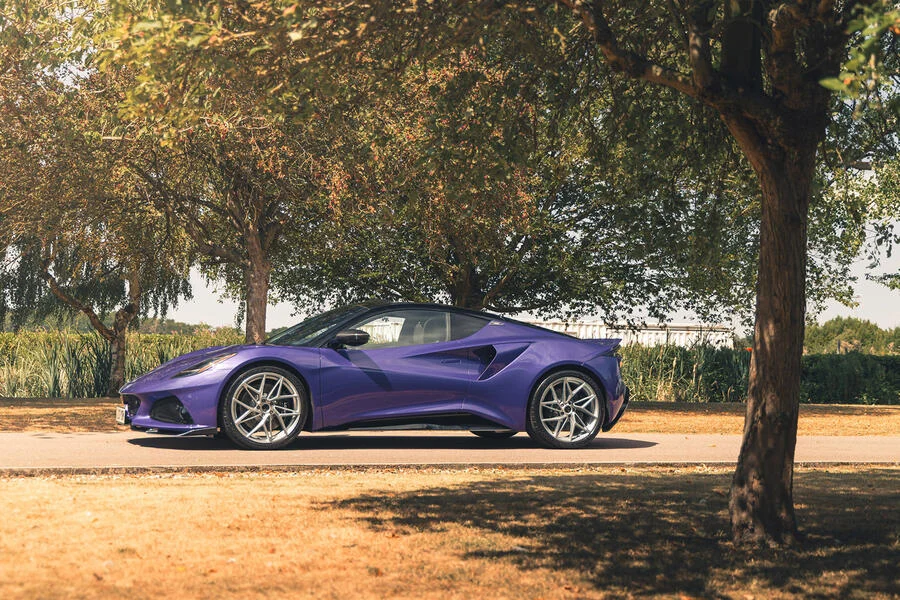
The Lotus Emira has always occupied a singular space in the sports car hierarchy. It is the bridge between the analog soul of the brand’s heritage and the modern expectations of a daily-drivable, premium performance machine. However, the introduction of the new Emira 420 Sport represents a distinct shift in focus. By trimming mass, upgrading the suspension architecture, and recalibrating the familiar Mercedes-AMG powertrain, Lotus is attempting to reclaim the purity of driving dynamics that the marque is world-renowned for.
This is not merely a trim update; it is a fundamental recalibration of what the Emira can achieve when the engineering team is given the green light to prioritize track-bred precision.
Main Facts: The Anatomy of the 420 Sport
At the heart of the 420 Sport lies the familiar 2.0-litre turbocharged four-cylinder engine sourced from Mercedes-AMG. While this unit has powered the Emira Turbo SE, the 420 Sport benefits from a significant software recalibration. The result is a total output of 416bhp and 369lb ft of torque—a notable bump of 16bhp and 15lb ft respectively.
However, the real story is the "Lightweight Handling Pack." By incorporating a titanium exhaust system, a weight-saving lithium-ion battery, and a vented carbonfibre engine cover, Lotus has shaved 25kg off the car’s kerb weight. This reduction is bolstered by the introduction of Multimatic dampers, which feature sophisticated spool-valve technology and 11 distinct clicks of adjustment, allowing the driver to dial in the damping characteristics to suit a specific circuit or road surface. Furthermore, the car sits 5mm lower than the standard model, tightening its center of gravity and sharpening its turn-in response.
Chronology: From Concept to Circuit
The development of the 420 Sport was a response to customer feedback calling for a more focused, driver-centric variant. Following the successful launch of the standard Emira and the Turbo SE, the engineering team at Hethel began working on a program to bridge the gap between the road-going Emira and the brand’s track-only aspirations.
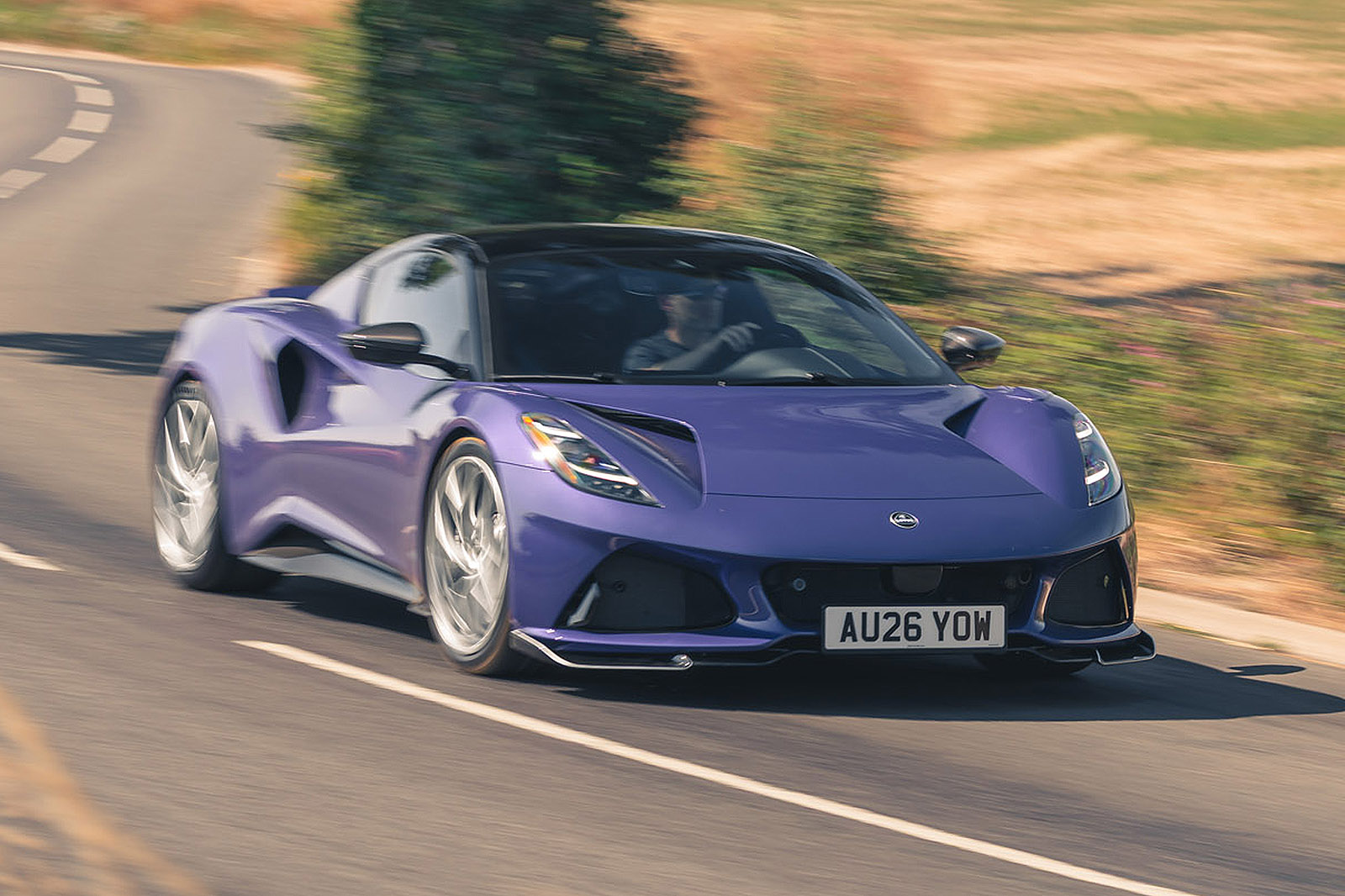
The development cycle saw extensive testing at the Hethel test track, where the prototype’s geometry was fine-tuned. Engineers spent months refining the interaction between the Multimatic dampers and the chassis, ensuring that the 420 Sport maintained the compliance necessary for public roads while delivering the platform stability required for high-speed track work. The finalized production model, showcased at the recent launch event, featured the optional Michelin Cup 2 tyres, which serve to maximize the mechanical grip unlocked by the revised suspension geometry.
Supporting Data: Performance and Precision
To understand the 420 Sport, one must look at how its components interact on the tarmac. During testing at the Hethel circuit, the car proved to be remarkably balanced. With the Multimatic dampers set to nine clicks, the car displays a flat, high-speed cornering profile that remains communicative.
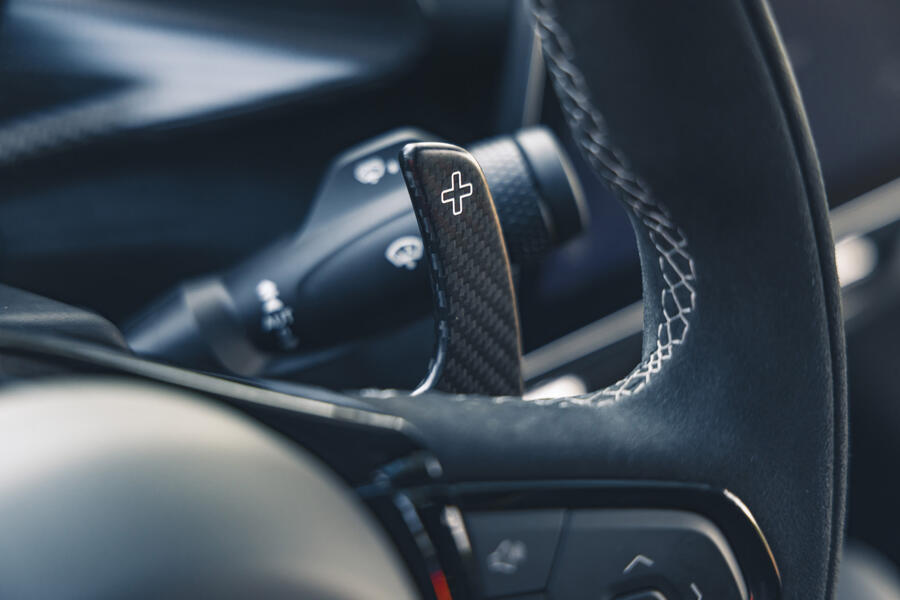
The hydraulic steering remains a highlight of the Lotus experience. Unlike the over-assisted, disconnected steering racks found in many modern rivals, the Emira 420 Sport retains a mechanical honesty that allows the driver to feel the exact threshold of front-end grip. The addition of longer carbonfibre gearshift paddles provides a tactile, "click-clack" satisfaction that makes manual gear changes feel intentional and precise.
Technical Breakdown:
- Power: 416bhp (up from 400bhp).
- Torque: 369lb ft (up from 354lb ft).
- Weight Reduction: 25kg (via titanium exhaust, lithium battery, carbon engine cover).
- Suspension: Multimatic spool-valve dampers with 11-way adjustability.
- Ride Height: Dropped by 5mm.
Official Perspectives and Interior Refinement
Inside the cabin, the 420 Sport maintains the snug, premium environment of the standard Emira but adds bespoke trim materials that elevate the tactile experience. Lotus designers have focused on the "driver-to-machine" interface, ensuring that every touchpoint—from the steering wheel rim to the new, extended shift paddles—reinforces the car’s athletic intent.
While the cabin is more refined than any Lotus before it, the brand has remained true to its "less is more" philosophy. The removal of the roof panel—a process that takes seconds and allows for convenient storage behind the seats—reminds the driver that this is a machine designed to be enjoyed at a sedate pace just as much as it is to be pushed on a track.
Implications: The Challenge of the Powertrain
Despite the mechanical brilliance of the chassis, the Emira 420 Sport is not without its caveats. The Mercedes-AMG-derived powertrain, while devastatingly effective when the turbo is fully spooled, remains the car’s most contentious element.
On the road, the engine can occasionally feel laggy at low revs, lacking the immediate, razor-sharp throttle response that one might expect from a car with such a sophisticated chassis. While the new exhaust system introduces a welcomed degree of aural drama—complete with aggressive pops and crackles in Sport and Track modes—the engine’s character remains somewhat clinical compared to the visceral, organic feel of the rest of the car.
However, the implications for the future of the Emira are clear: Lotus has successfully created a car that is "sharper than the standard Emira, but not aggressively so." It manages to walk the fine line between a track weapon and a weekend companion. The 420 Sport is a testament to the brand’s ability to evolve. It proves that Lotus can integrate high-end technology—like Multimatic dampers—without losing the "effortless lack of inertia" that has been the defining trait of every Lotus since the days of Colin Chapman.
Conclusion: A Masterclass in Dynamics
The Lotus Emira 420 Sport is a compelling proposition for the driving purist. It is a car that asks to be driven, not just owned. Its ability to work up to, and slightly beyond, the limit of its grip on the Michelin Cup 2 rubber is a testament to the work done at Hethel.
While the powertrain may not possess the instinctive, telepathic response of the chassis, the overall package is an undeniable success. It offers a degree of adjustability and biddability that is rare in the modern sports car market. Whether you are attacking a challenging B-road or finding the rhythm on a test track, the 420 Sport provides a level of engagement that reminds us why we fell in love with driving in the first place.
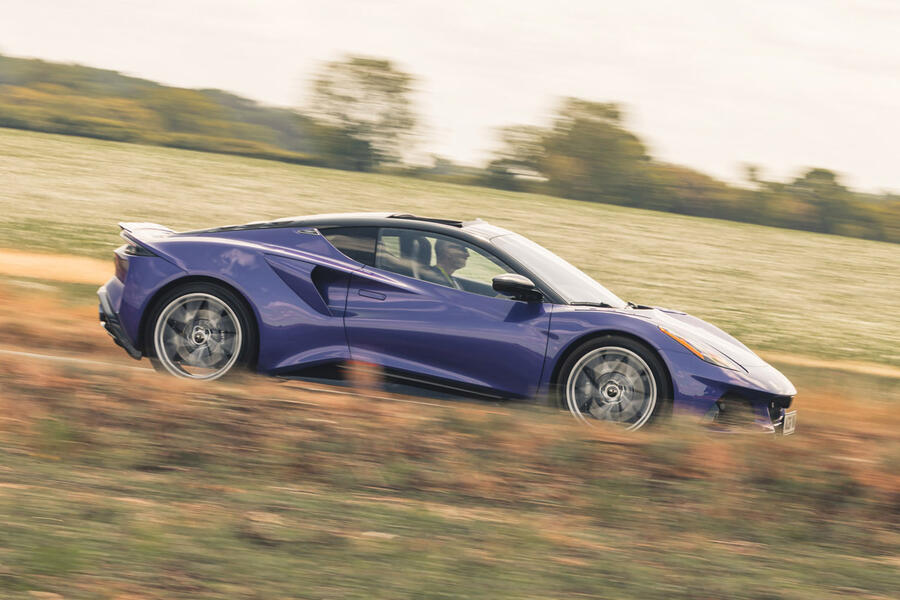
For those willing to accept the minor trade-offs in low-rev response, the 420 Sport rewards with a driving experience that is as fluid, adjustable, and exhilarating as anything in its class. Lotus has once again proven that they are masters of the craft, delivering a machine that, despite its modern refinements, remains fundamentally and unmistakably a Lotus.
Notes on Daily Utility
It is worth noting that while the 420 Sport is a track-oriented machine, its engineers have ensured it remains usable on the public highway. The ride, while undeniably firm, avoids the harshness that typically plagues track-biased machines. It possesses a sophisticated ability to soak up mid-corner bumps that would otherwise deflect a less capable car off its line.
However, prospective owners should be aware that the braking system is highly aggressive. While it is strong and progressive under the heavy, heat-generating conditions of track work, it requires a delicate touch during low-speed, urban driving. "Limo stops" are, as the saying goes, entirely out of the question.
Final Verdict
The Emira 420 Sport stands as a triumphant evolution of the Emira platform. By focusing on mass reduction and suspension precision, Lotus has created a car that feels more "connected" than its predecessor. It is a car that thrives on driver input, offering a level of transparency that makes the driver feel like a partner in the experience rather than a mere passenger. In an era of increasingly digitized and heavy performance cars, the 420 Sport is a refreshing, analog-feeling breath of air, proving that even as Lotus transitions to a new era, the spirit of Hethel remains as sharp as ever.
