


By Editorial Staff
July 23, 2026
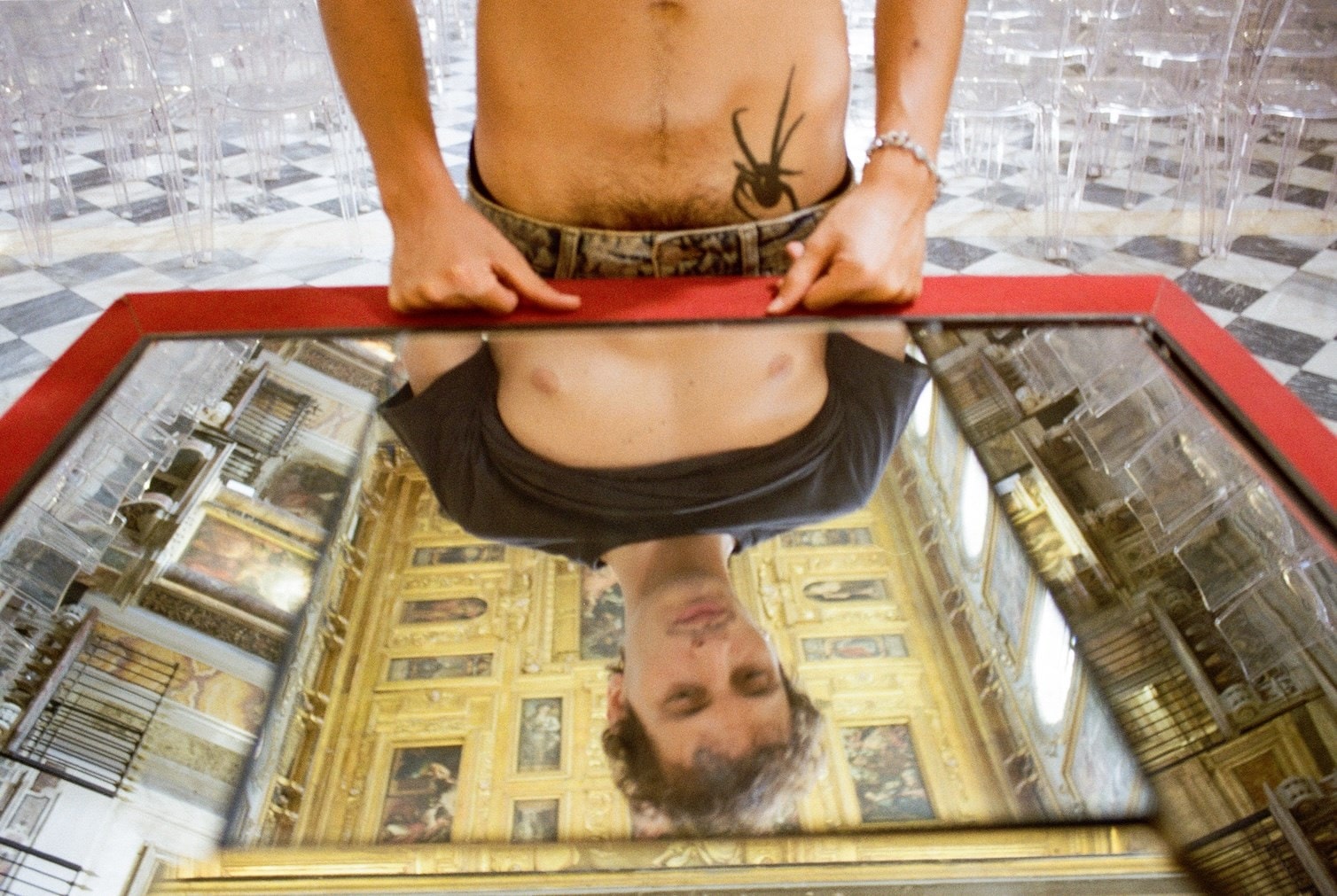
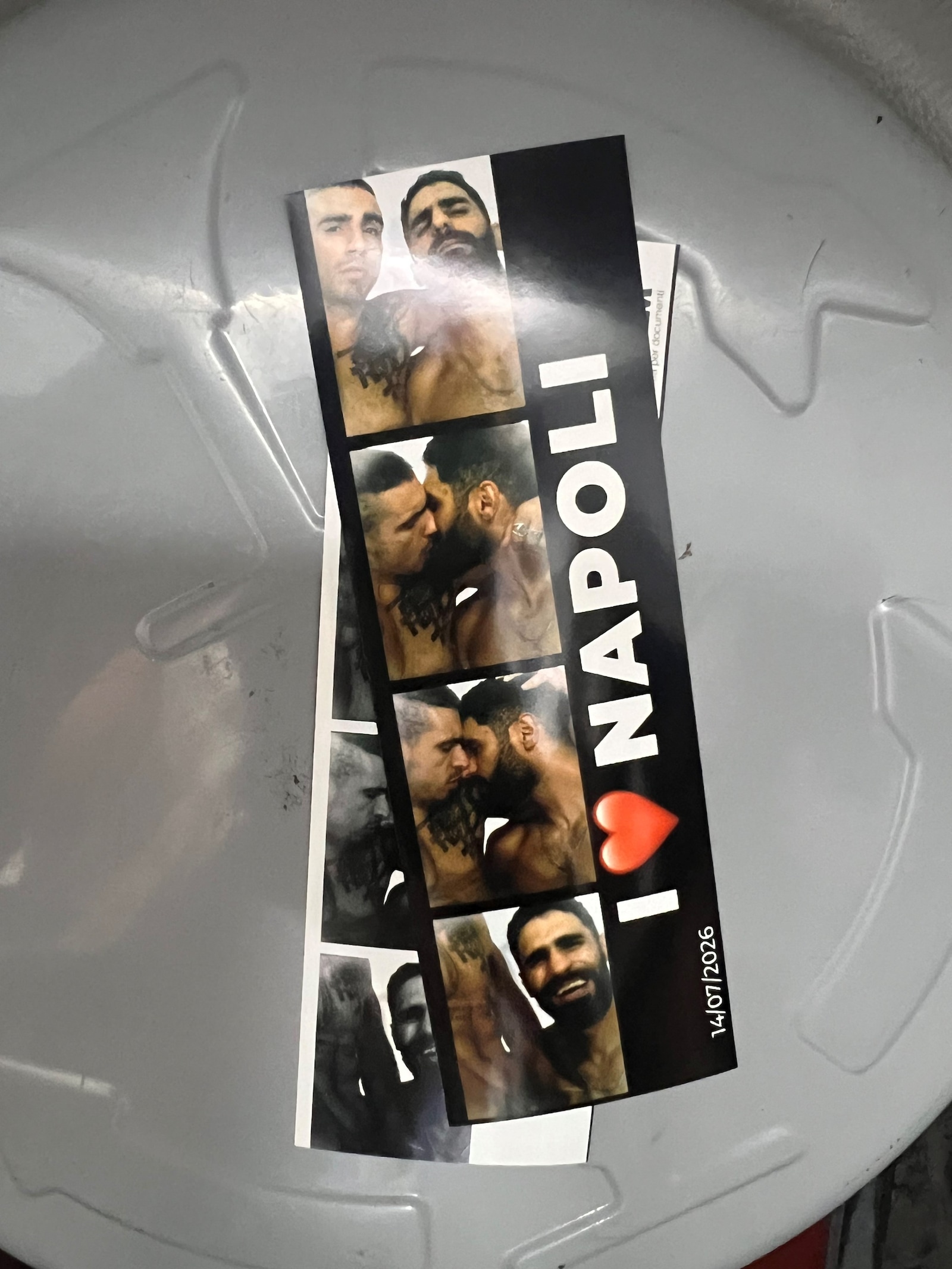
In the inaugural edition of AnOther Photo Dump, a new editorial series dedicated to the visceral documentation of the summer season, London-based photographer Jo Fetto presents a striking collection of imagery that transcends the conventional travelogue. The series, which pairs new work with archival material, serves as a love letter to Naples—the city of Fetto’s birth. Through his lens, the Italian metropolis is stripped of its postcard artifice, revealing instead a chaotic, beautiful, and profoundly human theater where the sacred and the profane exist in a state of permanent collision.
The Vision: Naples as a Living Contradiction
Jo Fetto’s work is characterized by a refusal to sanitize. For those familiar with his portfolio, the shift toward a more intimate, autobiographical narrative feels like a homecoming. In this latest project, Fetto captures the essence of Neapolitan life, not as a tourist, but as a witness to a city that is constantly performing for itself.

"Between sacred and profane," Fetto notes in his accompanying statement for the series. "Collected over the years, these photographs always return to the same waters. Here, we’re all blessed. The sea makes no distinction between Madonnas, saints, queers, or swimmers. Neither does Naples. It is never a postcard, but a city forever performing itself, where every contradiction finds a body."
This philosophical grounding—that the sea and the city are leveling forces—permeates the imagery. Fetto’s compositions are raw; they favor the grit of the alleyway and the salt-caked skin of the swimmer over the polished, idyllic vistas often associated with the Amalfi Coast.
Chronology: A Multi-Year Visual Archive
The project is not a singular event but a synthesis of time. By blending recent captures with older, archival shots, Fetto creates a sense of temporal suspension. Naples, in Fetto’s view, is a city where time is not linear but cyclical.

- The Early Years (Archival Foundations): Fetto began documenting his home city long before he moved to London. These early images capture the foundational elements of his aesthetic: the high-contrast light of the Mediterranean, the claustrophobic intimacy of the city’s dense architecture, and the expressive physicality of the Neapolitan people.
- The Return (Recent Imagery): In recent summers, Fetto returned to these familiar locales. The newer images show a evolution in his technical approach—a greater focus on color depth and the interplay between deep shadows and harsh sunlight.
- The Synthesis: By interweaving these eras, the photo dump creates a timeline that feels both personal and universal. It tracks not only the growth of a photographer but also the unchanging soul of a city that defies modernization.
Supporting Data: The Anatomy of a Neapolitan Summer
To understand the weight of Fetto’s imagery, one must consider the environment he is documenting. Naples, with its population of nearly one million in the city proper, is one of the most densely populated and historically layered cities in Europe.
- Geographic Context: Situated on the Bay of Naples, the city’s life is dictated by its proximity to the water. The sea is the city’s "great equalizer," a concept Fetto emphasizes in his descriptions of swimmers, both locals and visitors, mingling in the same tides.
- Cultural Density: Naples has been under Greek, Roman, Byzantine, Norman, Angevin, Spanish, and Bourbon rule. This history manifests in the city’s architecture—a labyrinth of baroque churches, hidden courtyards, and vertical housing. Fetto’s photographs lean heavily into this complexity, using tight framing to convey the feeling of being enclosed within a historic, living organism.
- The Social Fabric: Naples is famously a city of "the street." Life occurs in public spaces. Fetto’s choice to capture figures like "Mia," "Ivan," and the trio of "Talona, Ronga, and Paoli" highlights the importance of the individual within the collective. These are not merely portraits; they are studies of personality against the backdrop of an uncompromising urban environment.
The Cultural Implications: Beyond the Postcard
Jo Fetto’s work challenges the commodification of Southern Italy. In a digital age dominated by Instagram-friendly travel aesthetics—where Naples is often reduced to a backdrop for pizza and Vespas—Fetto’s work serves as a necessary intervention.
The "Sacred and Profane" Duality
One of the most compelling aspects of the series is its exploration of religious and secular life. Naples is a city of deep Catholic tradition, where statues of the Virgin Mary sit alongside the chaotic, loud reality of modern street life. Fetto’s lens captures these moments of overlap: the quietude of a prayerful moment situated directly next to the noise of a crowded beach.
The Queer Gaze in Naples
By explicitly mentioning "queers" alongside "saints" and "Madonnas," Fetto brings a necessary inclusivity to his documentation of the city. He situates queer identity as an intrinsic, vibrant thread within the fabric of Naples, rather than an outlier. This challenges the stereotype of Southern Italy as being exclusively traditionalist, highlighting instead the city’s history of fluidity and resistance.
The City as a Performer
Fetto’s claim that Naples is "forever performing itself" is perhaps his most insightful critique. The city possesses a self-awareness that is rare. The people, the architecture, and even the weather feel as though they are part of a grand, ongoing play. By photographing the city through this lens, Fetto avoids the "voyeuristic" trap often found in street photography, instead engaging in a collaborative performance with his subjects.
Official Responses and Critical Reception
While the series is still in its infancy, the response from the art photography community has been one of immediate resonance. Critics have praised Fetto’s ability to find "unfiltered intimacy" in a city that is notoriously difficult to capture without falling into cliché.
"Fetto has managed to do what many established photographers fail at," notes independent curator Elena Rossi. "He has bypassed the ‘tourist gaze.’ He isn’t looking at Naples; he is looking from Naples. It is an internal dialogue translated into visual form."
The choice of AnOther Magazine to launch this series with Fetto’s work signals a commitment to a raw, non-commercial aesthetic. It reflects a shift in contemporary editorial photography toward projects that favor personal narrative and emotional authenticity over high-concept production.
Implications for Future Photography
The success and tone of Fetto’s Photo Dump suggests a broader trend in how photographers are approaching their work in the mid-2020s. We are moving away from the era of the "perfectly curated" portfolio and toward the "honest collection"—a format that allows for mistakes, blurriness, and imperfection.

- Authenticity over Perfection: Fetto’s images are not always sharp or perfectly lit; some are grainy, others are candid snapshots. This lack of polish serves the narrative, suggesting that life—and summer—is inherently messy.
- Archival Recontextualization: By mixing old and new, Fetto demonstrates that photography is not just about the "moment captured" but about the "story continued." This is a lesson for emerging photographers: your archives are as valuable as your current work.
- The Return to the Personal: In an era of AI-generated imagery and global homogenization, the deeply specific, local, and personal work of artists like Fetto becomes more valuable. The more hyper-local the work, the more it resonates globally.
Conclusion
Jo Fetto’s Summer Imagery Photo Dump is a profound meditation on belonging, identity, and the relentless pulse of a city that never truly rests. By documenting Naples with both a critical eye and an affectionate heart, Fetto has created a series that feels vital.
For the viewer, these images serve as an invitation to look closer at their own environments. They remind us that the most compelling stories are not found in the exotic or the distant, but in the places we call home—the streets we walk every day, the faces we have known for years, and the waters that have shaped our personal histories.
As the series continues, it will be fascinating to see how other photographers interpret the "Photo Dump" format. But for now, Fetto has set a high bar, offering a masterclass in how to document a place without colonizing it, and how to capture a season without reducing it to a set of familiar tropes. Naples, through his lens, remains a city of infinite mystery, forever performing, forever breathing, and forever finding a body for its contradictions.
