

This story is published through the Indigenous News Alliance.
Across the globe, Indigenous communities are navigating a landscape defined by convergence: the accelerating devastation of climate change, persistent cycles of state-sanctioned violence, and the emerging, opaque threats posed by unchecked artificial intelligence. As these crises intensify, the leaders of these nations are no longer merely requesting a seat at the table—they are issuing a formal mandate.
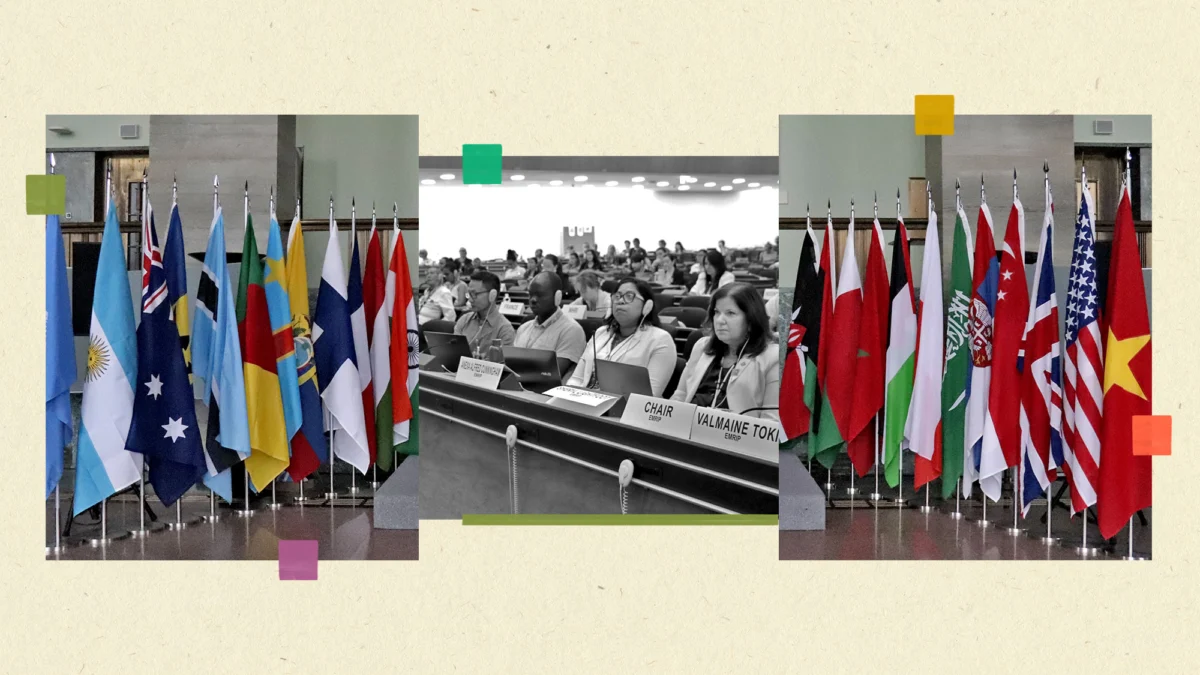
Last week, the seven Indigenous members of the United Nations Expert Mechanism on the Rights of Indigenous Peoples (EMRIP) finalized a 12-point action plan, a robust, comprehensive framework designed to force the United Nations and its member states to confront the systemic erosion of Indigenous rights. Yet, even as this document marks a new chapter in diplomatic advocacy, it emerges against the backdrop of a looming financial catastrophe that threatens to silence the very platforms Indigenous peoples have spent decades building.
The 12-Point Mandate: A Blueprint for Sovereignty
The 12 recommendations, which are set to be presented to the U.N. Human Rights Council, represent more than just policy suggestions; they are a survival strategy. The proposal demands that the international community move beyond rhetoric and transition toward immediate, measurable action to protect Indigenous land, cultural integrity, and physical safety.
"Our communities—our women, our children, our families—they have a right to action, and that’s what we’re not seeing globally," said Cora McGuire-Cyrette, a representative of the Bingwi Neyaashi Anishinaabek, speaking on behalf of the Ontario Native Women’s Association. "We are not looking for more promises. We are looking for action."
The recommendations are expansive, covering critical areas of modern life:
- Protection of Isolated Nations: Enhanced legal and humanitarian protections for Indigenous peoples living in voluntary isolation or initial contact.
- Data Sovereignty: Frameworks to ensure Indigenous communities maintain control over their own data and cultural intellectual property.
- Linguistic Preservation: A renewed, funded commitment to the survival of endangered Indigenous languages.
- Institutional Integration: Increased representation and voting influence within the U.N. Human Rights Council.
- Distinct Legal Standing: A demand that Indigenous rights be recognized as distinct from, and not merely a subset of, broader international human rights law.
A Chronology of Stagnation: The "Regression" of Rights
The urgency of this proposal is rooted in a sobering reality. Albert Barume, the U.N. Special Rapporteur on the rights of Indigenous peoples and a former chairperson of EMRIP, painted a grim picture for delegates at the recent summit. He described a widespread, global trend of "stagnation and regression" regarding human rights protections.
"In the last few years, almost no single state has taken a new measure protecting Indigenous peoples’ rights," Barume observed. "Conversely, states that previously held robust legal and policy frameworks are actively dismantling them."
This regression is not theoretical. For many Indigenous leaders, it is a daily struggle. Macy Duxfield, a Māori leader representing the Ngaa Rauru, Te Ātihaunui-a-Paparangi, and Ngāi Tahu nations, pointed to the current political climate in Aotearoa New Zealand as a primary example of this shift. Despite the setbacks, Duxfield emphasizes that the work of resistance is intergenerational.
"We exist in this moment," Duxfield said. "We have inherited the work from our ancestors, and we pass it on to our descendants."
Supporting Data: The Financial Chokehold
While the political will of Indigenous nations remains steadfast, the infrastructure designed to amplify their voices is facing a "liquidity crisis." EMRIP is one of three core U.N. pillars for Indigenous rights, alongside the Permanent Forum on Indigenous Issues and the office of the Special Rapporteur. All three are currently experiencing a severe drought in funding.
The U.N. Voluntary Fund for Indigenous Peoples, which provides the necessary financial support for representatives from remote or marginalized communities to travel to international forums, is dangerously underfunded. The statistics are stark:
- Limited Global Participation: Only eight countries currently contribute to the U.N. Voluntary Fund.
- Financial Scarcity: The fund’s total budget is less than $2 million—an infinitesimal fraction of the U.N.’s total operational budget.
- Institutional Neglect: Only three countries contribute to the U.N. Trust Fund for Indigenous Peoples.
- The U.S. Factor: Notably, the United States, a global superpower and a significant influence in U.N. policy, contributes to neither fund.
Marjolaine Étienne, an Innu leader from the Pekuakamiulnuatsh community of Mashteuiatsh in Quebec, warned that if this funding gap is not bridged, the international stage will become an exclusive club for the wealthy or the state-supported, effectively silencing the most vulnerable Indigenous voices.
Official Responses and the "UN80" Uncertainty
The future of these mechanisms is further clouded by "UN80," an agency-wide reform effort aimed at "streamlining" U.N. operations. Sheryl Lightfoot, an Anishinaabe scholar and EMRIP’s North America region expert, noted that the reform effort has created an atmosphere of profound uncertainty.
"There are a lot of unanswered questions right now about the reforms and what the impacts of that might be for Indigenous-specific mechanisms," Lightfoot said. While EMRIP is currently working to anticipate various outcomes, the fear is that "efficiencies" sought by the U.N. bureaucracy will result in fewer meetings, reduced country-level engagements, and a diminished capacity to follow up on human rights abuses.
McGuire-Cyrette was adamant that the U.N. must not use its current financial woes as a pretext for disengagement. "The liquidity crisis must not be used as an excuse to limit the mandate of EMRIP and to reduce the frequency or depth of country engagements or follow-up," she stated.
Implications: The High Cost of Silence
The failure to adequately fund and empower Indigenous voices at the international level has far-reaching consequences. When Indigenous leaders are sidelined, the policies that govern the extraction of natural resources, the development of artificial intelligence, and the mitigation of climate change often ignore traditional knowledge and ecological stewardship—expertise that is essential for global sustainability.
Furthermore, the lack of robust international enforcement allows states to continue the "dismantling" of rights mentioned by Barume. Without a functional, well-resourced EMRIP to monitor and report on these regressions, the protection of Indigenous sovereignty becomes purely aspirational.
As Lightfoot noted, "There’s clearly no shortage of work." The 12-point plan is a reminder that the international system is at a crossroads. It can either recommit to the principles of the U.N. Declaration on the Rights of Indigenous Peoples—which requires full financial and political support—or it can allow the mechanisms that protect the world’s most vulnerable populations to wither into insignificance.
The Indigenous delegates have fulfilled their part of the contract. They have organized, identified the systemic failures, and provided a roadmap for correction. Now, the burden of proof rests on the member states of the United Nations. Whether they choose to provide the funding and political backing necessary to enact this plan will determine the future of the partnership between the U.N. and the Indigenous peoples of the world.
For the leaders currently advocating in Geneva, the message is clear: the time for deliberation has passed; the time for action is now. As the world faces a future defined by instability, the preservation of Indigenous rights is not merely a matter of human rights—it is a matter of global survival.
